


The Cold Bench Heist
Build the pricing oracle for used lab equipment before the refrigerant transition gets expensive
The Environmental Protection Agency just created an unusually boring business opportunity.
On May 26, 2026, the agency published a final rule that pushed back a compliance deadline for two narrow categories of equipment: refrigerated laboratory centrifuges and laboratory shakers. New or imported units in these applications now have until January 1, 2028, instead of January 1, 2026, before tighter restrictions on high-global-warming-potential refrigerants take effect. The rule becomes effective July 27, 2026.
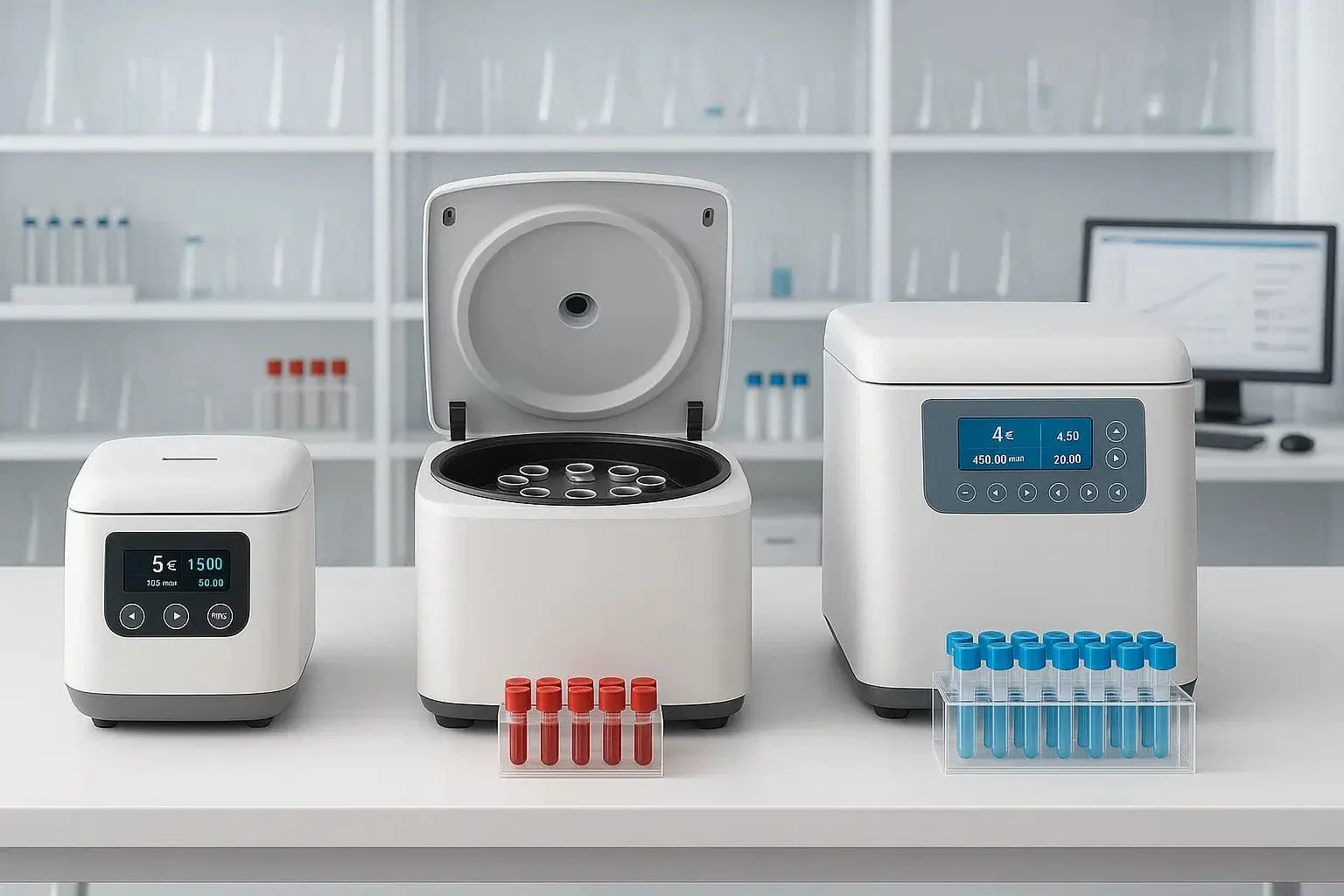
The reason for the delay is the interesting part. Manufacturers can't simply swap one refrigerant for another. Refrigerated centrifuges need new safety-testing procedures to handle flammable or high-pressure alternatives. Shakers carry their own constraints: compact footprints, wide temperature ranges, precise control, and lab environments with open flames or solvents. Some shaker applications require sub-degree temperature control that the currently available compliant alternatives can't consistently match. Compliant refrigerants and approaches like Peltier cooling aren't yet suitable for every use case.
Here's the opportunity:
The money: 20 dealer subscriptions at $500/month plus four lot reviews at $1,250 each puts you near $15K MRR before you touch institutional clients.
Inside:
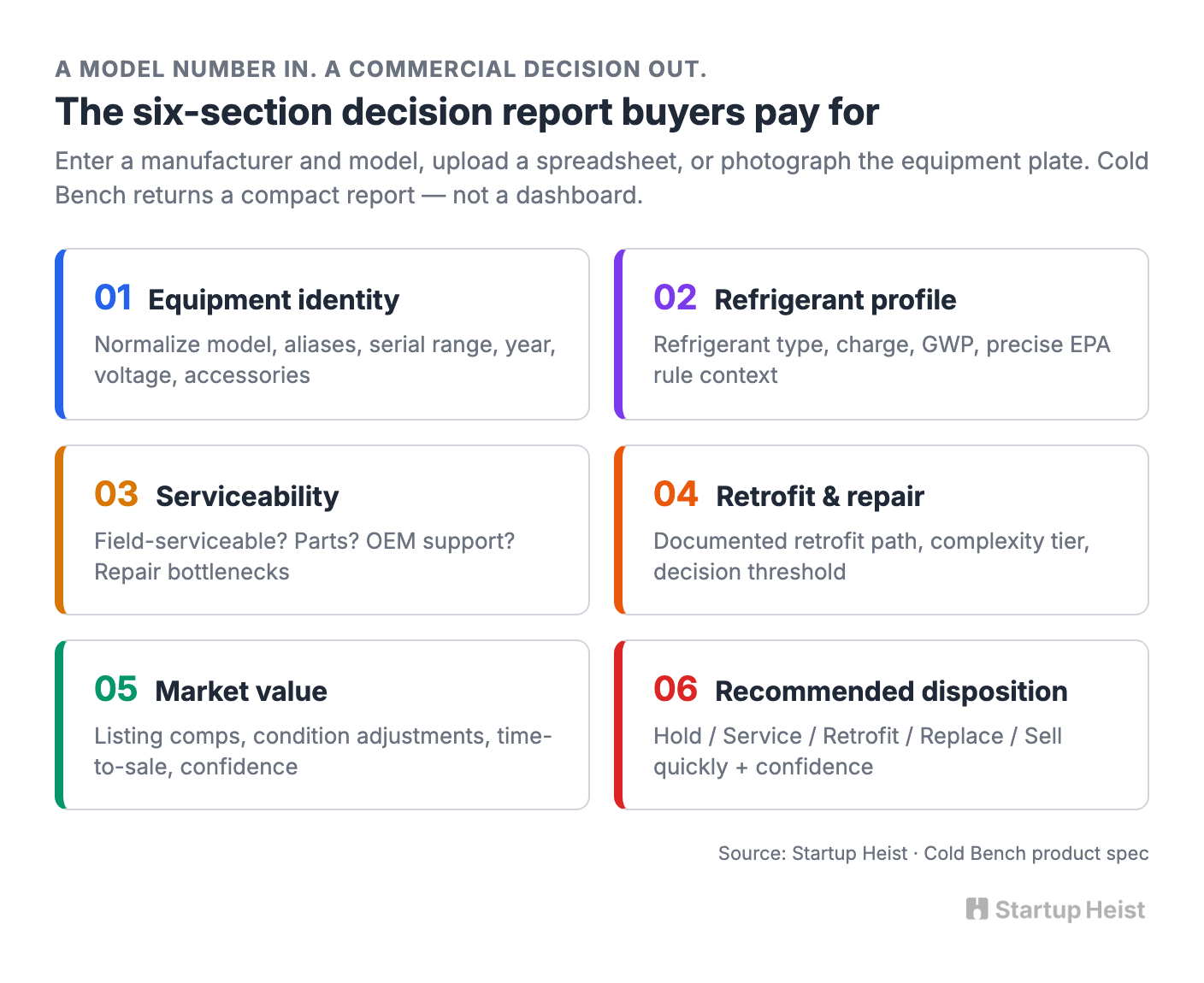
• Six-section decision report buyers pay for
• Four-tier pricing from $49 to $15K
• Dealer cold-email script that converts
• The data flywheel that locks competitors out
This isn't a ban on old equipment. Labs won't wake up on January 1, 2028, to find every legacy centrifuge illegal. Existing units can still be serviced, and legacy refrigerants will remain available to maintain installed assets.
But the problem doesn't go away. It gets messier.
A university lab manager, a biotech operations lead, an auction house, or a used-equipment dealer still has to answer a string of expensive questions. What refrigerant is inside this exact model? Is it worth refurbishing? Are parts and qualified technicians available? Does a lower-GWP retrofit exist? Will the unit hold resale value as buyers grow cautious? Should we hold it, repair it, retrofit it, discount it, or sell it fast?
Those questions are the opening.
Build Cold Bench, a specialized intelligence service for scientific refrigeration equipment. Start with refrigerated centrifuges and laboratory shakers. Turn a model number, a serial plate, or an inventory spreadsheet into a clear commercial decision. The wedge isn't generic compliance software. It's a dealer-grade pricing and risk engine for cold lab equipment.
The overlooked asset class
Laboratory equipment has a surprisingly active secondary market. Labs close. Biotech companies run out of funding. Universities upgrade. Pharma consolidates sites. Dealers buy entire rooms of instruments, refurbish the useful pieces, and resell them to smaller labs that can't justify full OEM prices. Surplus Solutions alone lists equipment from more than 1,200 brands across 120 categories. American Laboratory Trading runs 30,000 square feet of inventory.
Refrigerated equipment is the attractive corner of that market because it's valuable, necessary, and hard to evaluate casually. A basic used laboratory shaker might fetch a few thousand dollars. A refrigerated Thermo Scientific MaxQ floor shaker has listed around $8,495. A tested stacked MaxQ system has listed around $13,900. A 2021 INFORS Multitron triple-stack with CO₂ and humidity control has appeared near $72,500. A smaller MaxQ 4000 incubator shaker has been offered at $3,656.
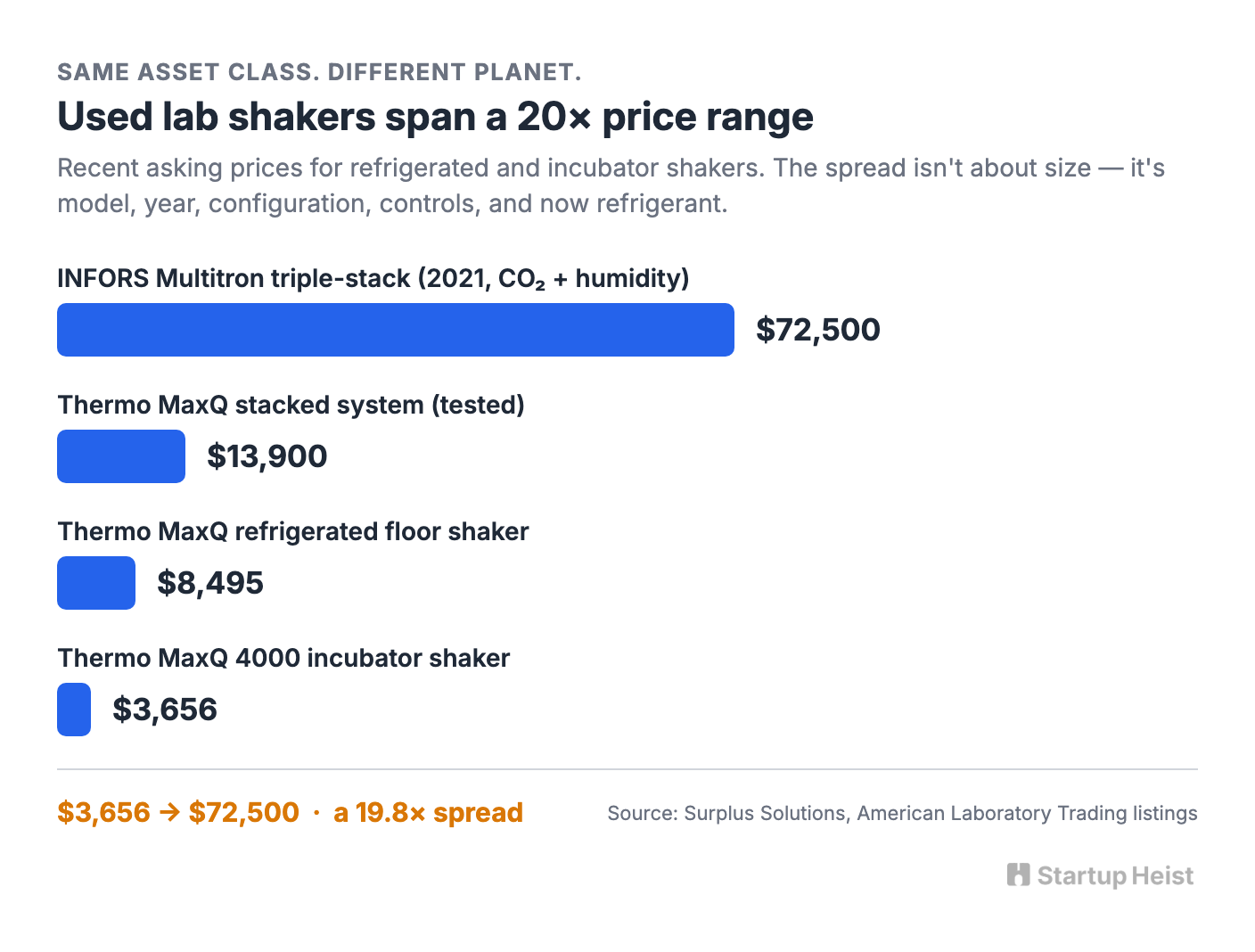
That spread isn't just about size. Value depends on model, year, configuration, accessories, temperature range, control precision, maintenance history, parts availability, warranty, shipping complexity, refrigerant system, and the buyer's confidence that the machine won't become a repair project after delivery. Refrigerated centrifuges add their own trap: a 20-year-old floor ultracentrifuge can run perfectly and still be a bad buy if the correct rotor can't be sourced, and warranty coverage on used units is often thin.
Now add refrigerant uncertainty. The market already demanded specialist judgment. The HFC transition adds one more variable most buyers can't read off a product listing. That's what Cold Bench sells: not a database for its own sake, but faster and more disciplined judgment on used lab equipment pricing.
Why the footnote matters
EPA's extension is narrow. It covers refrigerated laboratory centrifuges and shakers within a specific industrial-process-refrigeration subsector. It doesn't automatically apply to every refrigerated asset in a lab.
That narrowness is the opportunity. A broad policy announcement attracts consultants, major software vendors, and corporate compliance teams. A highly specific rule change affecting machines that sit in the back rooms of universities, biotech startups, and refurbishment warehouses attracts almost no one.
Yet the rule exposes a deeper commercial truth: cold lab equipment isn't a uniform asset class. A refrigerated centrifuge is more than a metal box with a compressor. A shaker running microbial cultures may need a wide temperature range held to a tenth of a degree. The future value of a machine depends on the exact use case, which means a lab manager can't solve the problem with a generic HFC phasedown chart, and a dealer can't solve it by glancing at the manufacturer logo. The answer lives at the model level, which makes this a classic vertical-data business.
The first customer is not the lab manager
The tempting version of Cold Bench is a lifecycle-management platform for laboratories. Don't start there. Universities move slowly. Lab managers are busy. Small biotechs feel no urgency until something breaks. Enterprise buyers already own asset-management systems and procurement committees. You can spend a year building a polished product and still struggle to get a pilot approved.
Start where the pain is already attached to a transaction. Used-equipment dealers, auction houses, lab-closure specialists, and asset-disposition teams inspect inventory constantly. They decide what to buy, how much to pay, whether to refurbish, what to list, and when to discount. A pricing mistake isn't an abstract inconvenience. It sits in the warehouse and eats cash.
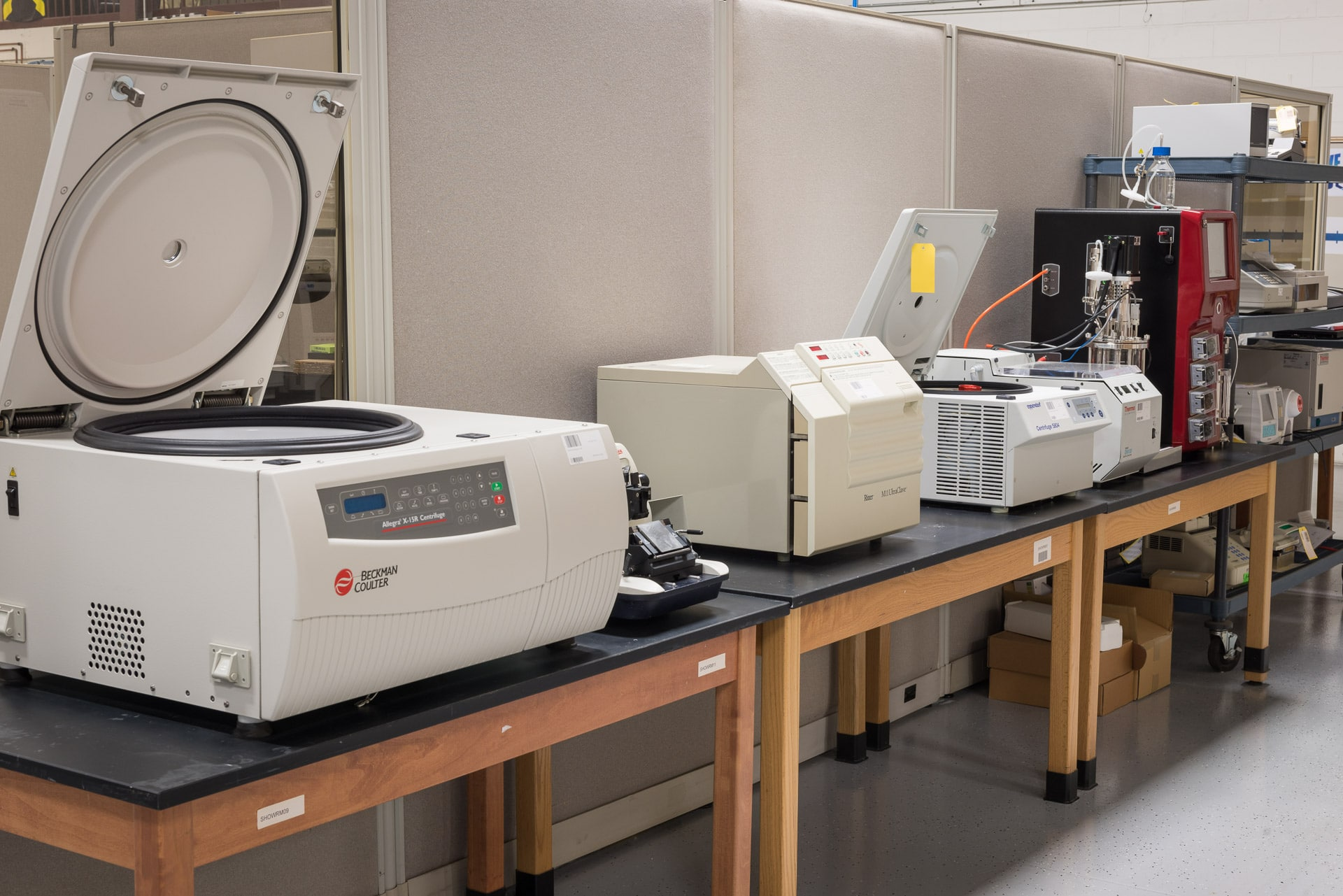
A dealer evaluating a refrigerated shaker lot doesn't want another dashboard. The dealer wants an answer: acquire below $2,800, budget $600 to $1,200 for inspection and probable service, the refrigerant profile is manageable today but faces a widening resale discount, list within 90 days, don't over-refurbish. That's a product. The initial promise is simple: upload your cold-equipment inventory, get back a prioritized triage report showing what to stock, what to inspect, what to discount, what to avoid, and what to sell before the market becomes less forgiving.
What Cold Bench actually does
Unlock the Vault.
Join founders who spot opportunities ahead of the crowd. Actionable insights. Zero fluff.
“Intelligent, bold, minus the pretense.”
“Like discovering the cheat codes of the startup world.”
“SH is off-Broadway for founders — weird, sharp, and ahead of the curve.”


