


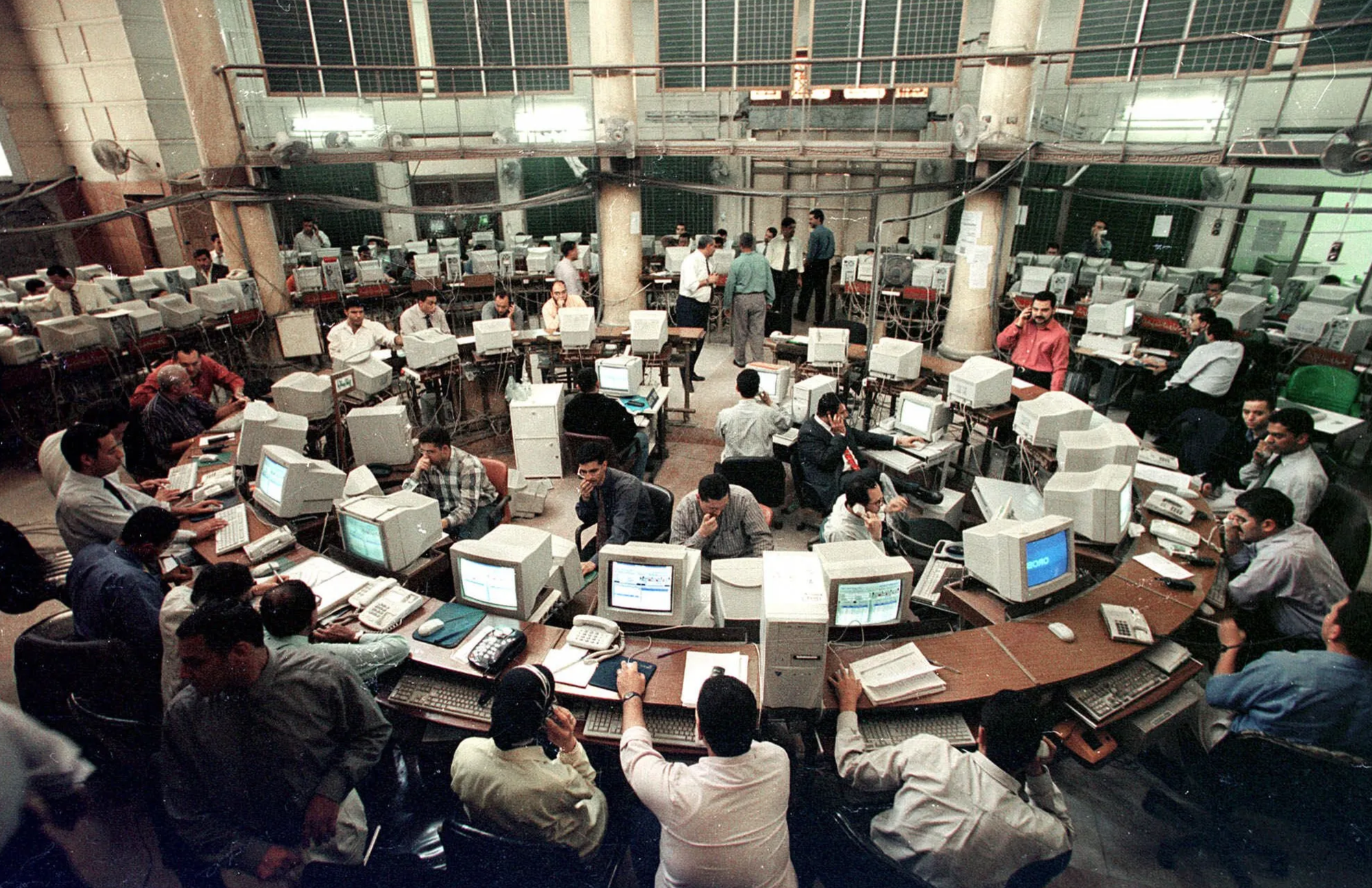
American businesses and the federal government spent more than $100 billion getting ready for January 1, 2000. Gartner put the global bill somewhere between $300 and $600 billion. The federal share of that ran about $8.5 billion.
Then the date arrived and the lights stayed on.
That became the joke. Y2K went into the culture as the great overreaction, the thing your uncle stockpiled canned goods for. Twenty-six years later it's shorthand for media hysteria.
The bug was real and it got fixed. Thousands of person-years went into hunting two-digit year fields through code nobody had opened in a decade, rewriting them before the clock rolled over. The reward for all that work was that nothing happened.
Prevention erases its own evidence. Which is a miserable deal if you want credit, and a fine one if you want to get paid.
There's a version of it running right now.
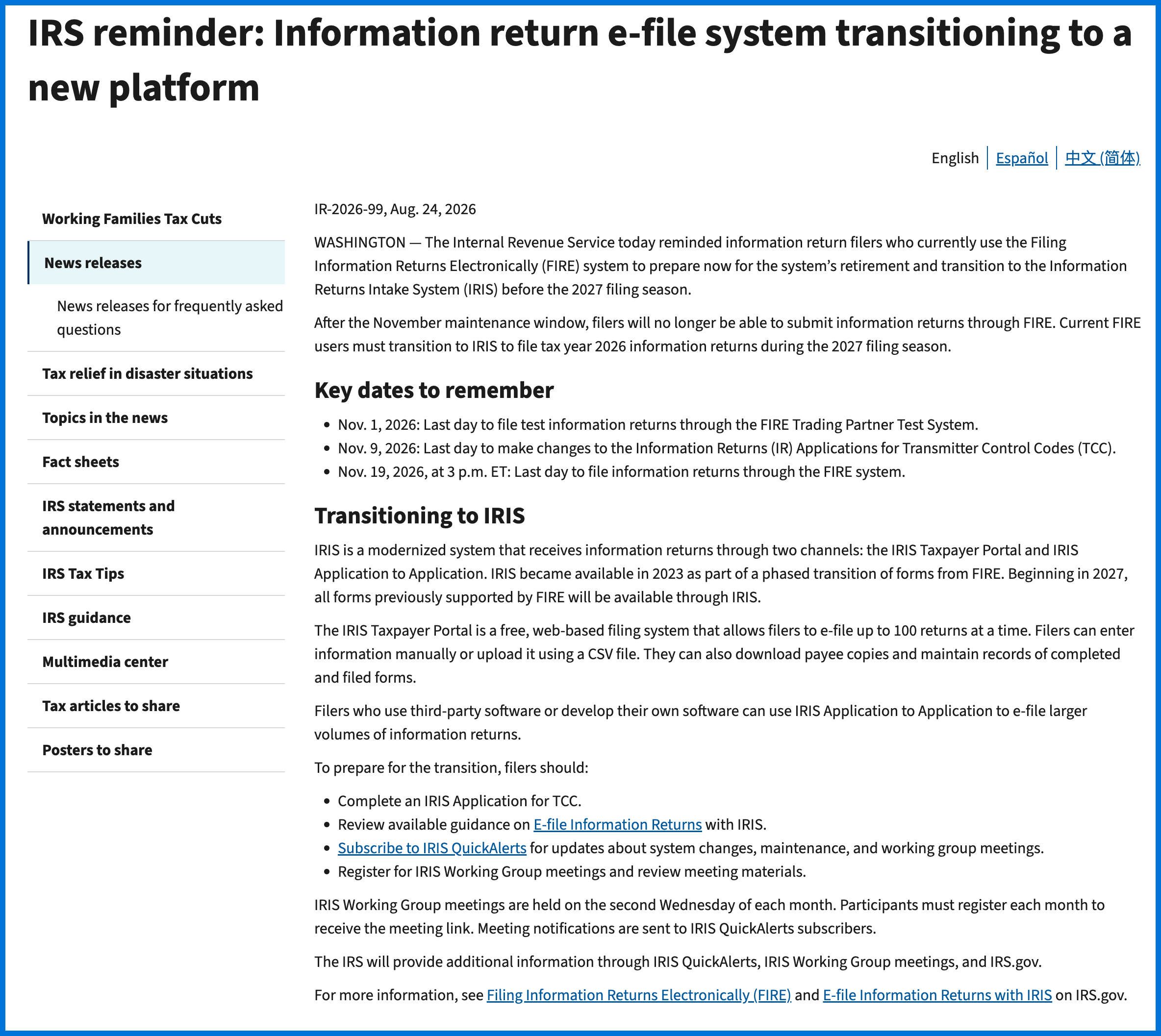
On August 24 the IRS put a date on FIRE, the system that has carried 1099s and related information returns for decades. November 19 at 3 p.m. Eastern is the last production file it will ever accept. In 2027 everything moves to IRIS.
The pain doesn't land in November. It lands in January, when a firm sits down to file tax-year 2026 returns and finds the pipeline it has used for ten years has nowhere to send its output. A twelve-person accounting firm with 180 small-business clients pulls its data from QuickBooks Desktop, a payroll app, spreadsheets, and two systems nobody there can name. A property-management SaaS built in 2009 hands over a fixed-width Publication 1220 file from a year-end module whose developer left in 2017.
Don't build another filing company. That shelf is full: Tax1099, Avalara, Yearli, and W2 Mate at about $89. Build the diagnostic that sits upstream of them: the thing that tells a firm whether its actual data survives the switch and exactly what has to change before January. One forced filing season, priced from the bottom: 100 workspaces at $349, 40 firm licenses at $2,400, and 20 implementation sprints at $2,000 runs about $171,000.
Read the full playbook here:
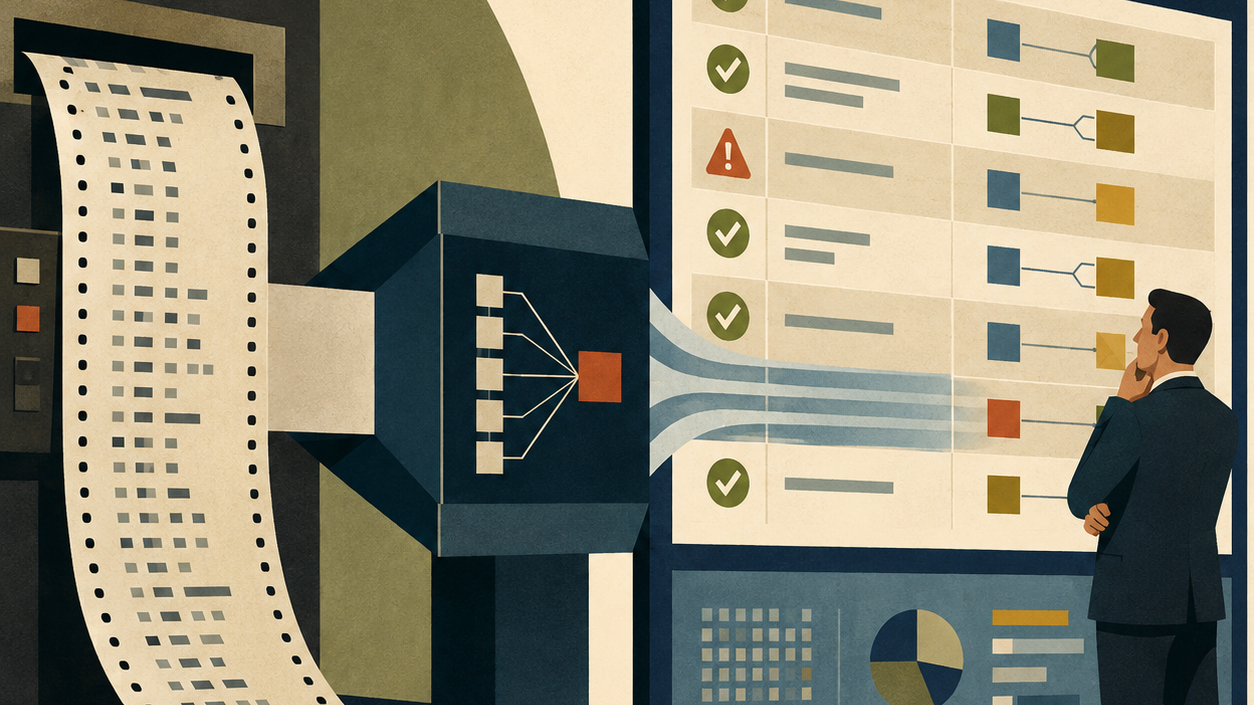
The IRS retires FIRE on November 19, forcing every 1099 workflow onto IRIS by January. The gap isn't filing software. It's knowing whose data survives the switch.
From the Vault:

Starship pulls 1,200 robots off 60-plus campuses after this school year. Five restaurants, twelve blocks, one e-bike fleet, and the late-night shift stops costing 30%.

The fractional executive market is $5.7 billion and layoffs refresh the supply weekly. A two-week productized sprint turns a senior operator's expertise into a credible B2B publication.


