


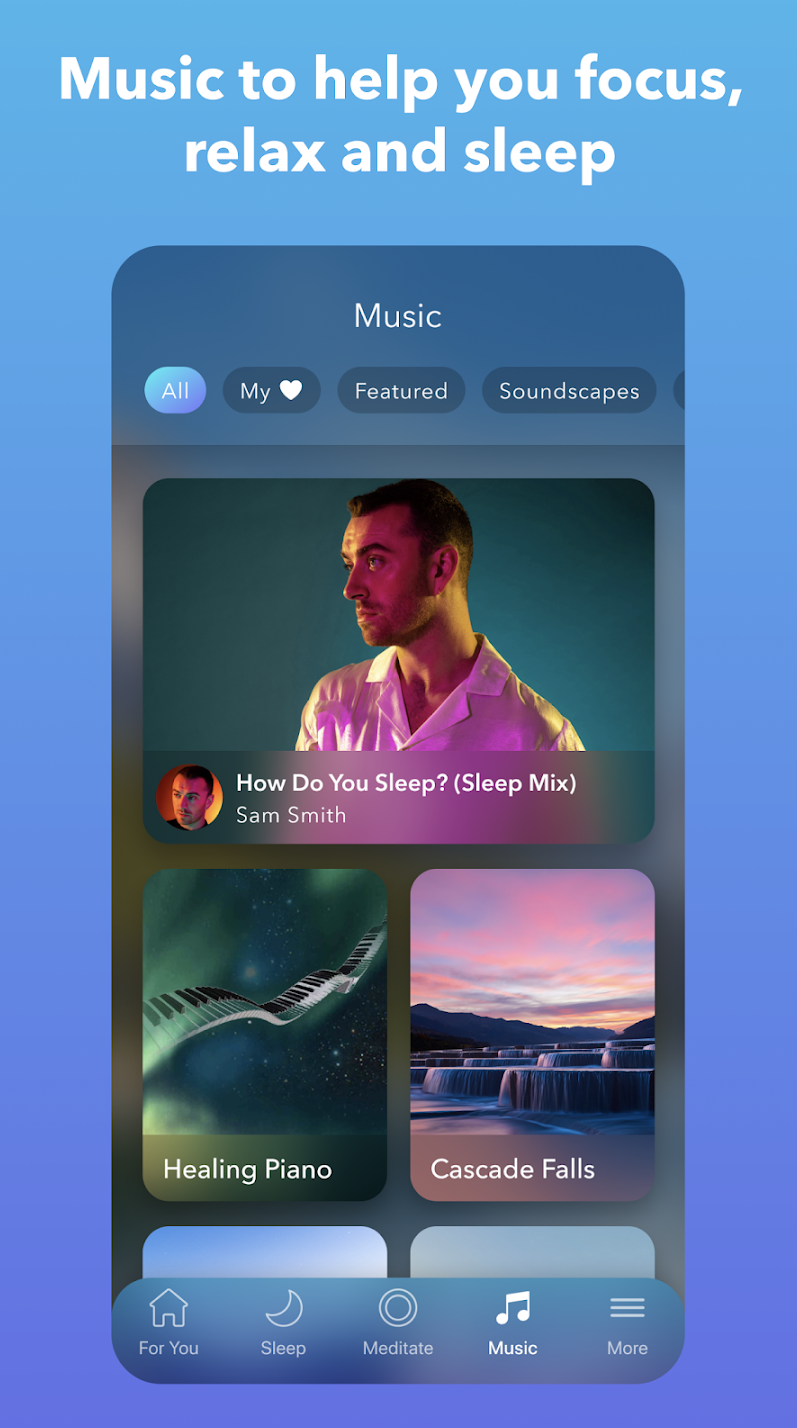
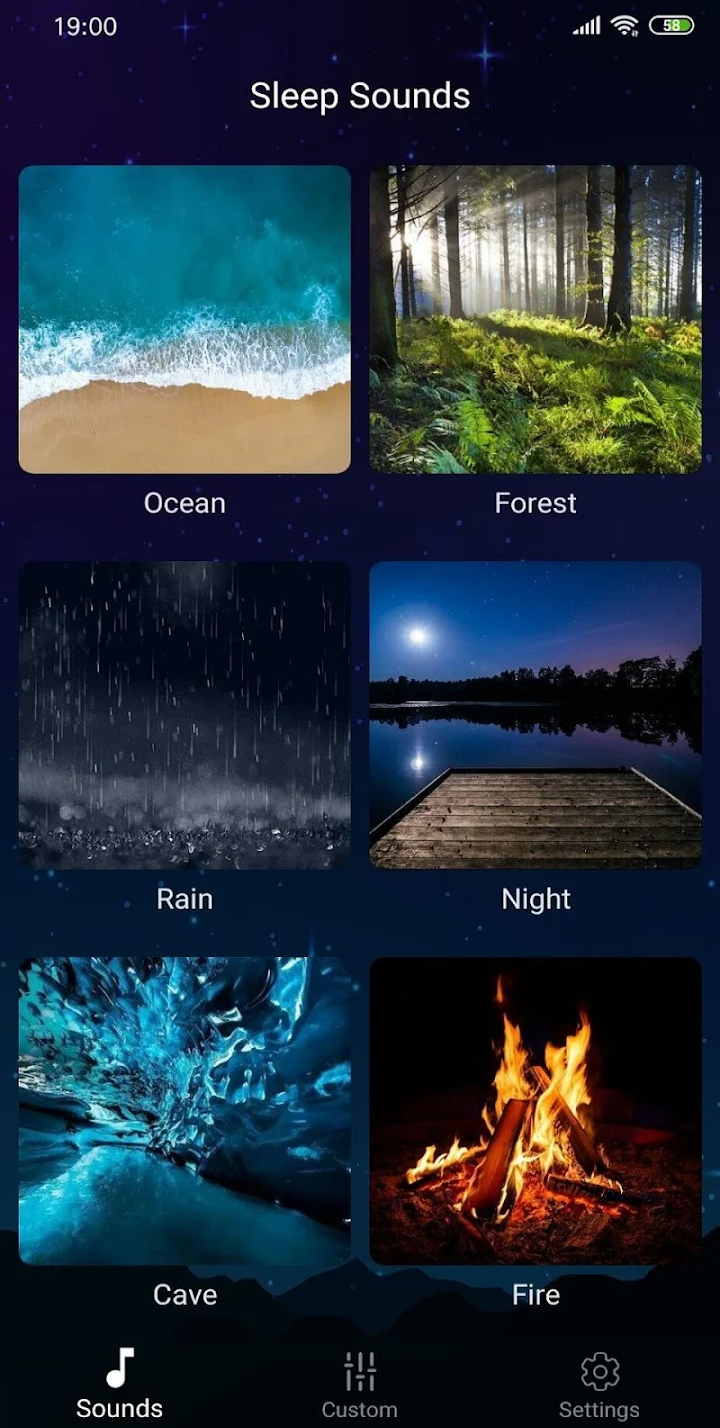
Every sleep app on your phone is a content library with a play button. Calm sells you rain sounds. Headspace sells you a British man's voice. Endel sells you algorithmically generated ambiance. They all share one fatal assumption: that the audio itself is what people are paying for.
People pay for outcomes. Nobody owns the outcome yet.
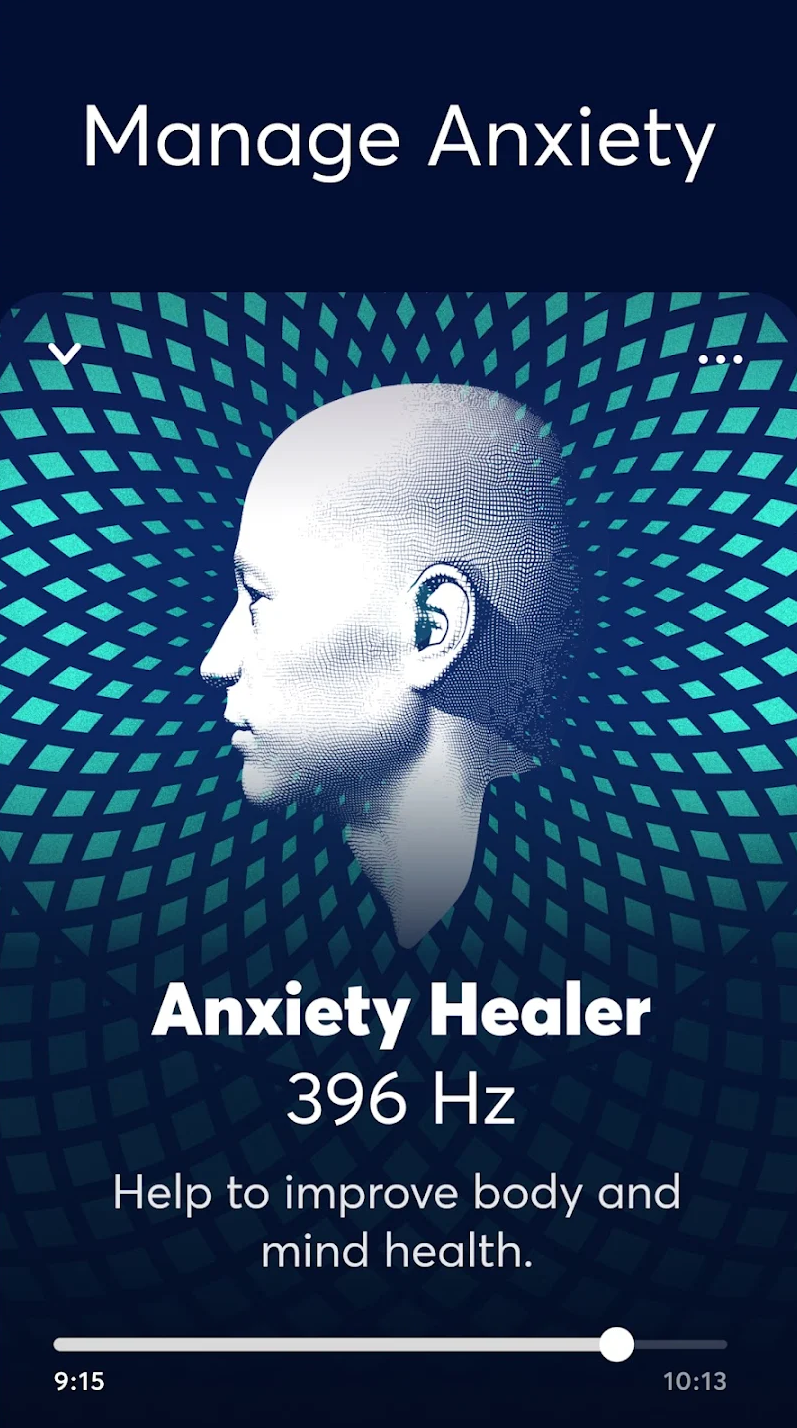
This health tech startup ideas is a closed-loop nervous-system intervention layer. Software that reads your physiology through a wearable you already own, adapts audio stimuli in real time, and proves it downshifted your body from "wired" to "settled." Measurable deltas in heart rate, HRV proxies, and breathing regularity.
At $12.99–$19.99/month with a session-based model that justifies premium pricing over content-only competitors, a conservative first year gets you to $70K MRR. Year two, with personalization and a coach/therapist wedge, $350K+ MRR is realistic.
The billion-dollar sleep app market is growing at 14.6% CAGR and projected to hit $2.79 billion by 2032 — and every major player is still selling content. The team that owns the biometric proof layer eats their margin from underneath.
If you've been hunting for a wearable app business idea or a micro-SaaS play in the wellness automation space, this is the one worth reading slowly.
Why Now
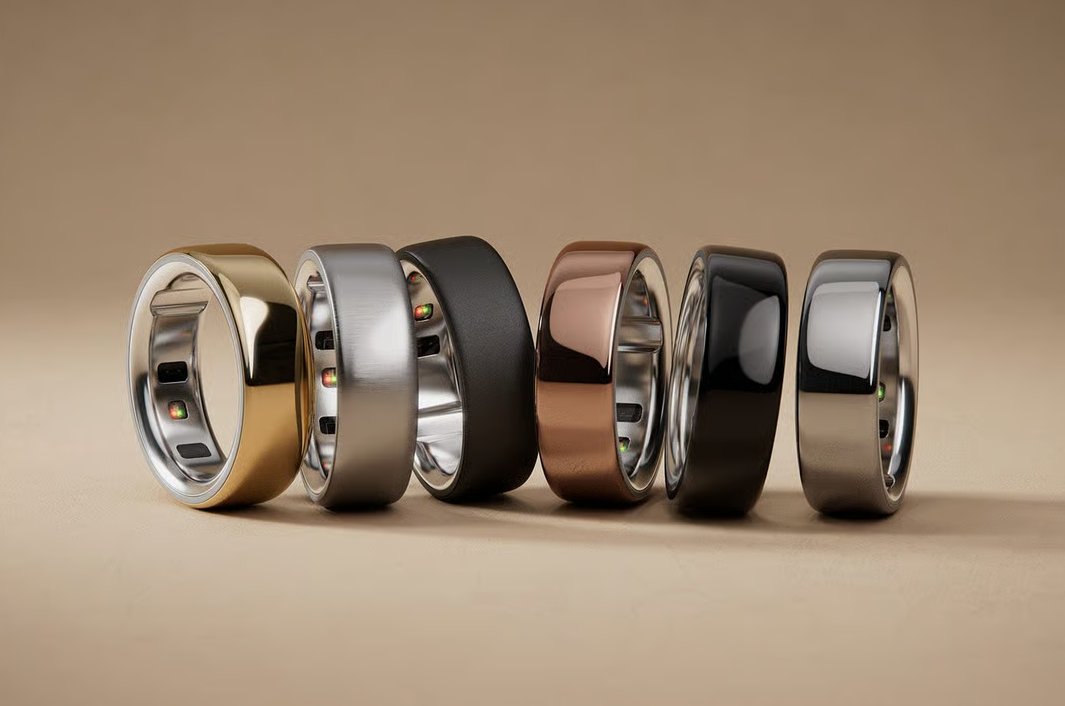
Wearables are already sensors. Apple Watch continuously measures heart rate and exposes it to developers. Roughly 100 million are on wrists globally. Add Garmin, WHOOP, Oura, Samsung. The hardware problem is solved. What to actually do with that data in real time remains wide open.
Regulatory clarity just improved. FDA's updated "General Wellness: Policy for Low Risk Devices" guidance, issued January 6, 2026, explicitly covers wearables and software that use non-invasive sensing to estimate physiologic parameters like heart rate variability, provided claims stay wellness-focused and avoid clinical language. A product that reads heart rate, adapts audio, and displays a "regulation score" can ship without FDA device clearance — as long as you never claim to diagnose, treat, or monitor a disease. Design your marketing language to stay on the "wellness / healthy lifestyle" side from day one. No clinical thresholds, no disease references, no "medical-grade" claims.
Consumers want receipts. WHOOP built a $3.6 billion valuation selling people their own recovery data. Oura hit an $11 billion valuation and expects close to $2 billion in 2026 sales — built on a sleep score and a ring. Measurable outcomes are stickier than subjective feelings, and shareability drives organic growth.
Clinical science backs this up. A 2025 Frontiers in Psychology feasibility study demonstrated that AI-driven music paired with real-time HRV biofeedback via wearables reduced anxiety. A Scientific Reports randomized controlled trial found that an 18-day smartphone-based HR biofeedback protocol produced a meaningful cut in perceived stress. And a JMIR workplace review reported that 89% of biofeedback studies showed positive stress and mental health outcomes, with mobile breathing-based apps leading the pack. Audio-driven biofeedback interventions produce measurable physiological change. The missing piece is packaging the closed loop into a consumer-grade experience that ships proof alongside the session.
Competitive Reality
Calm generated roughly $17 million in in-app purchase revenue in Q4 2024 alone, making it the highest-grossing health and fitness app worldwide. Headspace pulled approximately $11 million over the same period. The global sleep app market sits at roughly $1.07 billion in 2025. These are massive businesses built on content. None of them sell biometric feedback loops.
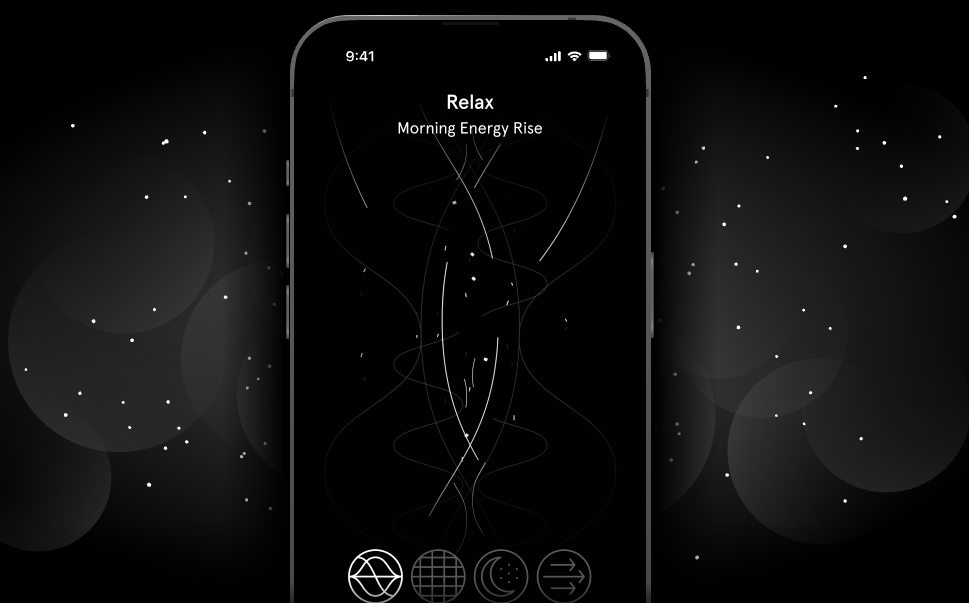
Endel is the closest direct competitor. The company partnered with Warner Music Group, has raised $22 million in funding, and Apple named it Watch App of the Year in 2020. Endel positions itself around "endlessly generated soundscapes" that can incorporate inputs like heart rate — so "adaptive soundscapes + wearables" is validated territory. But Endel's model is still fundamentally content-forward. It adapts ambiance. It doesn't optimize for physiological outcomes, generate a proof card showing your HR dropped 12 bpm in four minutes, or learn a personal regulation model per user.
HeartMath has operated in the biofeedback hardware space for 30 years, selling dedicated sensors ($199+) and training programs. Proven science, but they haven't cracked the consumer-software-only experience. Lief Therapeutics sells a dedicated chest-worn biosensing patch at $99/month with coaching, targeting clinical and therapeutic use cases — generating an estimated $4 million annually. Strong validation of the intervention model, limited by the hardware requirement and clinical framing.
The white space: nobody combines real-time wearable data from devices people already own, adaptive audio that responds to biometric trends, and a proof layer that quantifies the outcome and makes it shareable. Endel proved adaptive sound can build a real business. Lief proved biofeedback interventions produce real clinical outcomes. Your job is to synthesize these into a single product that doesn't require new hardware or clinical framing.
The Real Product: A Regulation Graph
Most wellness apps are content libraries. This product should look like a hidden control system:
Unlock the Vault.
Join founders who spot opportunities ahead of the crowd. Actionable insights. Zero fluff.
“Intelligent, bold, minus the pretense.”
“Like discovering the cheat codes of the startup world.”
“SH is off-Broadway for founders — weird, sharp, and ahead of the curve.”


