


The Ugly Nostalgia Library: A Rights-Cleared Asset Business for the Anti-Stock-Photo Era
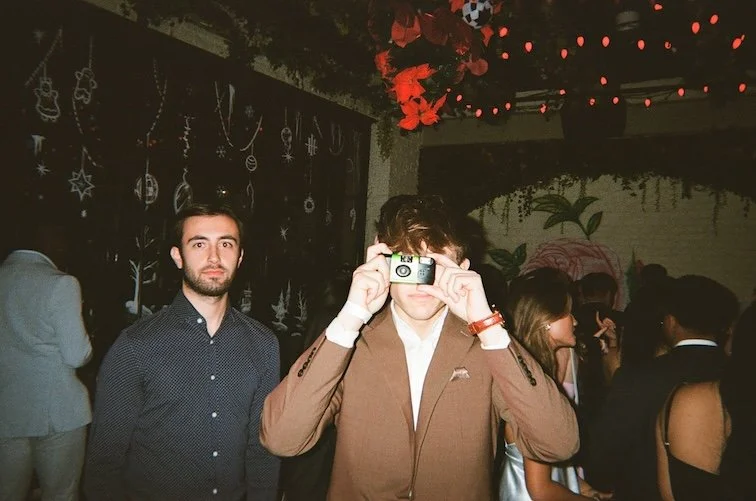
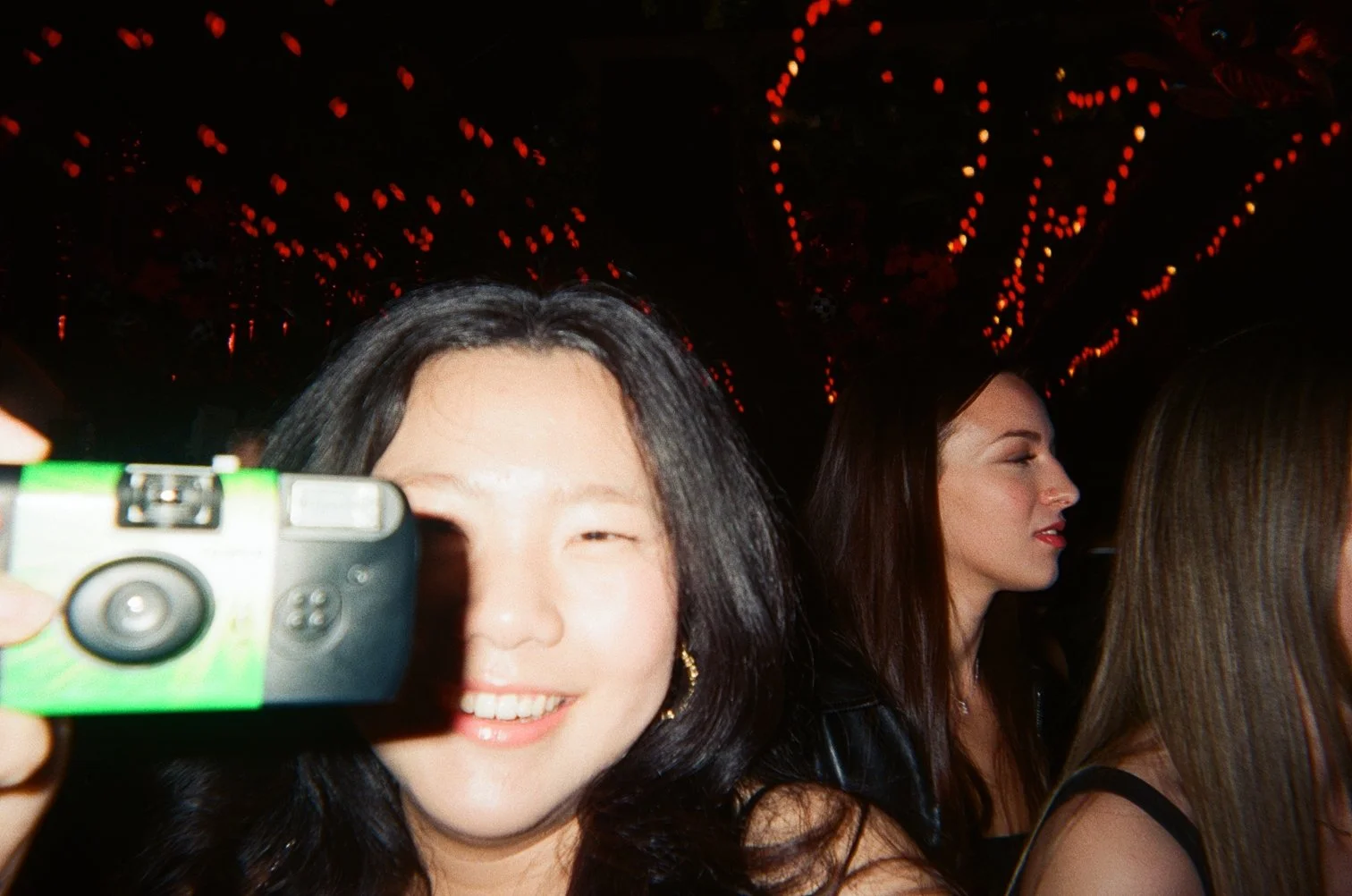
Brands want nostalgia, but not the polished, cinematic, retro-inspired version stock-photo libraries are built to produce. They want awkward flash photos. Mall-kiosk energy. Early internet mess. Disposable-camera lighting. 2004 bedroom walls. Slightly bad family-album composition. Images that look found, never art-directed.
It sounds like a small wedge. Small isn't weak.
The opportunity is a rights-cleared "imperfect nostalgia" library and trend-research tool for agencies, creator brands, freelance designers, and social teams who need authentic-looking 1990s, 2000s, and early-2010s visuals without touching the legal landmine of scraped internet photos.
Here's the shape of the play:
The money: 200 studio customers at $79/month is $15,800 MRR before packs and custom sourcing. Stock photography is a $5.44B market and royalty-free already drives 71.65% of spend.
Inside:
• Six-week MVP scope and starter asset list
• Three-tier pricing plus one-off pack revenue
• Outreach templates for studios and agencies
• Four moats including contributor supply
Nostalgia Has Moved From Moodboard to Media Strategy
Nostalgia isn't a Super Bowl trick or an anniversary-campaign reflex anymore. It became a mainstream creative device because it solves a modern advertising problem: trust. Generative AI made glossy mockups, stylized portraits, and cinematic product visuals nearly free to produce. The more polished everything gets, the more fake it feels. The ugly stuff works for that exact reason.
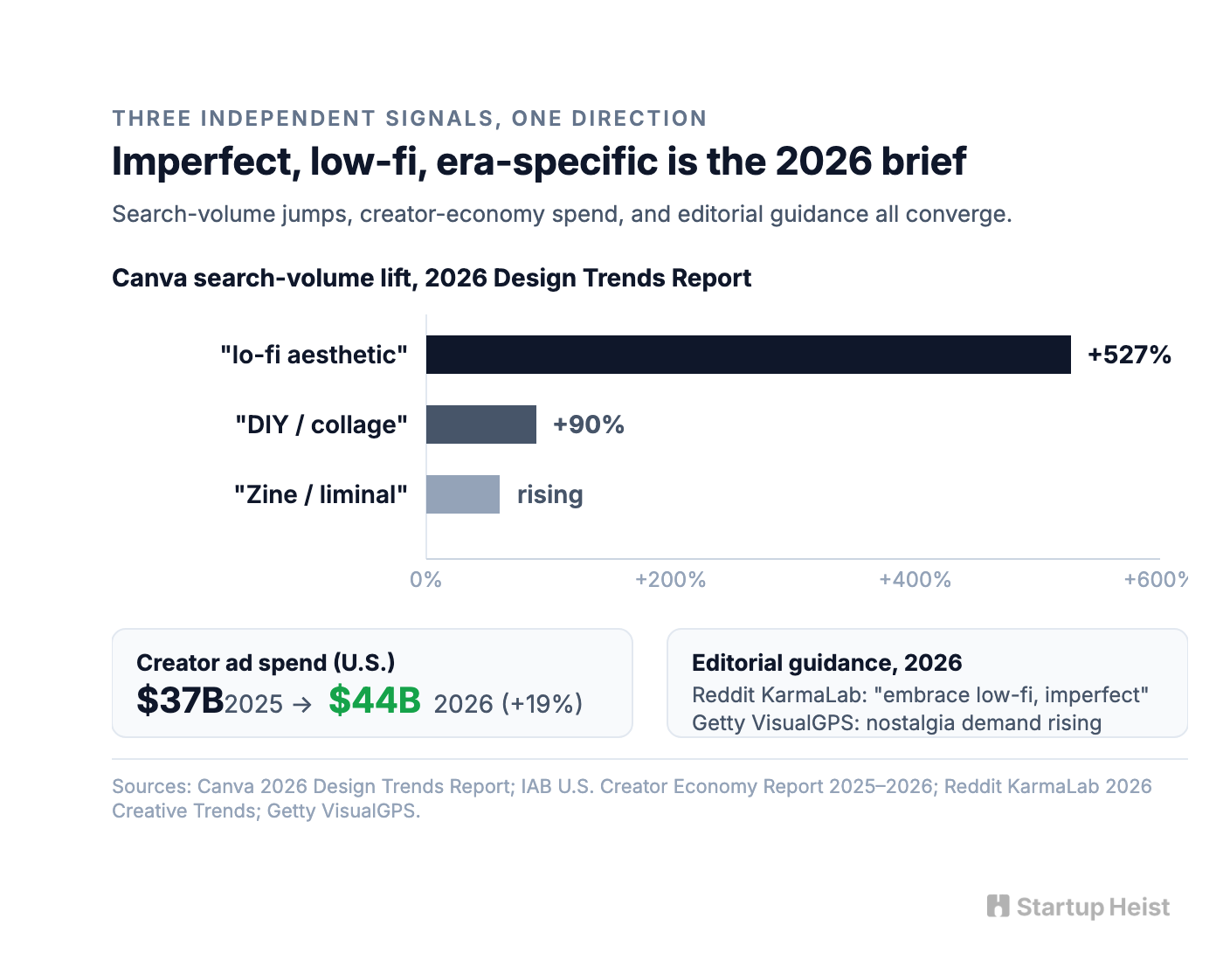
Three independent sources tell the same story. Reddit's 2026 KarmaLab creative trends report tells brands to "embrace low-fi, imperfect creative executions" because nostalgia is "rarely glossy" and recommends pulling from brand archives. Getty VisualGPS research is tracking rising consumer demand for nostalgia-leaning imagery, with the sharpest lift showing up in Asia-Pacific downloads. Canva's 2026 Design Trends Report calls the year "Imperfect by Design": searches for "lo-fi aesthetic" are up 527%, DIY and collage searches are up 90%, and Zine-inspired and liminal aesthetics are climbing alongside.
Two audiences drive the wave. Millennials engage with nostalgia as direct memory. Gen Z engages with the same era as aesthetic, a stand-in for emotional safety absent from today's hyper-optimized digital world. The wedge is believability, dressed up as retro.
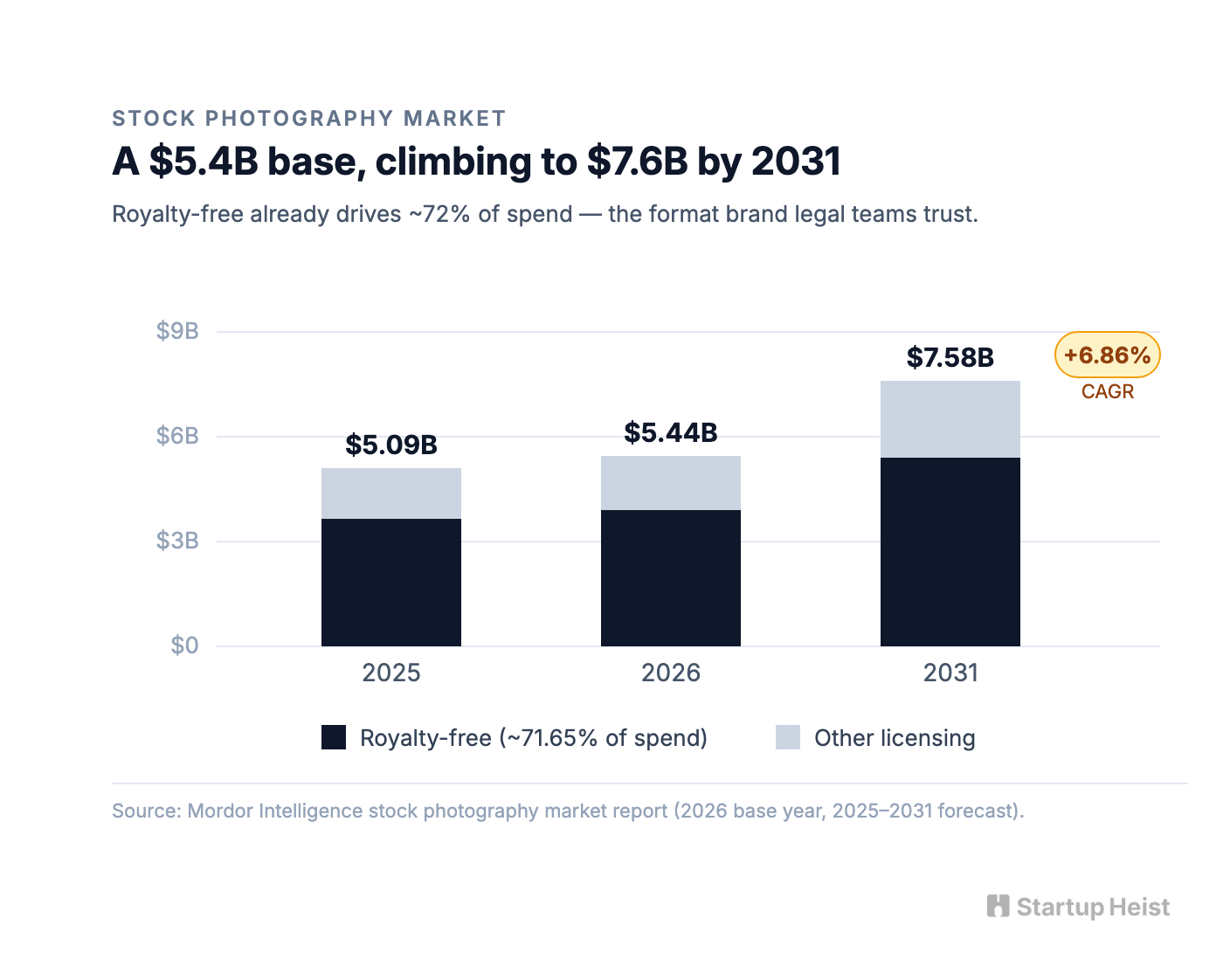
The market is large enough to reward niche suppliers. Mordor Intelligence sizes the stock photography market at $5.44 billion in 2026, climbing to $7.58 billion by 2031 at a 6.86% CAGR. Royalty-free deals account for 71.65% of 2025 spend, about $3.65 billion, because predictable usage rights match enterprise risk tolerance. Getty itself reported Q4 2025 revenue of $282.3 million on the back of two large licensing deals tied to display rights and AI training data. Layer on creator marketing. IAB projects U.S. creator ad spend at $37 billion in 2025, growing four times faster than the broader media industry, with a 2026 forecast near $44 billion. That tells you where the next wave of buyers comes from.
The first buyer isn't WPP. It's the overstretched creative director at a DTC agency, the freelance designer making ten social concepts a week, the creator-brand founder whose visuals can't look like Canva, and the small social team trying to brief UGC-style content without burning two days on sourcing. This is a painkiller dressed up as a vibe product.
"Authentic" Images Are Hard to Buy Safely
Every creative person knows the loop. You search Getty, Shutterstock, Unsplash, Pexels, Pinterest, Reddit, Tumblr, Flickr, the Internet Archive, Wikimedia, and a forgotten blogspot from 2007. You find the perfect image. Then the questions begin. Can we use this commercially? Is the person identifiable? Do we need a model release? Is the license real? Is the image public domain worldwide or only in one jurisdiction? Will the client's legal team approve it?
The friction itself is the product.
Adobe Stock's contributor guidelines require a signed model release for any image with a recognizable person, where recognition can come from personal characteristics like tattoos and birthmarks, plus external markers like clothing, equipment, or location. The underlying rule is right-of-publicity law: a personal release permits commercial use of someone's likeness, and most platforms require one before an asset can be sold for commercial use. Public-domain status is messier than it looks. The U.S. Department of the Interior tells users that public-domain works can be used without permission but warns agencies don't warrant legal status, and the National Archives notes that a small percentage of its photographic records remain under third-party copyright the archive itself doesn't verify.
Publicly visible doesn't equal commercially usable. Viral doesn't equal licensed. Reddit-famous doesn't equal safe for a brand campaign. The valuable business sits underneath the image search box: a confidence layer that tells a buyer this asset is safe to ship.
Why the Incumbents Leave the Gap Open
The giants are playing a scale game. Getty and Shutterstock are mid-merger, a deal valued at roughly $3.7 billion, cleared unconditionally by the U.S. DOJ in February 2026 and still under in-depth UK CMA review with a final decision due June 14, 2026. The CMA's provisional concerns sit in UK editorial content, not the global creative-stock market. The part of the business that matters for this opportunity is expected to consolidate. Two things follow. Licensed imagery is valuable enough to consolidate around, and the incumbents are optimized for breadth, not weird specificity. A startup shouldn't compete with Getty on "all images." It should compete on "the 500 specific assets and reference packs your creative team needs this week."
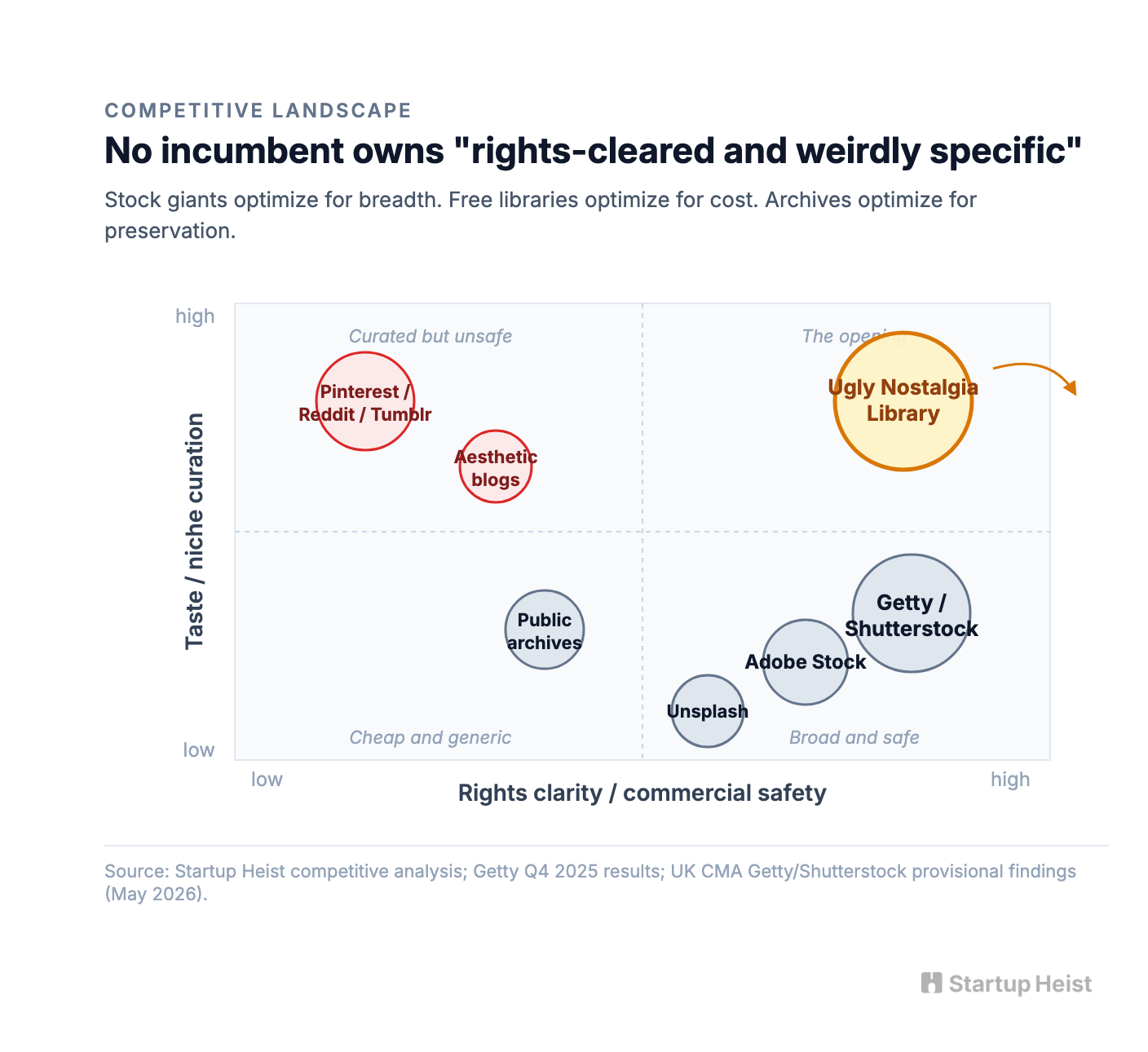
Free libraries have the opposite weakness. Unsplash and Pexels solve cost, not taste. They're overused, visually obvious, useful for "person using laptop in coffee shop" and useless for "real early-2000s amateur birthday party with no obvious brand logos, cleared for ad concepting." Public archives — the Library of Congress, Wikimedia, regional digital libraries — are raw material, not products. Discovery is bad. Metadata is inconsistent. Rights vary by item. The creative buyer doesn't want to become an archivist.
A second tailwind is making this gap hotter, not just wider. Brand legal teams are increasingly demanding provenance documentation on every asset that ships in a campaign. The Stability AI v. Getty UK ruling in late 2025 made it harder to attack AI training on scraped imagery in court, which has the perverse effect of pushing risk-averse buyers toward provably clean supply. As scraped supply chains become legally fraught, rights-cleared archives shift from "nice to have" to a premium category that brand counsel can sign off on.
The startup's job is to do the annoying work once and sell the result repeatedly. The gap is wide enough to walk through.
The Product: A Rights-Cleared Ugly Nostalgia Search Engine
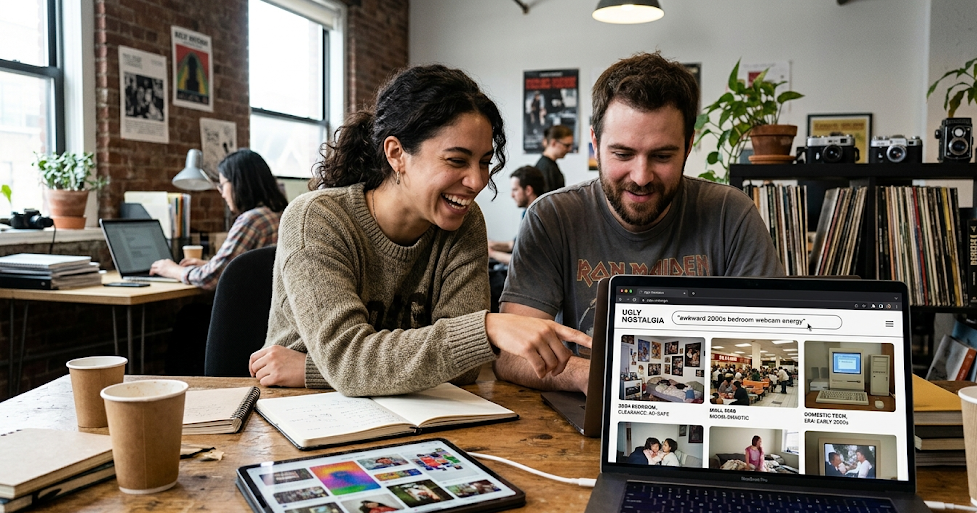
A creative team logs in and searches the way creative people actually talk:
- "awkward 2000s bedroom webcam energy"
- "mall food court 1998"
- "early blog era desk setup"
- "disposable camera party but brand-safe"
- "family computer room 2003"
- "teen magazine collage wall"
- "retro office training video"
- "suburban garage band practice"
The platform returns curated collections of legally usable assets and reference packs, each tagged by era, mood, texture, use case, rights status, and clearance level. The first version doesn't need millions of assets. It shouldn't have millions. Curation is the point. Start with 2,000 to 5,000 high-quality, heavily tagged assets and references. Enough, if the library feels unusually specific.
The product has three layers:
Unlock the Vault.
Join founders who spot opportunities ahead of the crowd. Actionable insights. Zero fluff.
“Intelligent, bold, minus the pretense.”
“Like discovering the cheat codes of the startup world.”
“SH is off-Broadway for founders — weird, sharp, and ahead of the curve.”


