


You've seen the Dunning-Kruger study on every LinkedIn carousel since 2019. The usual takeaway: incompetent people think they're great.
That's the boring half.
The part nobody quotes is what Kruger and Dunning found on the other end of the curve. Top performers — people scoring in the 90th percentile — consistently underestimated their own ability. They assumed they were barely above average.
The researchers called it a "dual burden." Low performers lack the skill to recognize skill. High performers assume everyone else finds it just as easy.
Now apply that to AI. The most capable models on the market are being chronically underused — not by beginners, but by competent people who figure a basic prompt is good enough. Both sides of the prompt bar are leaving value on the table, and neither one knows it.
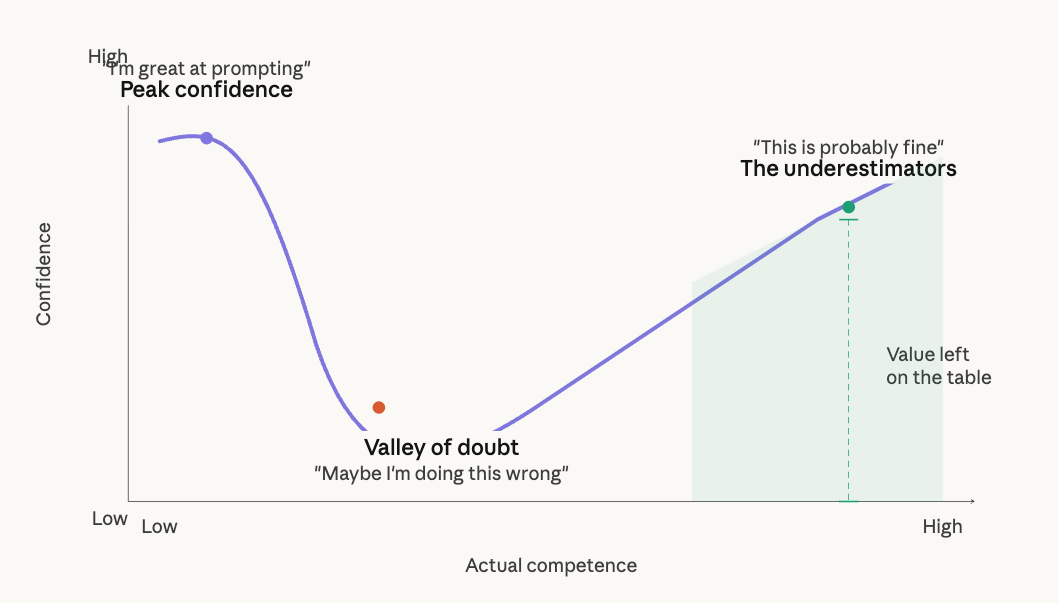
Competence creates its own ceiling. So does the assumption that your tools have one.
That gap is where today's opportunity lives.
Today's Featured Startup Idea: Build a "Grammarly for AI Work" — The Prompt Coaching Layer
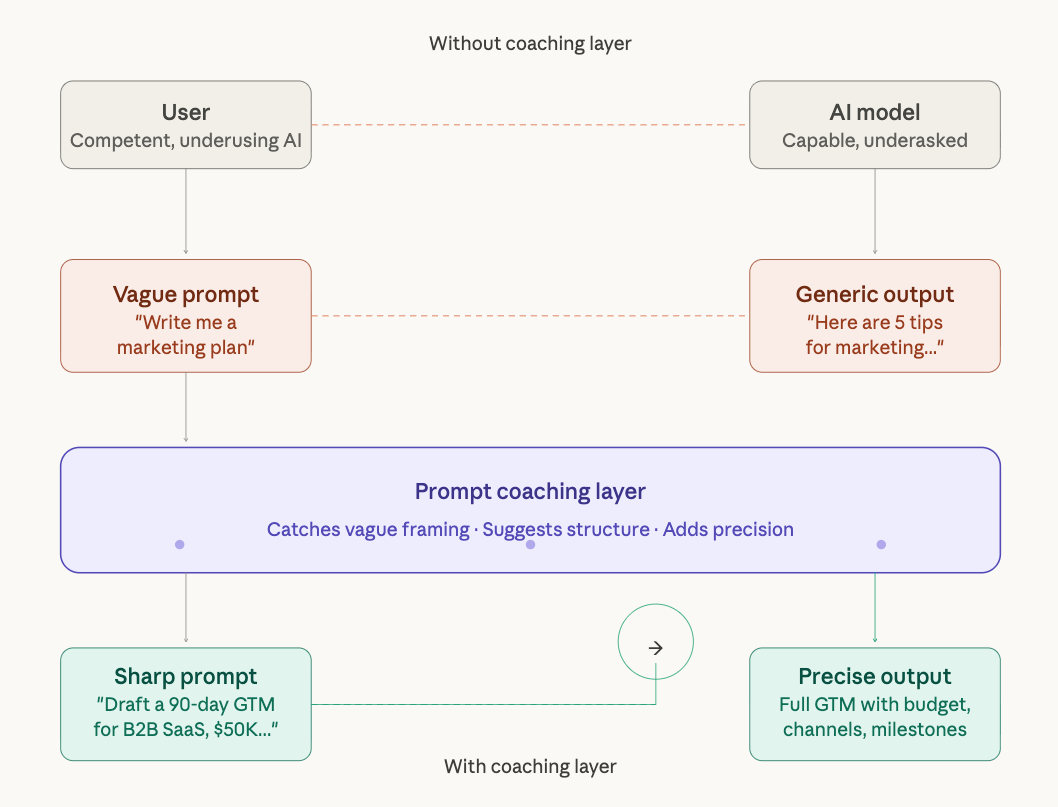
Grammarly didn't replace the writer. It gave the writer leverage. Now imagine that same real-time feedback layer sitting between a user and their AI tools — catching vague prompts, suggesting sharper framing, turning a mediocre ask into a precise one.
A coaching layer that makes every AI interaction measurably better, and makes the user feel the difference.
The prompt engineering market is wide open, and the business model is proven: SaaS, usage-based, embedded in existing workflows. We're projecting $20K–$100K MRR for a lean team that moves fast. If you're looking for a profitable startup idea or a side business you can build solo, this is the one to read.
Read the full playbook here:

78% of companies use AI but only 1% call their rollout mature. The missing layer is not better models — it is usage analytics and real-time coaching for the teams already inside the prompt box every day. A B2B SaaS opportunity mapped to a $4.5 billion market.
From the Vault:

Every creator outlier tool flags the winners. None of them explain why a 3,000-follower account just pulled 120K views — or how to replicate it. That interpretation layer is a wide-open micro-SaaS opportunity.

AI tools now drive more product discovery than traditional search. Brands have no system for tracking or correcting how ChatGPT, Gemini, and Perplexity describe them. A vertical AI brand-monitoring SaaS startup idea with enterprise-grade pricing and a clear path to defensible data moats.


