


The 40-Seat Fandom Café: Turn Indie Characters Into Prepaid Nights Out
Japan runs nostalgia through a café format with a reservation fee, a collectible, and a ¥2,300 curry. The American version for independent creators skips the kitchen and keeps the prepaid seat.
On October 22, 2026, the Heisei Fancy Café opened inside BOX cafe & space at SHIBUYA109, Tokyo's youth-fashion landmark. The headliners are five "fancy goods" mascots from the stationery makers Kamio Japan and CRUX, including Happy March and Hamuhamu Cafe, characters that decorated Japanese pencil cases and sticker books during the Heisei era. There's no anime tie-in and no blockbuster franchise behind them. Guests pay ¥550 just to reserve a seat and receive a holographic sticker (one of six designs) for the privilege. Then they order a ¥2,300 Happy March star curry and a ¥990 themed drink. The Tokyo run closes December 6, and a second location at KITTE Osaka runs November 12 through December 20.
Each purchase sets up the next one. The character justifies the reservation, the reservation fills a table, and the table sells food that gets photographed before the sticker goes home in a bag. One license produces four or five purchases per guest.
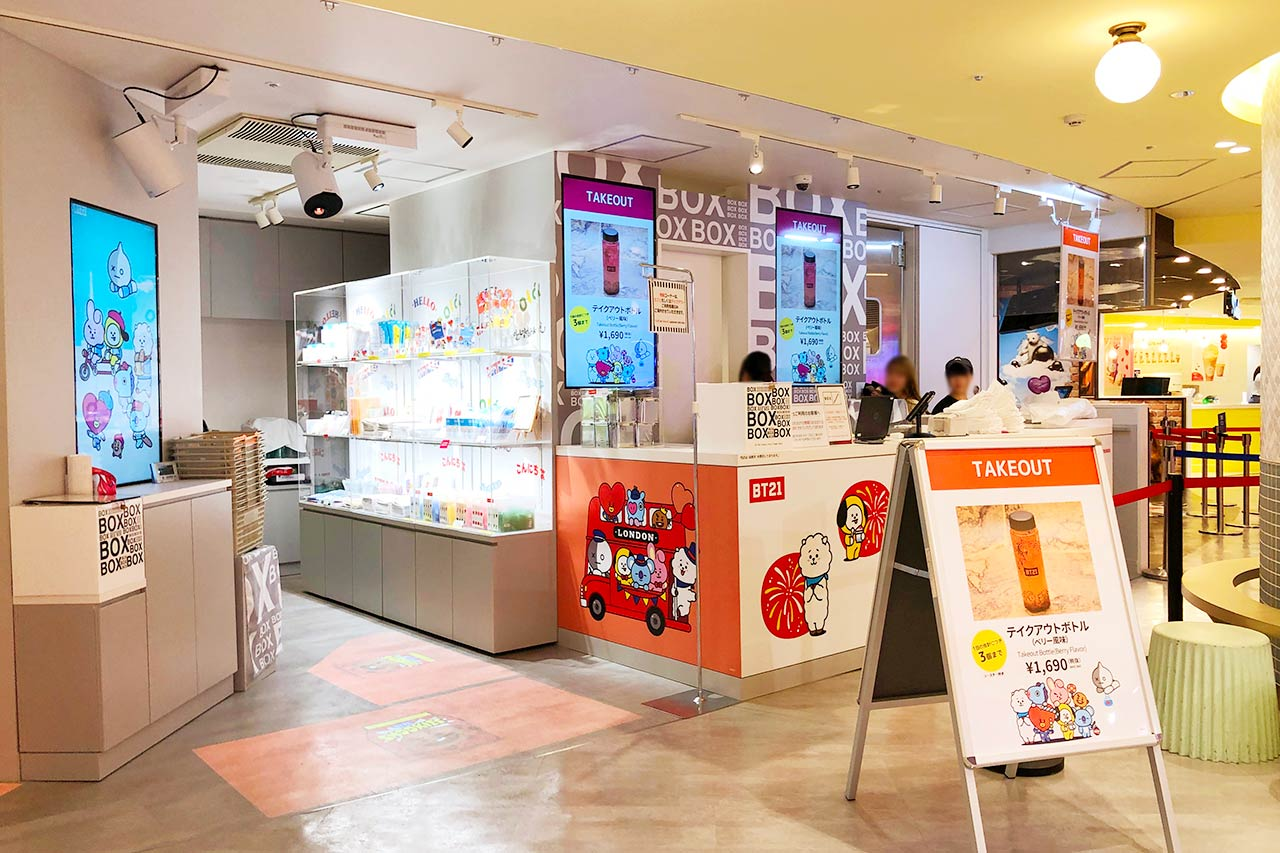
Serious licensing machinery sits behind Japan's character cafés. Branch Out, the apparel and licensing company behind the announcement, advertises more than 300 licensing contracts, and the café operator, LTR, is a joint venture of two holding companies. The same machinery is now crossing the Pacific. Demon Slayer Cafe USA opened in Chicago's Wicker Park on August 8, 2026, billed as the first officially licensed standalone Demon Slayer café in the country, and Bearology in Temple City, California, ran a ticketed Demon Slayer pop-up with Aniplex USA starting in February 2026.
All of that serves franchises with millions of fans. An independent webcomic artist with 15,000 devoted readers has no licensing department and no restaurant partner, and neither does the developer of a cozy indie game or the illustrator behind a beloved original-character series. Yet any of them might have 40 local fans willing to pay $50 to meet them over coffee and take home a print made for that night only.
Build a local production business that turns concentrated indie fandoms into prepaid café nights, inside cafés that already exist.
The creator brings the audience and the characters. A neighborhood café brings seats, staff, and a kitchen. You bring the format, the ticketing, the money flows, and a hard rule that the event clears its numbers before anyone spends real cash. It starts as a hands-on service business. The asset underneath is knowing which online fandoms can physically fill a room.
Here's the opportunity at a glance:
The money: Four 60-guest nights a month at $55 a ticket clear about $4,400 in monthly contribution before overhead. Requiem Café sold out a Homestuck night at $41.30.
Inside:
• 30-day launch plan with a go/no-go threshold
• Creator and café outreach templates
• Pilot vs. repeat-event unit economics
• Seven-piece event kit and startup budget
The Opportunity: Small Fandoms Have No Room
Creator-economy infrastructure is built for scale. Merch companies start calling around 500,000 subscribers, and licensing agencies at a few million. A creator with 8,000 fans who genuinely care gets Patreon, a print shop, and a folding table at the regional convention. A physical fan event at that size looks absurd on paper: venue, ticketing, customer support, insurance, collectibles, and someone to run the room, all for 40 people. So it never happens, even though the fans would pay.
Picture an illustrator who sells original-character prints at regional conventions and has a few hundred followers within driving distance. A 25-seat café nearby goes quiet on Wednesday nights. You book two seatings of 20. Each guest pays $49 for 90 minutes: a drink, a dessert from the regular menu, an exclusive acrylic pin, and time with the artist, who draws live, answers questions, and signs. The kitchen makes what it always makes. The prepaid ticket doubles as your demand test, because the event only happens if the seats sell first.
The Evidence: Fans Already Pay to Gather
Licensing International's 2026 study put global licensed merchandise and services at $389.8 billion for 2025, up 5.45%, with character and entertainment licensing at $161.8 billion, up 8%. Anime, video games, comics, social media, and other properties make up 34% of that category. Those dollars flow to franchises, and your market is measured in seats per city. The useful questions are local: how many viable creators live in your metro, how many of their fans live within an hour, and what those fans will pay for something they can't get online.
The small-venue evidence tells you more. Requiem Café, a fantasy-themed venue in Anaheim, sold out a Homestuck fan party on April 13, 2024, with more than 120 guests listed at $41.30 a ticket, which bought an exclusive sticker, a themed "I VOTED" sticker, and one drink voucher. Requiem returned to the same fandom on October 25, 2026, with an 18+ Homestuck drag show and cover-song concert capped at 70 guests, tickets around $41, and a free drink. Philadelphia's SAIKA Cafe began as monthly pop-ups for anime, manga, and game fans and grew into a recurring clubhouse. Convention artist alleys complete the pattern, since fans there already pay to meet illustrators, buy originals, and commission work. You're pulling that interaction out of a crowded convention weekend and giving it its own evening.
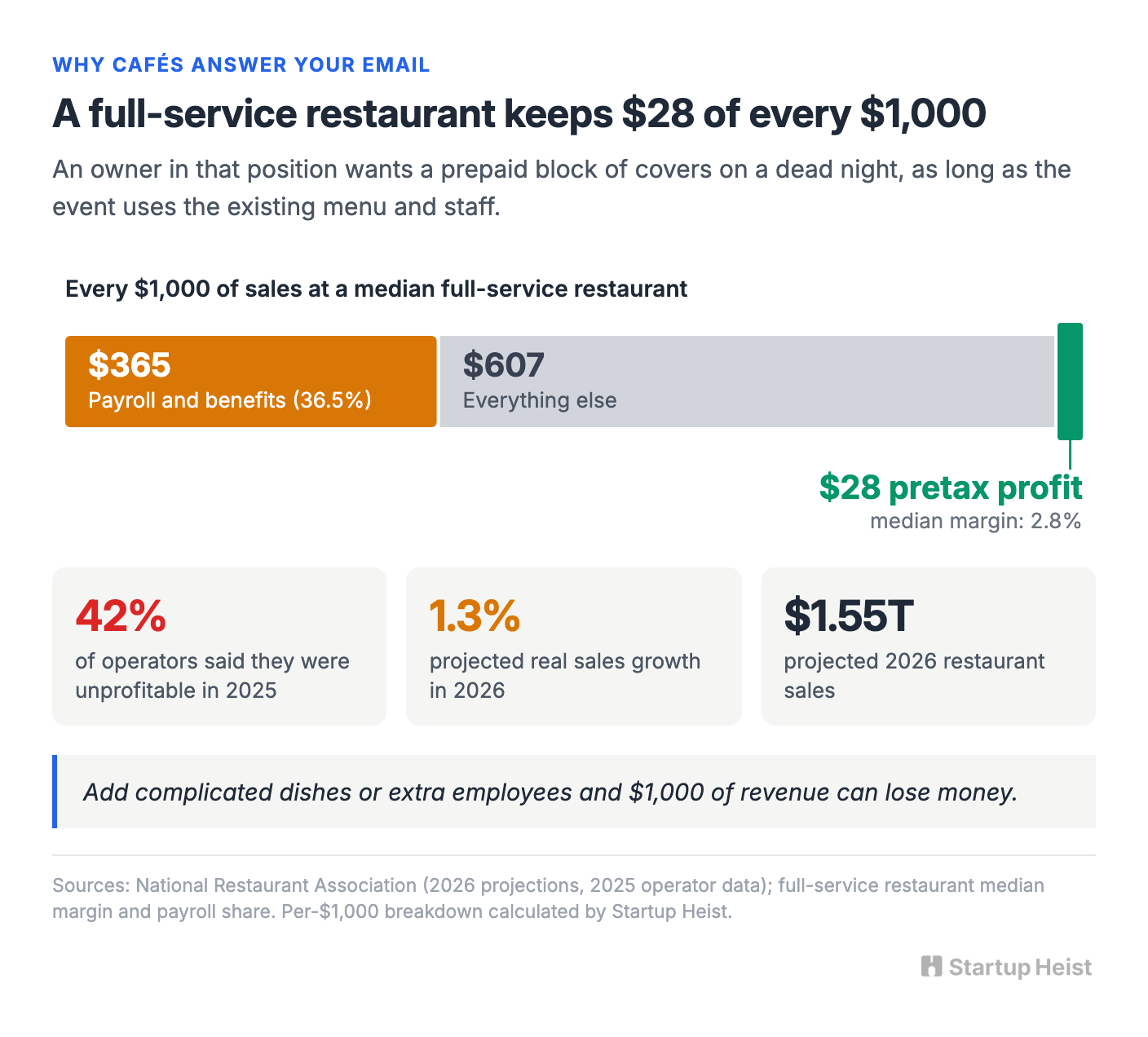
Cafés have their own reason to answer your email. The National Restaurant Association projects $1.55 trillion in 2026 sales with only 1.3% real growth, and 42% of operators said they were unprofitable in 2025. Full-service restaurants posted a median pretax margin of 2.8%, with payroll and benefits eating 36.5% of sales. An owner in that position wants a prepaid block of covers on a dead night, as long as the event uses the existing menu and staff. Add complicated dishes or extra employees and $1,000 of revenue can lose money. Your pitch is incremental profit after food, labor, and disruption, and that discipline starts with the guest count.
Geography Beats Follower Count
Take a webcomic creator with 20,000 followers. Forty tickets is 0.2% of the audience, which sounds trivial. Now assume 1% of those followers live within a reasonable drive of the venue. That's 200 people, and selling 40 seats means converting 20% of them, which a devoted community can do but won't do automatically.
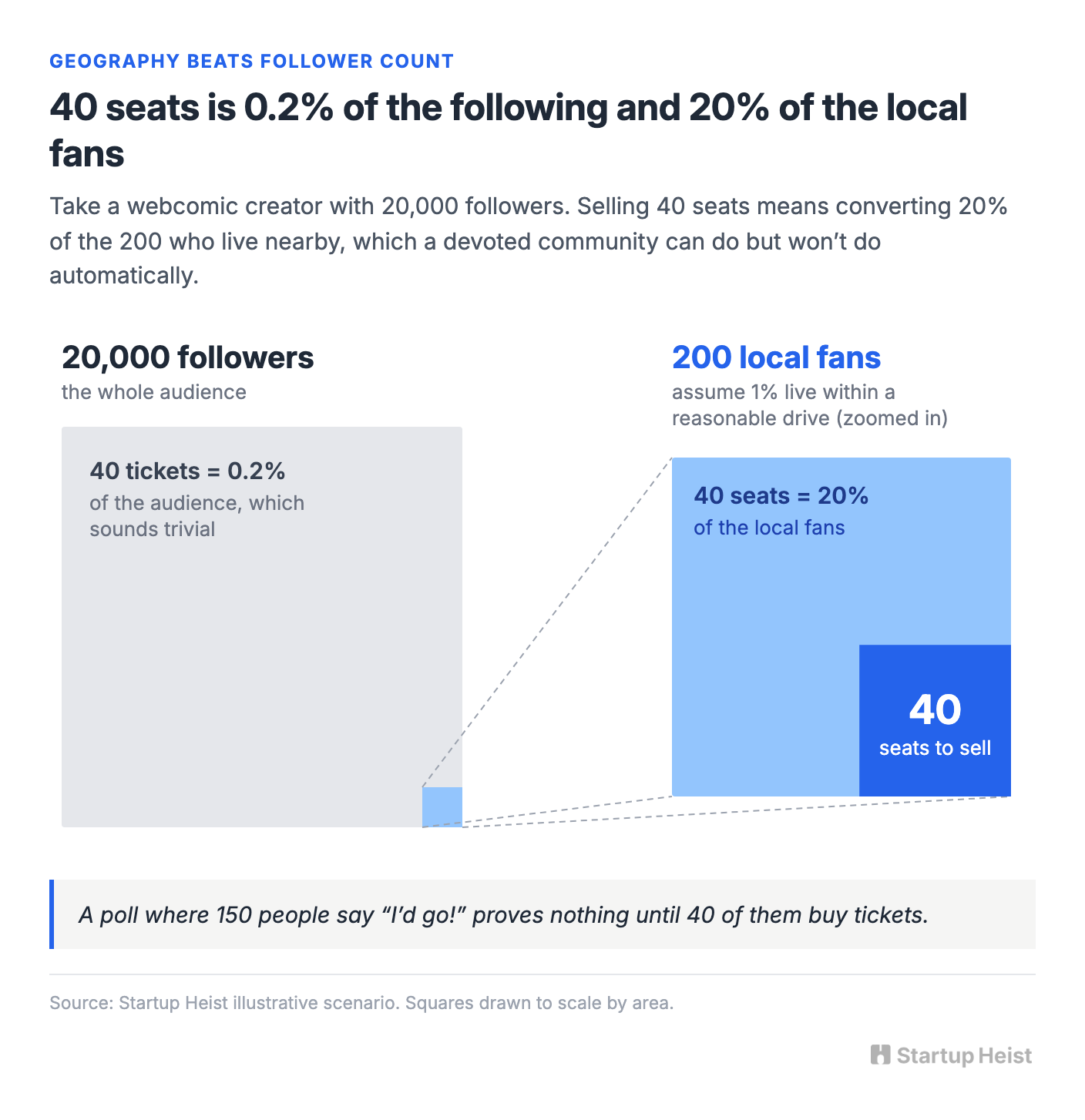
A creator with 100,000 followers spread across 40 countries can have less local pull than an illustrator with 3,000 followers clustered around one city. Your best early partners already prove local demand in cash: they sell out at regional conventions, run workshops, draw crowds at book launches, or have an email list with known zip codes. A poll where 150 people say "I'd go!" proves nothing until 40 of them buy tickets. Your first durable asset is a map of which communities can fill a room in your city, and nobody else is drawing it.
What You Sell: The Creator Café Night
The Japanese format layers reservations, custom meals, drinks, merch, and collectible incentives. Copying all of it would bury a small operator. Every custom dish adds prep work and food-cost risk, every merch SKU adds an approval and an inventory bet, and every piece of décor has to be hauled, stored, and torn down.
Unlock the Vault.
Join founders who spot opportunities ahead of the crowd. Actionable insights. Zero fluff.
“Intelligent, bold, minus the pretense.”
“Like discovering the cheat codes of the startup world.”
“SH is off-Broadway for founders — weird, sharp, and ahead of the curve.”


