


The $16 Cookie Drop: A Local Fandom Business Hiding in Plain Sight
South Korea's biggest convenience-store chain sold 1.5 million pieces of K-pop bread in about five weeks. The American version is smaller and easier to start: a studio that turns small, passionate local audiences into paid collaborations with neighborhood bakeries.
A Photo Card Moved 1.5 Million Breads
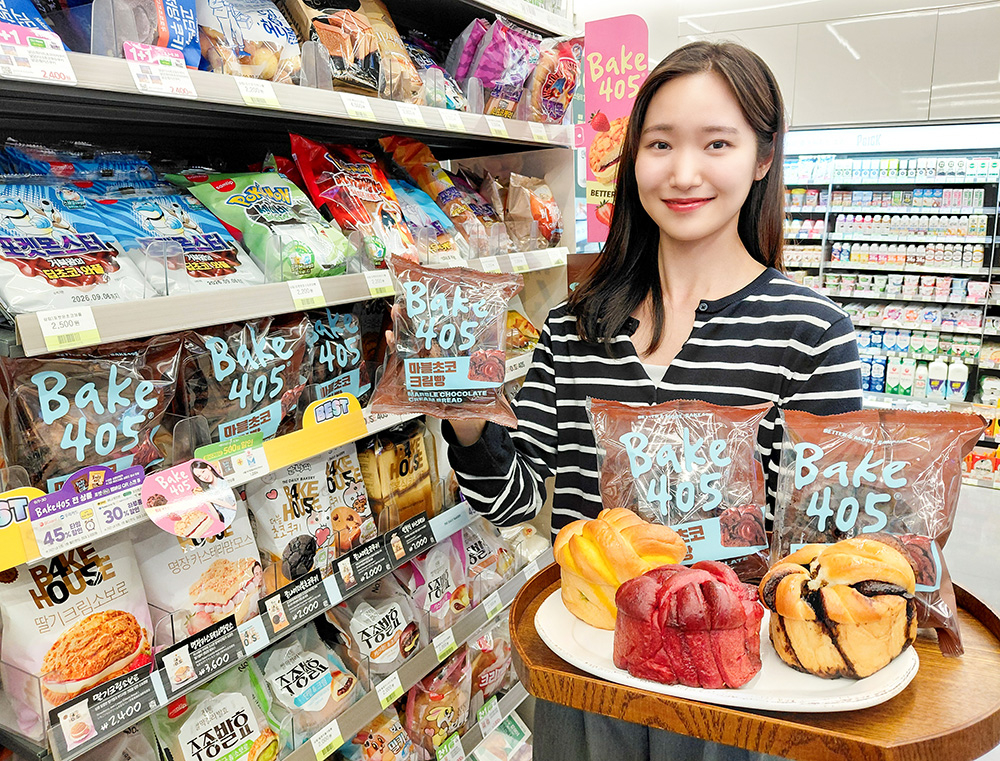
On September 17, 2026, South Korean convenience-store chain CU released five bakery products under its BAKE405 brand in collaboration with RESCENE, the K-pop group it signed as a brand model in July. Each product reflected a member's tastes, and every package held one randomly selected transparent photo card from a set of 27.
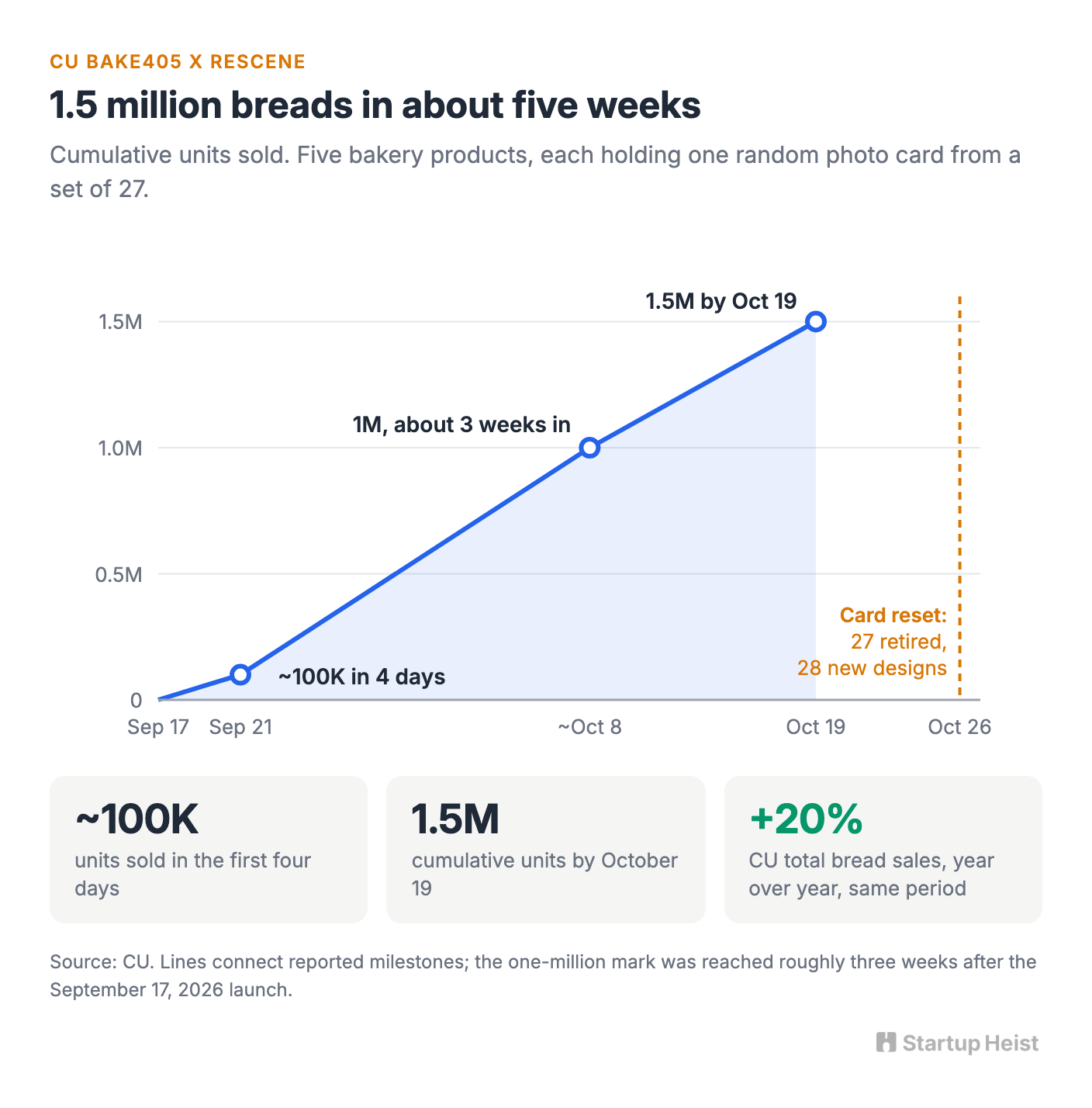
CU sold about 100,000 units in four days. Cumulative sales passed one million roughly three weeks after launch and reached 1.5 million by October 19. Over the same period, the chain's total bread sales rose 20% year over year. CU then announced that from October 26 the original 27 cards would be retired and replaced with 28 new designs, which gave every fan who had finished a set a reason to start buying again. On secondary marketplaces, single cards were listed at 3,000 to 5,000 won, popular ones above 20,000 won, and one seller asked 140,000 won for the full set. Those are asking prices, and there's no record of what actually sold.
Korea has run this play before. When SPC Samlip relaunched its Pokémon bread in February 2022, with one of 159 stickers in each package, it sold more than 10 million units in about six weeks. Nobody can cleanly separate the pull of the card from the celebrity, the recipes, and a nationwide store network. The underlying mechanism is still clear enough to borrow: an ordinary consumable becomes a collectible when it's attached to an audience that already cares, and you don't need CU's distribution to use it.
Here's what that looks like as a business you can run in one American city:
The money: Sixty 200-pack campaigns a year at $350 plus 15% of sales earn a solo operator $49,800, about $4,150 a month.
Inside:
• Audience filter for picking the right creators
• Unit economics and the $350 + 15% fee model
• 30-day playbook with creator and bakery emails
• Four moats: supply, playbook, list, calendar
The American Version Is Smaller and Easier to Start
Picture an independent comic artist in Philadelphia with 4,000 Instagram followers and a book signing next month. About 150 people came to the last one, and many bought prints. Three blocks from the venue sits an independent bakery with spare capacity, a loyal neighborhood following, and zero interest in celebrity merchandise.
You bring both parties one proposal. For the signing, release 200 limited-edition packs, each holding one of the bakery's signature chocolate-chip cookies and one collectible art card designed by the artist. Each pack costs $16. Fans preorder online and pick up during a two-hour window at the bakery, timed to the signing. The artist, the bakery, and the event organizer all promote it.
You coordinate everything else: the introduction, the commercial terms, artwork production, the preorder page, packaging, the promo schedule, pickup, and final reconciliation. The bakery only has to bake a cookie it already sells, and the artist only has to supply art. Fans walk away with a small, tangible piece of the occasion, and your company gets paid for making it happen.
Underneath the cookie, this is a local promotional-production business. You're selling an outsourced capability to creators and small businesses who can't economically organize these collaborations themselves, and you can test it in one city.
Three Behaviors Already Exist
Each piece of this business is already proven separately. Patreon's State of Create study, which surveyed 1,007 creators and 2,002 U.S. fans in August 2024, found that 80% of core fans are likely to pay creators. That figure measures willingness to support a creator and says nothing direct about snack sales, but it explains why a $16 bundle can work. The bundle sits well below a $35 T-shirt or a $75 signed print, it's tied to a specific day, and the card survives long after the cookie is gone.
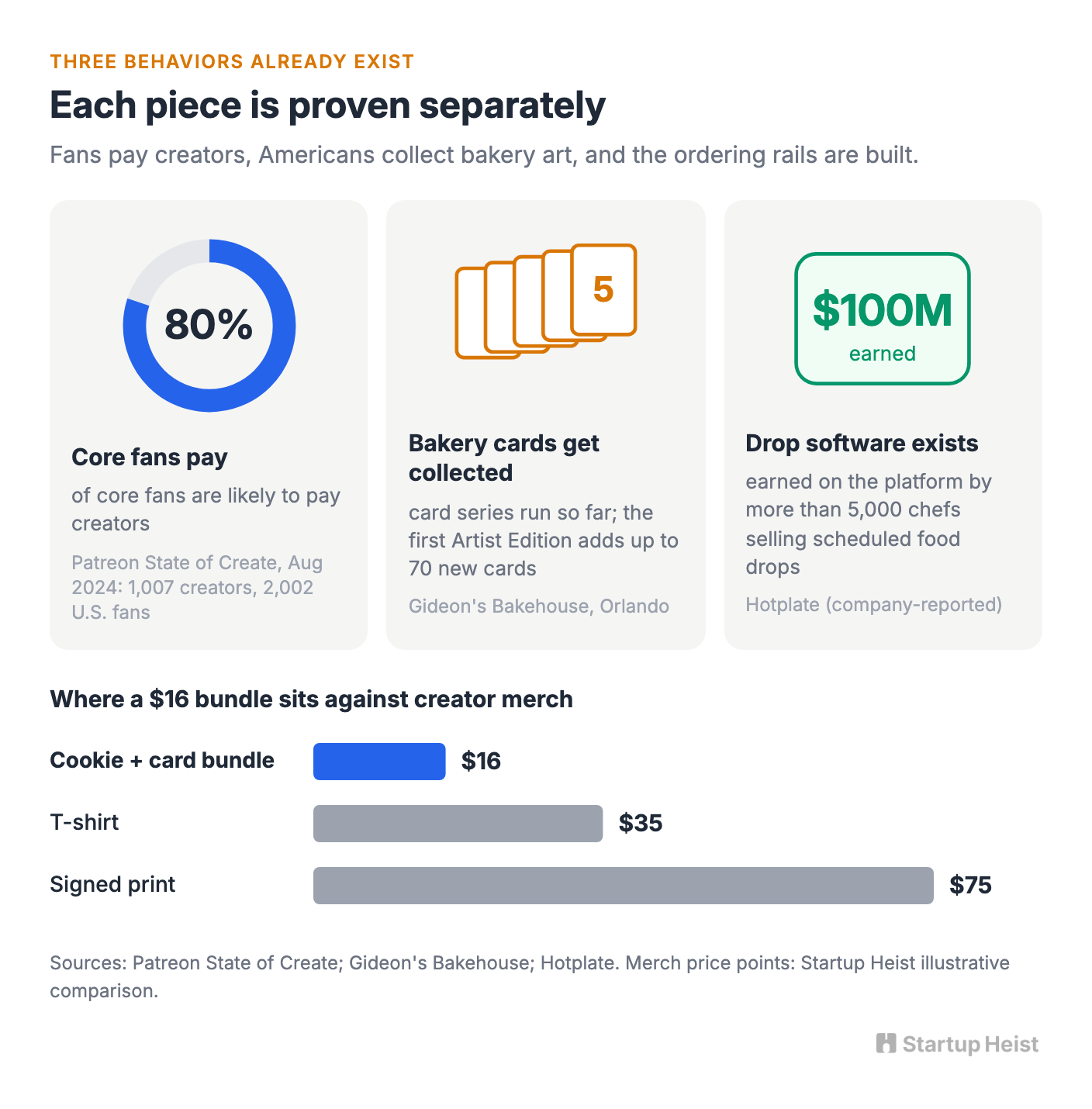
Americans also already collect bakery art. Orlando's Gideon's Bakehouse hides a trading card in every medium or large cookie box and in online merch orders over $20, and it has run five card series so far. On October 21, 2026, it announced its first Artist Edition series, with up to 70 new cards from artists including Ryan Ottley, Gris Grimly, and Jill Thompson. The ordering rails are built too. Hotplate, which says more than 5,000 chefs have earned $100 million on its platform, runs scheduled food "drops" with capped quantities, pickup windows, and prep lists.
What's missing is someone to connect the pieces. Gideon's owns its brand and staffs its own card program. A regional musician, a solo illustrator, an independent bookstore, or a corner bakery has none of that infrastructure, and a third-party producer can supply it.
The Gap Is Coordination Labor
The tempting move is to build a marketplace where creators upload art, bakeries pick partners, and fans preorder. That would be premature, because the software layer is already cheap.
| Existing tool | What it handles | What it leaves undone |
|---|---|---|
| Hotplate | Scheduled food drops, reminders, inventory, pickup | Creator recruitment, licensing, three-party deals |
| Fourthwall | Creator storefronts, merch, preorders | Finding and managing a local bakery partner |
| Stripe Payment Links | Checkout with no custom code | Campaign strategy, physical coordination, demand |
| The bakery's POS | Payments and everyday retail | Collectible production, outside audiences |
Hotplate charges customers 5% plus $0.55 per order and sellers the standard 2.9% plus $0.30 card fee. Fourthwall takes no platform cut on self-sourced products. A creator and a bakery could run a drop themselves with email, a payment link, and a local printer, so charging 20% for a preorder page is a weak business.
What neither party wants is the 20 hours of work: finding a partner, negotiating terms, clearing rights, wrangling artwork, managing production, coordinating promotion, and handling pickup day. That's what you sell, packaged as four outcomes:
- A qualified match. A creator paired with a bakery whose customers, location, and capacity fit.
- A product people want. The collectible, the event tie-in, and the release plan.
- A clean launch. Preorders, promo assets, printing, deadlines, and pickup, handled.
- An accountable result. A report on sales, new customers, economics, and whether to run it again.
Think of it as a miniature, highly standardized experiential-marketing agency. Standardization is where the margin comes from, and the first thing to standardize is how you pick the audience.
Start With the Audience
The biggest mistake is signing a bakery and then hunting for an influencer with a big following. For a pickup-only offer, the only fans who count are the ones who can physically reach the counter and care enough to pay.
Unlock the Vault.
Join founders who spot opportunities ahead of the crowd. Actionable insights. Zero fluff.
“Intelligent, bold, minus the pretense.”
“Like discovering the cheat codes of the startup world.”
“SH is off-Broadway for founders — weird, sharp, and ahead of the curve.”


