


The $7 Screen That Decides Whether a $700 Bag Is Worth Checking
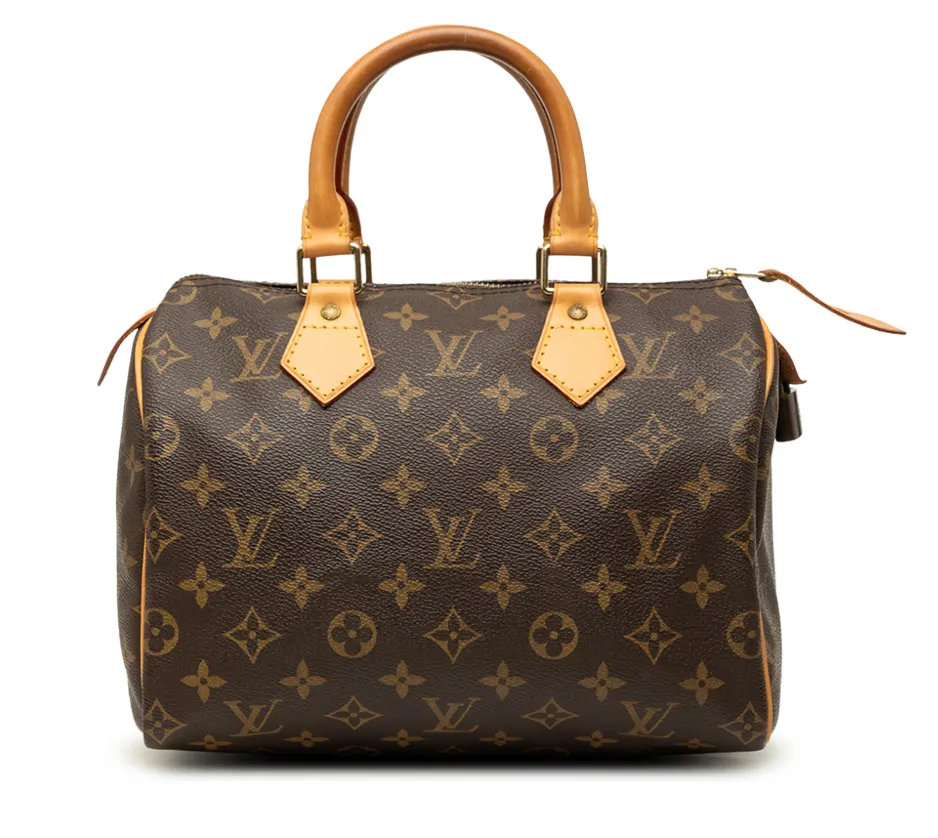
You're standing in a thrift store holding a Louis Vuitton Speedy marked $240.
The stitching looks clean. The canvas feels right. There's a date code stamped inside, but you have no idea whether it makes sense for this model or this year. Google returns fifteen authentication guides that contradict each other. Reddit might help by Thursday. A professional authenticator will give you a credible answer, but by the time you shoot the required photos, pay $15 to $60, and wait for the verdict, the bag is in someone else's cart.
A certificate is worthless at 4:40 on a Tuesday. What you want is someone to say: Don't buy yet. Photograph the heat stamp and the zipper pull. The date code alone proves nothing. At $240, get those two shots before you take the risk.
Nobody sells that. It's cheaper to build than authentication, faster to deliver, and it sits in a corner of the resale market nobody has bothered to fortify.
The play is a luxury-resale risk screener. Text a number, tap a link, photograph the item through a guided flow, and get back a fast Pass / Caution / Don't Buy Yet read that explains what looks consistent, what looks off, what evidence is missing, and whether the purchase is worth escalating to a real authenticator. It never tells you the item is authentic, and that refusal is the whole business.
The shape of the business:
The money: Fifty consumer screens a day at $6.99 is about $10K a month. Add 150 shops at $149 and you're near $32K MRR.
Inside:
• The 30-day MVP and capture engine
• Six-stage analysis pipeline, spelled out
• Consumer and shop pricing that clears
• Four moats above the model layer
The $500 line is where the industry stops protecting you
Managed marketplaces have quietly absorbed the trust problem for expensive items. eBay's Authenticity Guarantee routes eligible handbags listed at $500 or more through expert authentication at no charge to buyer or seller, and lets buyers of $200 to $499.99 bags add the service for $40 at checkout. Poshmark ships anything $500 and up to its own authenticators before it reaches the buyer, free. Whatnot negotiated bulk rates for its luxury sellers: $7 per item through Entrupy, $10 through Real Authentication.
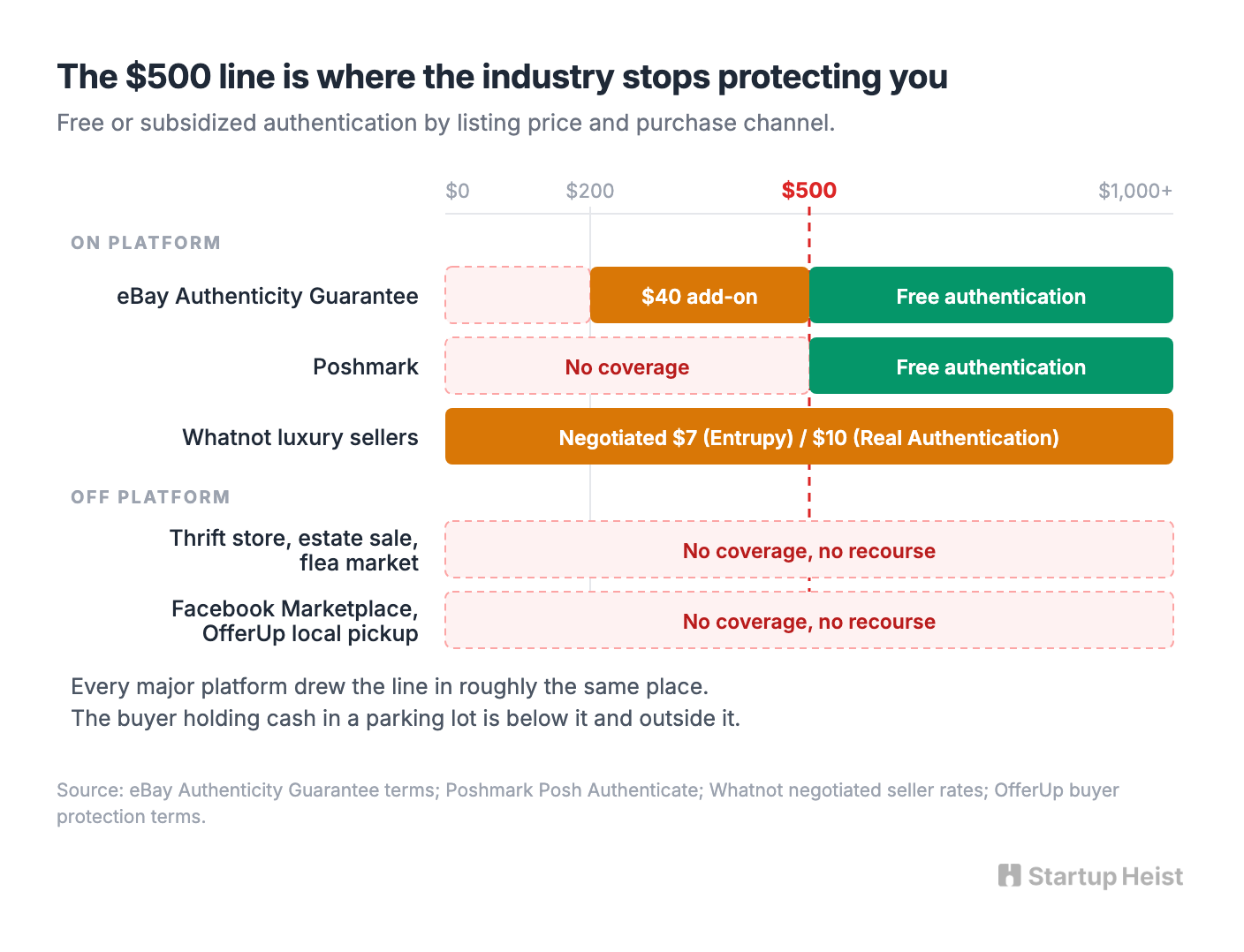
Every major platform drew the same line in roughly the same place, and everything below it is bare.
The line has a second edge that matters more. It only exists inside the platform. The moment a transaction happens at a thrift store, an estate sale, a flea market, a local consignment counter, a Facebook Marketplace meetup, or an OfferUp local pickup, the entire apparatus disappears. OfferUp's buyer protection covers items shipped through its own system, which is precisely the transaction a bag flipper never uses. Cash, parking lot, no recourse.
Your customer is the person holding an item off-platform, under time pressure, with a phone in the other hand. The eBay buyer already gets authentication bundled in and has no reason to hear from you.
Resale got big enough to have a fraud economy
ThredUp's 2026 Resale Report projects the global secondhand apparel market at $393 billion by 2030, growing roughly 9% a year to about a tenth of all global apparel spend. Secondhand grew 13% in 2025 while sales of new apparel stayed close to flat, and U.S. resale is now expanding about four times faster than retail overall.
Volume that size attracts supply. The OECD and EUIPO put global trade in counterfeit goods at $467 billion, around 2.3% of world trade, with clothing, footwear, and leather goods making up 62% of seizures. Handbags are the flagship category of the fake economy, and secondhand channels are where fakes launder into legitimacy. A counterfeit sold as new invites a trademark suit. A counterfeit sold as "vintage, from my aunt's closet" invites a shrug.
So every off-platform luxury purchase carries a tax the buyer pays in time and anxiety, standing there with a store closing in twenty minutes, unable to tell whether the price is low because of luck or because of a con.
The authentication industry sells the answer that arrives an hour later, which is the wrong shape for the moment that actually hurts.
Don't build an AI authenticator
The obvious product is send us two photos, our AI tells you if it's real. It demos beautifully, and it's the wrong business. The operators who do this well show how much machinery a credible verdict requires. Entrupy's entry plan runs $139 a month for 25 authentication tokens, about $5.60 each, and that price buys a proprietary microscopy device plus a reference database built over a decade. Volume barely helps: the 250-token plan lands at roughly the same price per item. LegitGrails starts at $15 for a 12-hour bag verdict and runs to about $35 for 30-minute turnaround, with at least two specialists on every item. Real Authentication starts at $30 with two or more experts reviewing. Even The RealReal doesn't point a general model at a handbag and call it done: its Shield system scores more than 50 attributes to flag high-risk inventory, its Vision system reads microscopic detail like leather grain and thread, and both exist to route items to trained humans faster.
Across every serious operator the pattern holds. The machine narrows, the human decides.
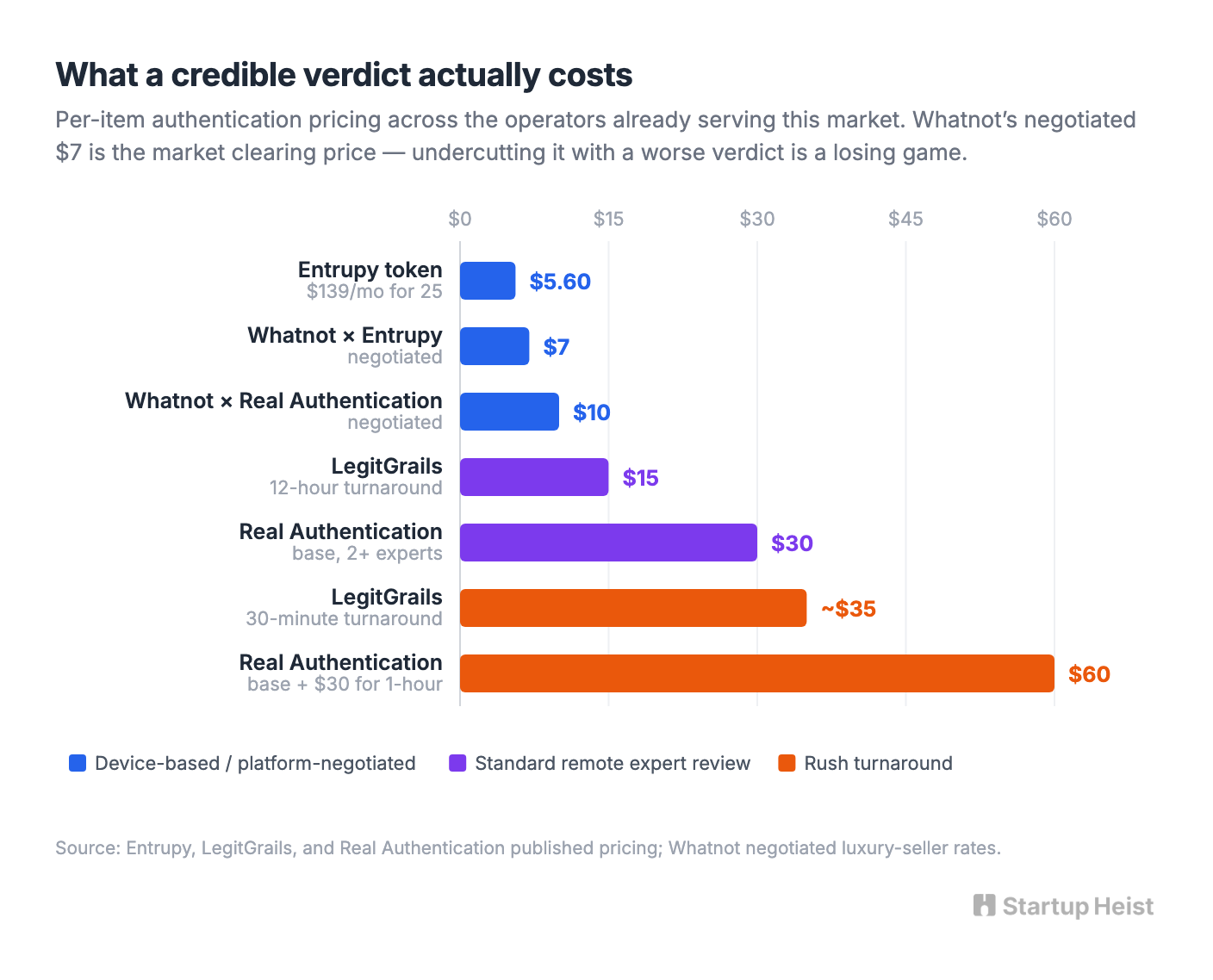
The naive version is already taken. An app called BagCheck launched in August 2025 promising AI authentication of designer handbags from three photos in under a minute, free for your first scan. A year later it has collected a grand total of three App Store ratings. Rebuilding it with a better prompt is a race to the bottom of a category consumers structurally distrust.
The model's job here is triage, and triage is real work. A general multimodal model is already good at it: judging whether a photo is usable, recognizing brand and product family, checking whether expected evidence is present, catching obvious inconsistencies, and telling the shopper which detail to shoot next. It's a more defensible product than a fake verdict, because it's honest about what it knows.
The product is a decision engine
Call the service FirstPass. You find a Gucci Marmont at an estate sale.
Unlock the Vault.
Join founders who spot opportunities ahead of the crowd. Actionable insights. Zero fluff.
“Intelligent, bold, minus the pretense.”
“Like discovering the cheat codes of the startup world.”
“SH is off-Broadway for founders — weird, sharp, and ahead of the curve.”


