


In April 2005, Linus Torvalds lost access to BitKeeper, the version control tool his Linux team had relied on for three years. The company revoked its free license after a developer tried to reverse-engineer the protocol.
Torvalds skipped the negotiation. He went offline, and in roughly ten days, built his own replacement. He called it Git, British slang for an unpleasant person. "I'm an egotistical bastard," he told a conference audience, "and I name all my projects after myself."

Within weeks, Git was managing the entire Linux kernel. Today, 94% of developers use it. Microsoft paid $7.5 billion for GitHub, the platform built on top of it. The insight that made Git valuable was structural, not technical: every change to every file should be tracked, attributed, and reversible. A permanent record of what happened, when, and why.
That was twenty years ago. Software has version control. Your neighborhood does not.
A bakery on your block closes. A construction fence appears overnight. Weeks later, a permit gets taped to the window. These are real signals — tenant churn, development momentum, early friction — and all of them evaporate. Over 200 U.S. counties have zero local news outlets. The professionals who actually need this data, real estate investors, site selectors, underwriters, spend billions on tools that still miss what's happening at street level.
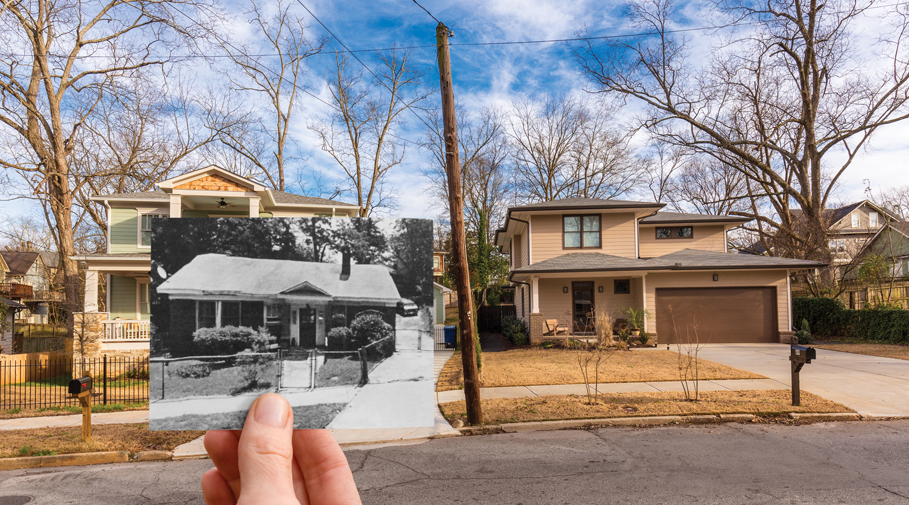
Today's featured startup opportunity is one most people will walk right past: build the canonical change ledger for physical places. Free for residents. $49/month for pros. Up to $150K/year per metro for enterprise data buyers. One $50K license validates the model, and the dataset compounds daily — nearly impossible to replicate after two years of operation.
Read the full playbook here:

Local news is dying at two outlets per week — this location data startup idea turns block-level change signals into a B2B data product with paying CRE customers on day one.
From the Vault:

A proptech startup idea built on Walk Scores biggest flaw — cities need street-level accessibility data and theyre already court-ordered to pay for it.

Trillions in small business assets are changing hands with no standardized handover process — a productizable gap hiding in plain sight.


