


RoomSweep: The Business Hidden in Houses That Need to Be Emptied
Build a local estate-buyout brokerage that turns an overwhelming house cleanout into one competitive offer, one accountable contractor, and a confirmed empty property.
A family is preparing to sell their late mother's three-bedroom house. The furniture is ordinary. The garage holds forty years of tools. There are boxes of kitchenware, shelves of paperbacks, and a stereo nobody has switched on since 2004. Some of it has resale value. Plenty of it costs money to haul away.
They have three options, and each one hurts. An estate-sale company may need weeks to organize a sale, and it may decline the job outright if the contents won't gross enough. A junk-removal crew can empty the house in a day, then charges for the privilege and throws the tools in the truck with everything else. Selling it all themselves means dozens of meetups with strangers, coordinated from another state.
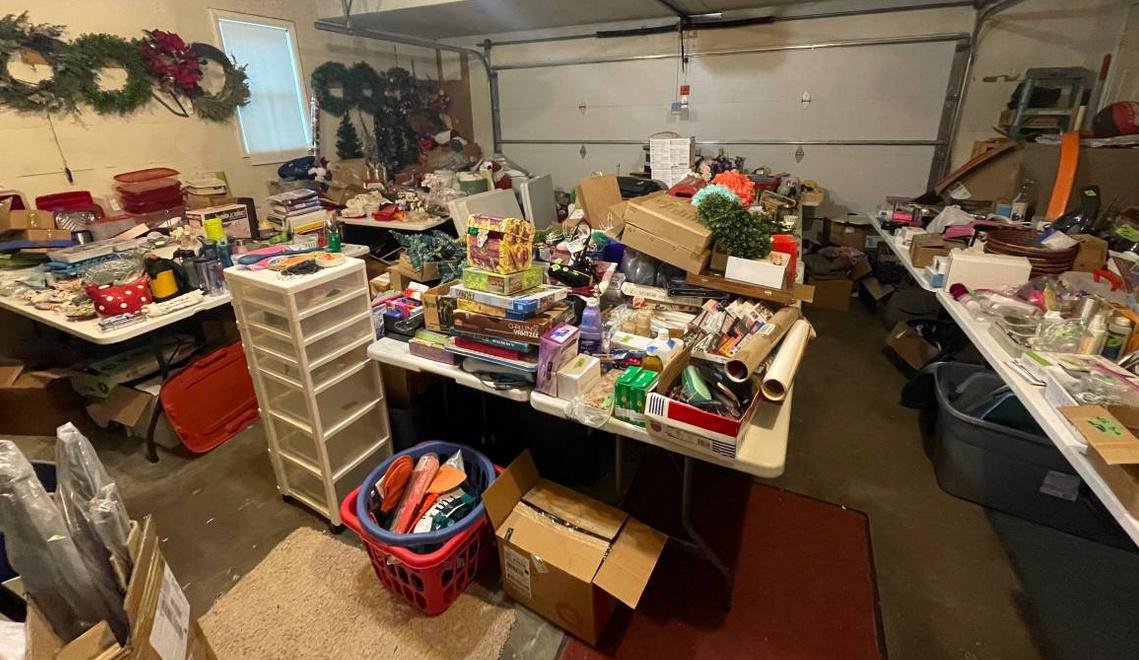
A fourth option looks like this. The family records a guided walkthrough on a phone. Within a few days, three local operators review the packet and bid to take responsibility for the entire clearance. One offers to pay the family $700. Another offers $300. A third quotes $400 to remove everything. The family sees each offer net of fees, picks one, and books the date, without running a public sale, posting 500 individual listings, or arguing over who takes the broken recliner.
This is RoomSweep: a software-assisted brokerage for whole-house estate cleanouts. The business organizes a fragmented local market around one question: what will a qualified operator pay, or charge, to take responsibility for emptying this house? Answer that reliably and you have a profitable local service with a path to B2B infrastructure, provided you resist the temptation to build an AI that prices every antique.
Here's the opportunity at a glance:
The money: 20 completed clearances a month at a $399 flat fee brings in $7,980 a month and $4,480 in contribution, from one metro with no trucks or warehouse.
Inside:
• Reseller math behind every whole-house offer
• Flat-fee pricing for positive and paid jobs
• Outreach email for estate-sale referrals
• 90-day pilot plan with metrics and budget
The Market: Plenty of Assets, Expensive Transactions
The demographic supply is settled. The U.S. Census Bureau counted 61.2 million Americans aged 65 and older in 2024, up 13% since 2020. AARP's 2024 Home and Community Preferences survey found that 75% of adults 50 and older want to stay in their current home as long as possible, while 44% expect to relocate at some point. Every one of those eventual moves, senior downsizings, and estate settlements ends with a house full of possessions someone has to deal with.
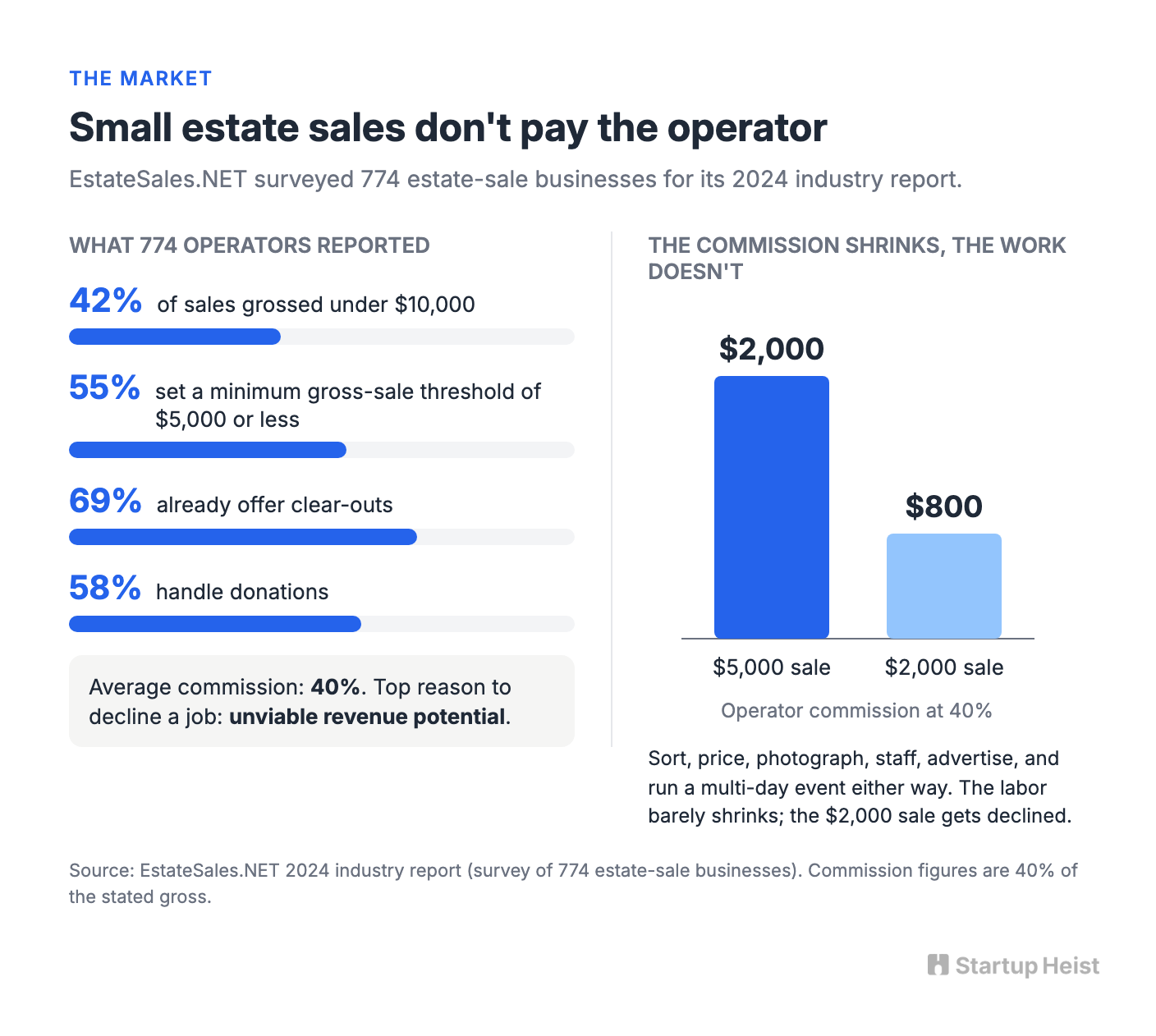
The sharper evidence comes from the estate-sale industry itself. EstateSales.NET surveyed 774 estate-sale businesses for its 2024 industry report and found that 42% of their sales grossed under $10,000. The average commission is 40%. More than half of operators (55%) set a minimum gross-sale threshold of $5,000 or less, and the most common reason they decline a job is unviable revenue potential. Clear-outs are already offered by 69% of them, and 58% handle donations.
Run the math on a $5,000 sale. At 40%, the operator earns $2,000 to sort, price, photograph, staff, advertise, and run a multi-day event. Drop the expected gross to $2,000 and the labor barely shrinks while the commission falls to $800. That job gets declined. The goods still have some value, and the family still needs an empty house by closing day, yet retail-style estate liquidation now costs more than it recovers. RoomSweep's opening is to replace hundreds of small retail transactions with one wholesale transaction: a lower price in exchange for far less work, a faster finish, and a clearly assigned removal obligation.
What the family is really buying is an outcome:
- A cleared property before a listing, move, or closing date
- Fewer flights home and fewer days off work
- Nothing valuable or sentimental tossed by accident
- A clean record to show siblings or beneficiaries
The question stops being what the stereo might fetch. It becomes whether paying $400, or receiving $700, for the entire contents is the best practical result by the deadline, and that's a far easier decision to sell.
The Gap: Sell Everything or Finish Everything
RoomSweep enters a crowded field of online auctions, senior-transition franchises, consignment services, and ordinary junk haulers.
| Competitor | What they sell | RoomSweep's opening |
|---|---|---|
| MaxSold | Online estate auctions, managed or seller-run | One wholesale transaction instead of cataloging hundreds of lots |
| Caring Transitions / CTBids | Senior relocation, estate sales, cleanouts, online auctions | A narrow, faster clearance-quote workflow |
| Remoov | Collects goods, consigns or auctions what sells, donates or recycles the rest | A firm net offer before pickup instead of a payout that depends on future resale |
| Traditional estate-sale companies | Local appraisal knowledge, buyer lists, often cleanouts | Declined jobs, urgent jobs, post-sale remainders |
| Junk-removal operators | Reliable removal at a volume price | A bid that credits the salvage value of the contents |
Each player sells either the upside or the finish, and few fix the number in advance. MaxSold's managed tier charges a 30% commission plus a $2,000 flat fee, so a $5,000 auction costs the family $3,500; the seller-managed tier is far cheaper but hands cataloging and pickup back to the family. Remoov, the closest analog, pays 50% of resale value on items that sell during a consignment window of about 60 to 120 days, bills pickup by truck volume, and states plainly that it does not purchase outright. Caring Transitions serves more than 450 locations and has run its CTBids auction platform for over a decade. At the floor, 1-800-GOT-JUNK's published 2025 averages run from $107 for a small load to $1,099 for a large one, and a whole house can take several.
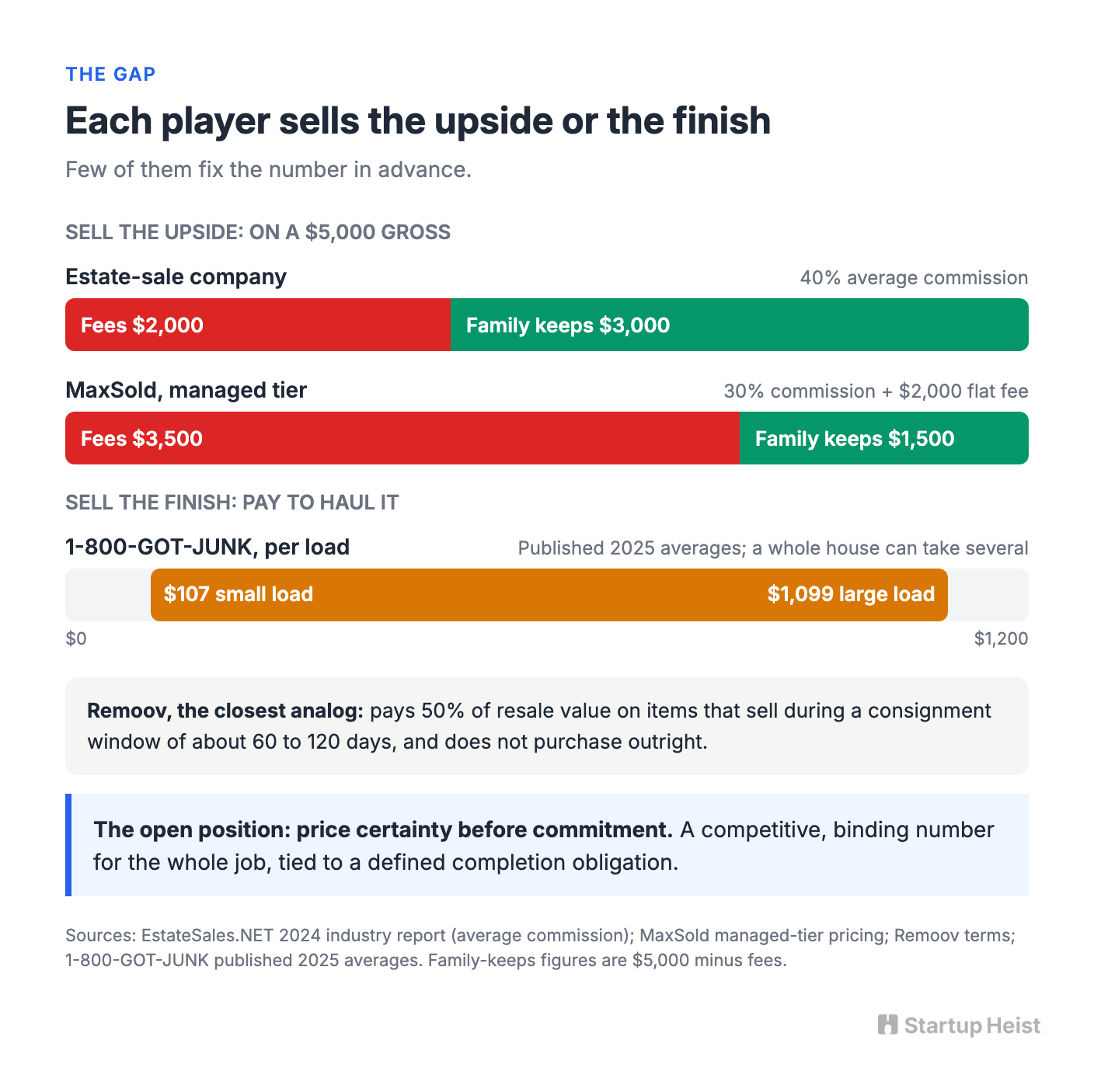
The open position is price certainty before commitment: a competitive, binding number for the whole job, tied to a defined completion obligation. Investor bidding platforms already compete to buy the houses themselves, and the contents have no well-known equivalent. RoomSweep won't beat an auction on gross proceeds; its case rests on delivering a better mix of net price, certainty, and convenience than any single alternative. The cautionary tale sits nearby. Everything But The House built an online estate-sale business on warehouses, passed 1,000 employees in 2017, and entered an assignment for the benefit of creditors in July 2019 after a potential lead investor withdrew and its financing fell through. The brand survived and still runs auctions out of Blue Ash, Ohio, but the warehouse-heavy model nearly sank it. RoomSweep should be a broker that owns no trucks, no warehouse, and no inventory.
The Product: One Clearing Price for the Whole House
The core product is the net-clearance quote: the economic result of handing the agreed contents to one accountable operator, with removal and disposal included. The same process produces three possible outcomes.
Unlock the Vault.
Join founders who spot opportunities ahead of the crowd. Actionable insights. Zero fluff.
“Intelligent, bold, minus the pretense.”
“Like discovering the cheat codes of the startup world.”
“SH is off-Broadway for founders — weird, sharp, and ahead of the curve.”


