


California Just Opened the Door to 120-Day Stores. Sell the Test, Not the Lease.
An online homewares brand is doing $50,000 a month, and customers keep asking where they can see the products in person. The founder has priced a permanent store: a multiyear lease, a security deposit, buildout, fixtures, staff, and months of fixed costs before the first sale proves anything. The founder would happily spend $15,000 to learn whether one street can carry the brand, but won't sign a five-year bet to find out it can't.
Two blocks away, a landlord is holding an empty storefront. A temporary tenant would bring in rent and make the space easier to lease, yet coordinating one is a hassle nobody on either side is equipped to run.
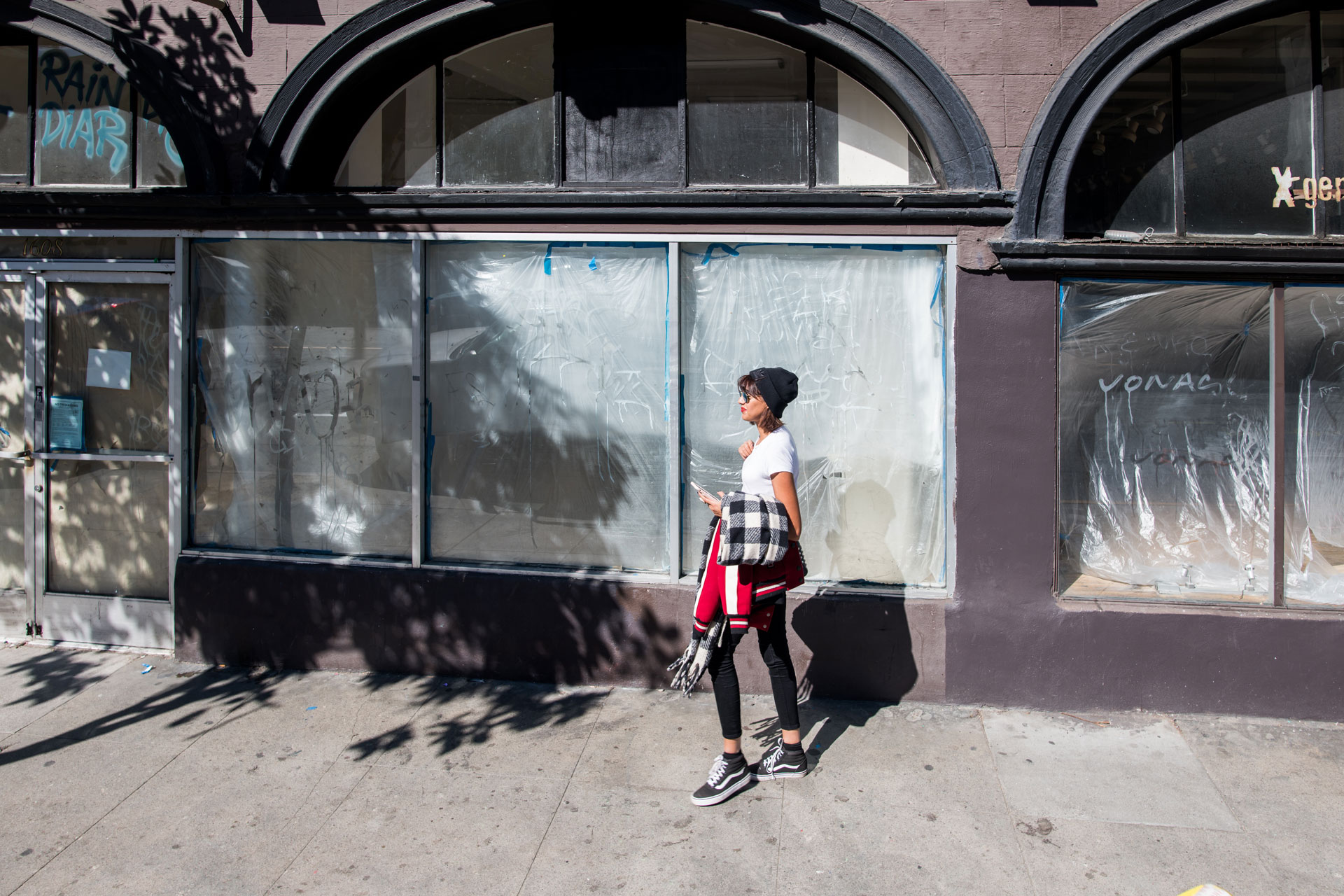
On September 30, 2026, Governor Gavin Newsom signed Assembly Bill 1679, which gives that arrangement a legal pathway. Starting January 1, 2027, every California city and county must offer an authorization that lets qualifying pop-up businesses occupy vacant commercial space for up to 120 days, and each must consider relaxing standards written for permanent tenants.
Another marketplace for pop-up shop space is the obvious play, and a crowded one. The opening sits with the operator behind the experiment: a local service that helps proven online brands run a two-to-four-week store, coordinates the launch alongside a licensed broker, measures everything, and hands the merchant a financial verdict. The merchant funds the store and the landlord keeps control of the property, so you never sign a lease or carry inventory. What you sell is the answer to a single question: does this business make money at this address?
Here's the opportunity at a glance.
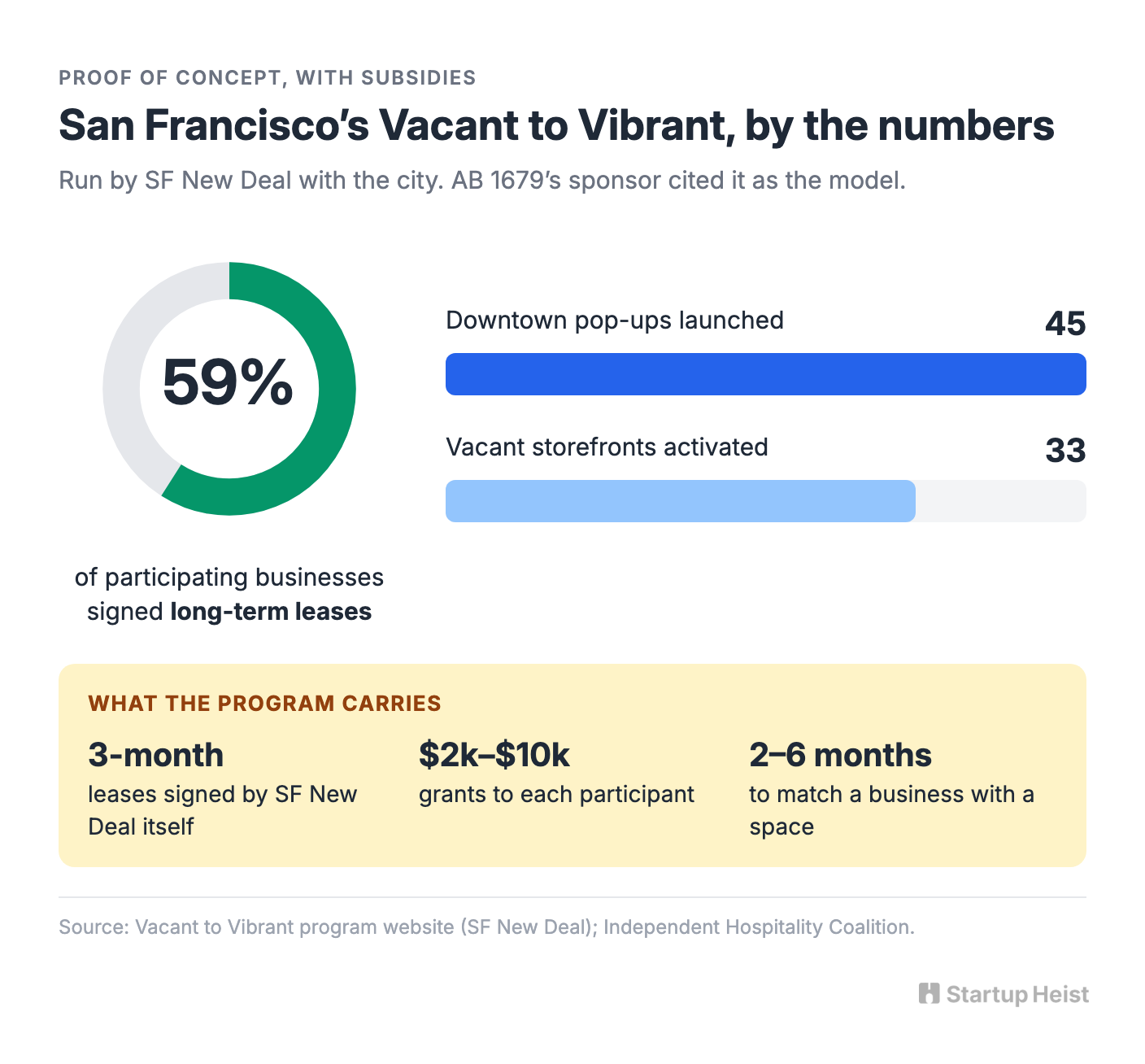
The money: Four $2,500 launches a month is $10,000 in monthly revenue and $4,600 in contribution before overhead. San Francisco's Vacant to Vibrant reports 59% of participants signing long-term leases.
Inside:
• Eight-step playbook for one California city
• Licensing split between you and a broker
• Pricing tiers and per-activation unit economics
• Outreach emails for brands and brokers
What AB 1679 Actually Changes
The law, Chapter 825 of the Statutes of 2026, was co-authored by Assemblymembers Mark González and Buffy Wicks. It requires local jurisdictions to offer a "temporary commercial activation" authorization for pop-up small businesses. The eligible use is commercial activity in a Group B (business) or Group M (mercantile) occupancy with an occupant load of 49 people or fewer, inside an existing space previously used for commercial purposes. The activation can't involve structural alterations or changes to fire-resistant elements.
Cities must consider suspending, deferring, or modifying requirements built for permanent occupancy, including long-term parking minimums, public improvement dedications, and discretionary land-use review. Fees are capped at the reasonable cost of running the program. Jurisdictions can renew or extend an authorization, revoke it for violations, and require a permanent-occupancy application once a space has hosted more than 12 cumulative months of temporary use within any 24-month period. Fire, health, and accessibility rules still apply, and cities must hand applicants written accessibility guidance.
The law doesn't approve any storefront, and it doesn't force any landlord to participate. Each city can implement it through an existing permit system or a new one, so fees, forms, departments, and timelines will vary from one jurisdiction to the next. A local operator earns its fee by mastering that variation.
Why the Timing Works
E-commerce reached 17.1% of U.S. retail sales in the second quarter of 2026, or $340.2 billion seasonally adjusted, according to the Census Bureau. Inside that number are thousands of direct-to-consumer brands with proven demand running into the limits of digital-only growth: products customers want to touch, repeat buyers clustered in specific cities, and ad costs high enough to make a storefront look like a marketing channel.
On the supply side, Los Angeles retail vacancy rose to 5.7% in the third quarter of 2026, up from 5.6% the prior quarter, with average asking rents near $2.75 per square foot per month, per Kidder Mathews. That's a metro average, and many owners will still prefer vacancy to a short-term tenant. Your customers are the owners who won't.
With subsidies, the model already works. San Francisco's Vacant to Vibrant program is run by SF New Deal with the city, and the program's website reports 45 downtown pop-ups launched, 33 vacant storefronts activated, and 59% of participating businesses signing long-term leases. SF New Deal signs the three-month leases itself, gives participants grants of $2,000 to $10,000, and can take two to six months to match a business with a space. AB 1679's sponsor, the Independent Hospitality Coalition, cited Vacant to Vibrant as the model and its "substantial public coordination, funding, and administrative support" as the burden the bill should lift. The law clears the permit friction, but someone still has to run the coordination, and a private operator can charge for it.
The Business: A Retail Test-Drive Operator
The business is a launch-management firm with an analytics product attached, built from four pieces.
1. The readiness assessment. Before talking locations, qualify the merchant. A stationery brand doing $40,000 a month online wants to know whether a neighborhood delivers enough new customers to justify a store. A vintage seller earning $6,000 a month at weekend markets wants to know whether weekday demand exists. The assessment defines the hypothesis, budget, success metric, and reasons not to proceed. A good one reads like this: Can this brand generate $19,000 in full-price sales over four weeks and stay contribution-positive after rent, paid staff, and launch costs?
2. The space-readiness dossier. Working with a licensed commercial broker, document each candidate space: prior commercial use and occupancy records, B/M classification and occupant load, utilities and restrooms, exits and fire requirements, accessibility concerns, proposed terms and restoration obligations, the local authorization route and fees, and practical details like deliveries, signage, and storage. Each entry carries its source, a verification date, and open issues. The dossier records what's been checked and never claims a space is approved. A turnkey former boutique beats a cheap raw shell every time, because you're running experiments, and renovations wreck experiments.
3. Launch coordination. The merchant owns product, pricing, and staff; the broker handles leasing; inspectors and licensed professionals make their own determinations. Your job is one operating calendar showing every deadline, document, vendor, owner, and approval between signing and the first customer.
4. The economic report. After the store closes, deliver the numbers: contribution margin, conversion, weekday versus weekend sales, full-price versus promotional sales, new versus returning customers, and sensitivity to permanent-store rent and labor. Online orders traced to the store get measured separately so nothing is double-counted. Then make a recommendation: walk away, retest in another neighborhood or season, change the merchandising or staffing, or underwrite a permanent lease through a proper process. This report is what the merchant is paying for.
The Math a Four-Week Store Has to Clear
Unlock the Vault.
Join founders who spot opportunities ahead of the crowd. Actionable insights. Zero fluff.
“Intelligent, bold, minus the pretense.”
“Like discovering the cheat codes of the startup world.”
“SH is off-Broadway for founders — weird, sharp, and ahead of the curve.”


