


Sell through the refrigeration service contractors who already own the customer relationship. Charge $79–$249 per month per location. One prevented emergency pays for an entire year of monitoring.
Most small businesses still manage expensive physical equipment the way people did twenty years ago: wait until something starts sounding wrong, then call somebody. That works fine when failure is merely inconvenient. It gets brutal when failure destroys inventory, cancels a dinner rush, or triggers a weekend emergency service bill that exceeds the cost of a new unit.
A single restaurant can lose $5,000 to $10,000 in product from just a few hours of refrigeration failure. Emergency repairs routinely run $2,500 to $8,000 once you factor in overtime labor, expedited parts, and spoiled inventory. A monitoring subscription at $79 to $249 per month pays for itself the first time it catches a problem before it becomes a catastrophe. And the strongest go-to-market isn't selling to restaurant owners one by one — it's selling through the refrigeration service contractors who already own the customer relationship, turning a difficult local-sales grind into a scalable channel play.
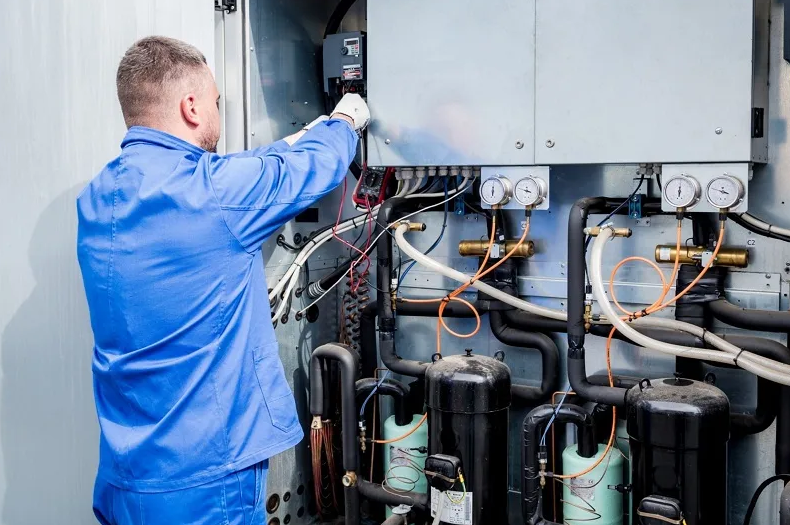
If you've been hunting for small business ideas at the intersection of IoT, automation, and physical operations — or looking for a B2B SaaS concept that serves a specific trade vertical — this is one of the better-shaped opportunities available right now. The predictive maintenance market hit roughly $14.3 billion in 2025, with projections reaching $80–$100 billion within the next decade. The macro trend is settled. What remains deeply underbuilt is the version for smaller operators who lack industrial engineers, SCADA systems, or enterprise procurement teams. The play is packaging machine monitoring as a dead-simple risk-reduction product for narrow verticals where one asset failure has an immediate, measurable financial consequence.
Three things make this viable right now.
First, sensor economics improved dramatically. Commercially available vibration-and-temperature sensors now ship with features that belonged exclusively in enterprise stacks five years ago: FFT-style vibration data, configurable aggregation, cloud compatibility via MQTT, AWS IoT, and Azure. Battery life runs five to seven years. Install time is often under ten minutes. A small team no longer has to invent core hardware to ship a useful product.
Second, the value of uptime became easier to sell. Axiom Cloud demonstrated measurable savings across 79 Grocery Outlet stores in California, generating $418,000 in combined energy and maintenance savings in the first three months. Hussmann's StoreConnect sells on the promise of eliminating unexpected refrigeration repairs. Buyers already accept the logic — and vendor data confirms that preventive maintenance programs with monitoring typically save $3,000 to $6,000 per store per year in avoided emergency events alone.
Third, regulation is creating a tailwind. The EPA's HFC Management Rule, effective January 2026, extends mandatory leak detection and repair requirements to HFC-containing appliances with a refrigerant charge of 15 pounds or greater — down from the previous 50-pound threshold. That sweeps in thousands of previously exempt commercial systems. Automatic leak detection is required for new large commercial refrigeration systems by January 2026, and for existing systems by January 2027. Non-compliance penalties can reach $60,000 per violation, per day. Worth noting: many true mom-and-pop walk-ins may sit near or below the 15-pound threshold, so regulation alone won't close your earliest deals. But the broader market expectation is shifting toward continuous monitoring as a baseline, and that shift benefits everyone selling in this direction.
The Right Wedge Is Not "All SMBs"
The instinct to serve "small businesses" is directionally right and strategically wrong.
"SMBs" is not a market. It's a tax bracket. Plumbers, dentists, bakeries, breweries, laundromats, and restaurants all have expensive machines, poor visibility, and real downtime pain. But each has different equipment, different failure modes, different buyers, different service ecosystems, and entirely different language. The first version should target one narrow asset class inside one vertical where failure is costly, sensor placement is straightforward, and sales can ride an existing maintenance channel.
Start here: commercial refrigeration for independent restaurants, small grocers, butcher shops, bakeries, convenience stores, and specialty food retailers.
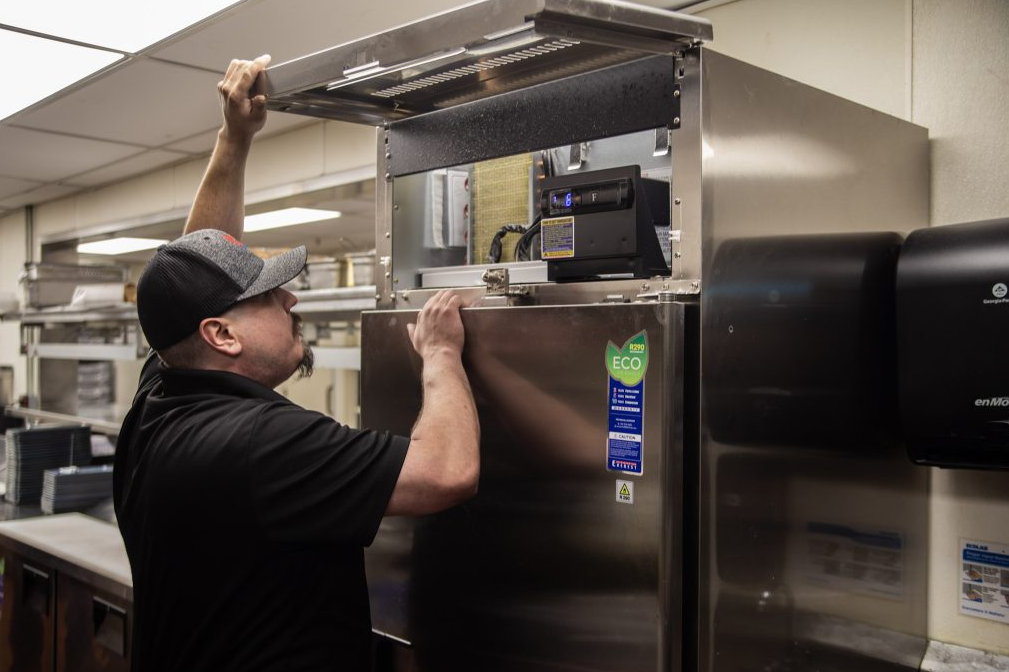
Why refrigeration? Because the stakes are immediately obvious to the buyer. If a freezer, walk-in cooler, prep table, or compressor goes down, the owner doesn't need a whiteboard session to understand the damage: spoiled product, lost sales, emergency labor, possible food-safety violations, and a weekend repair bill that could rival rent. Industry data suggests restaurants lose $1,000 to $5,000 per day in sales alone during downtime, before accounting for emergency ingredient purchases, overtime, and rental kitchen expenses. Emergency refrigeration repairs commonly run two to three times more expensive than scheduled service. The commercial refrigeration repair market itself is projected at roughly $5.8 billion in 2025, growing at about 6.5% annually through 2033.
You can walk into this sale without first having to teach the concept. The pain is already understood.
What You're Really Selling
Skip the buzzwords. You're selling fewer surprise failures and fewer catastrophic weekends.
That distinction reshapes the product design completely. The winning product here is not a beautiful dashboard with twenty charts. It's a small, reliable system that produces one credible message at the right time:
"Your walk-in compressor is drifting out of normal range. High probability of failure within 72 hours. Book service before Friday."
For the customer, the value is saved margin. Frame the business more like equipment insurance with early warning than like software analytics. The more you tie pricing to protected asset value and avoided loss, the less you get dragged into generic SaaS price comparisons.
The Competitive Landscape Tells You Where Not to Go
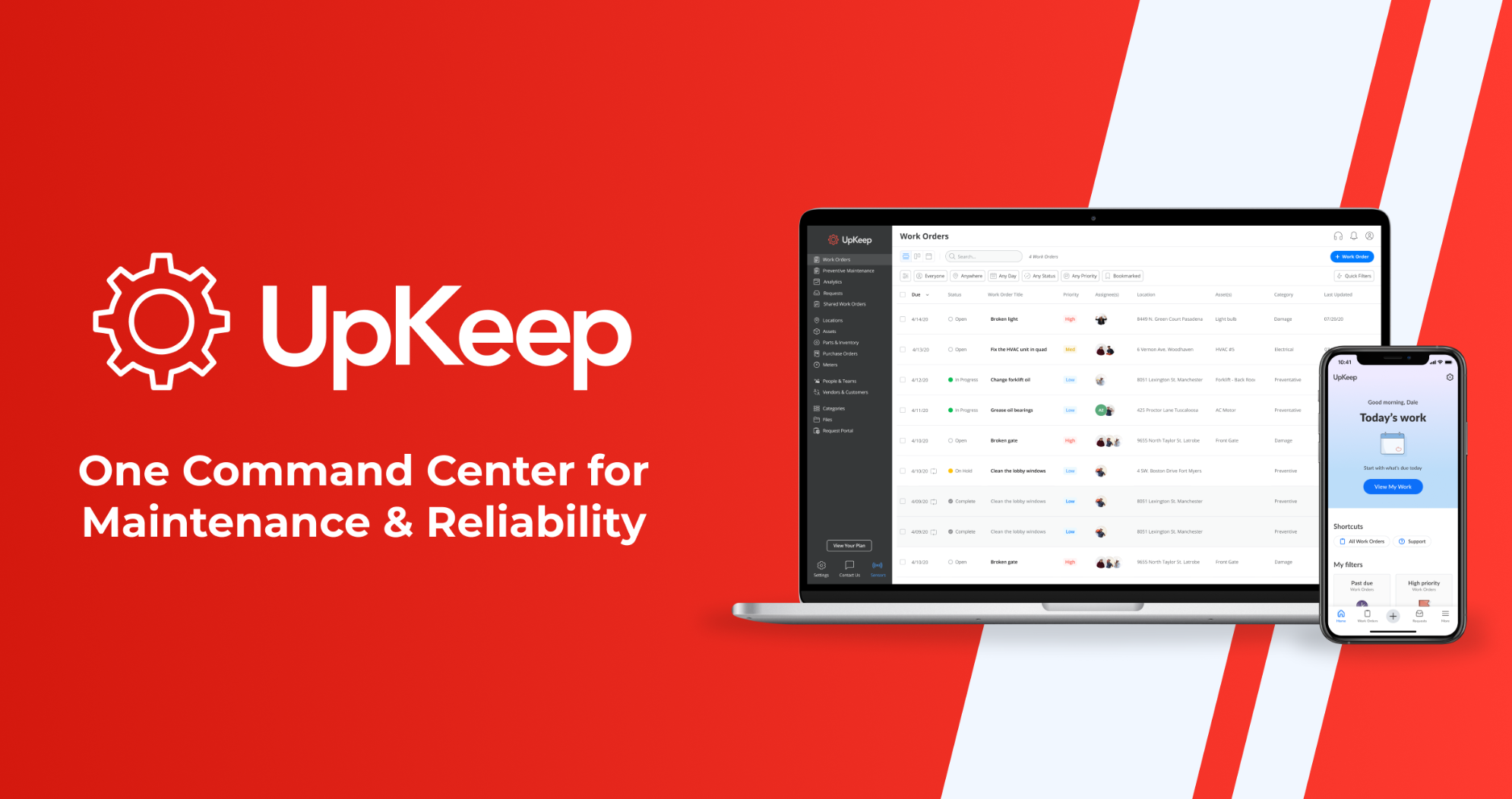
Enterprise and mid-market players already exist. Axiom Cloud serves 15+ U.S. grocery chains with AI-powered refrigeration management — predictive maintenance, leak detection, energy efficiency — all layered onto existing refrigeration controllers without additional hardware. Hussmann's StoreConnect provides leak detection and operational analytics for supermarket-scale systems. CMMS platforms like UpKeep help teams manage work orders and preventive maintenance schedules. Field-service software players help contractors dispatch technicians and manage workflows.
The opportunity sits at a level those companies aren't optimizing for. Independent operators have three unsolved problems. First, low-friction install on older equipment: most independents don't have internet-connected refrigeration controllers, and they need a hardware-included solution that straps onto existing machines in minutes. Second, a dead-simple ROI story: an independent restaurant operator is never going to log into a multi-tab analytics dashboard every morning; they need a text message that says "call your repair guy." Third, a channel strategy that uses local service contractors rather than requiring a direct enterprise sales motion.
The gap is packaging, focus, and distribution. The technology already exists.
The Insight: Your Real Customer May Be the Service Company
At first glance, the restaurant owner looks like the buyer. In practice, the stronger wedge may be refrigeration and kitchen-service contractors.
Those businesses already sell maintenance agreements. They already get emergency calls. They already dispatch techs. They already own the trust relationship. They operate in a world where reducing catastrophic failures makes their operations smoother and their contracts stickier. Industry commentary consistently highlights the complexity of commercial refrigeration service, the shortage of skilled techs, and the premium on emergency work — all of which make a contractor-centric monitoring layer attractive for smoothing dispatch and building recurring revenue.
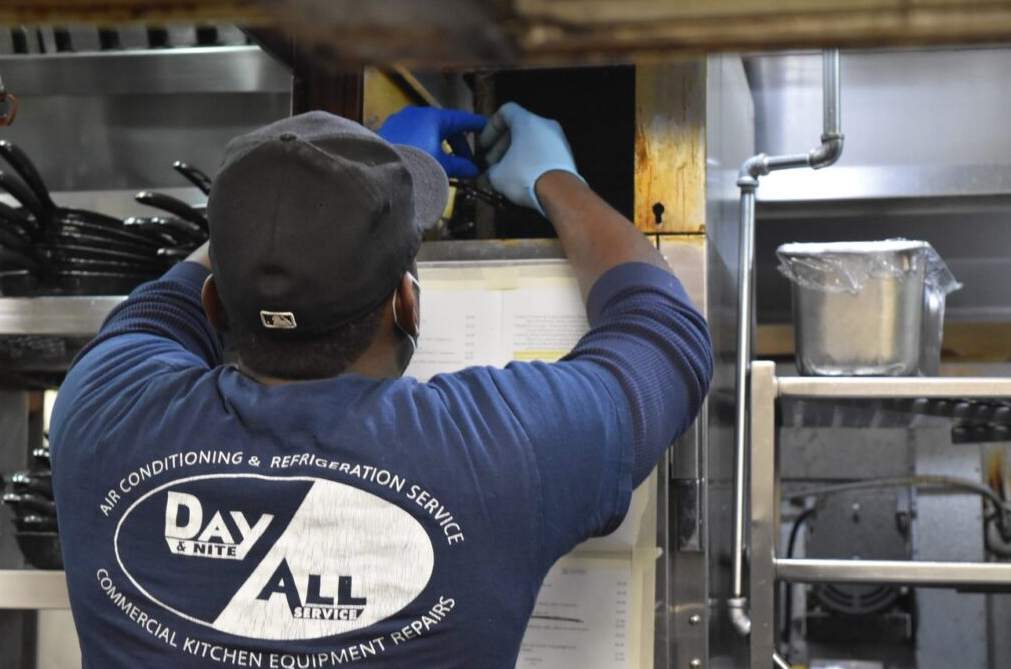
This reframes the go-to-market entirely. Instead of persuading thousands of individual owners one by one, you equip a contractor with a premium monitoring layer they resell across their installed base. The contractor gets fewer blind emergency visits, more scheduled work, better customer retention, and a new recurring-revenue line. You get distribution. This approach is consistent with how other building-systems tools have successfully gone downmarket — leveraging existing trust and maintenance agreements rather than forcing high-friction direct sales to every individual location.
This is likely the strongest version of the business because it converts a difficult local-sales problem into a channel-sales problem attached to existing trust and service behavior.
What the Product Should Actually Be
The first product shouldn't pretend to predict every failure mode with magical precision.
It should do four things well:

Unlock the Vault.
Join founders who spot opportunities ahead of the crowd. Actionable insights. Zero fluff.
“Intelligent, bold, minus the pretense.”
“Like discovering the cheat codes of the startup world.”
“SH is off-Broadway for founders — weird, sharp, and ahead of the curve.”


