


The Waitlist Is a Second Studio
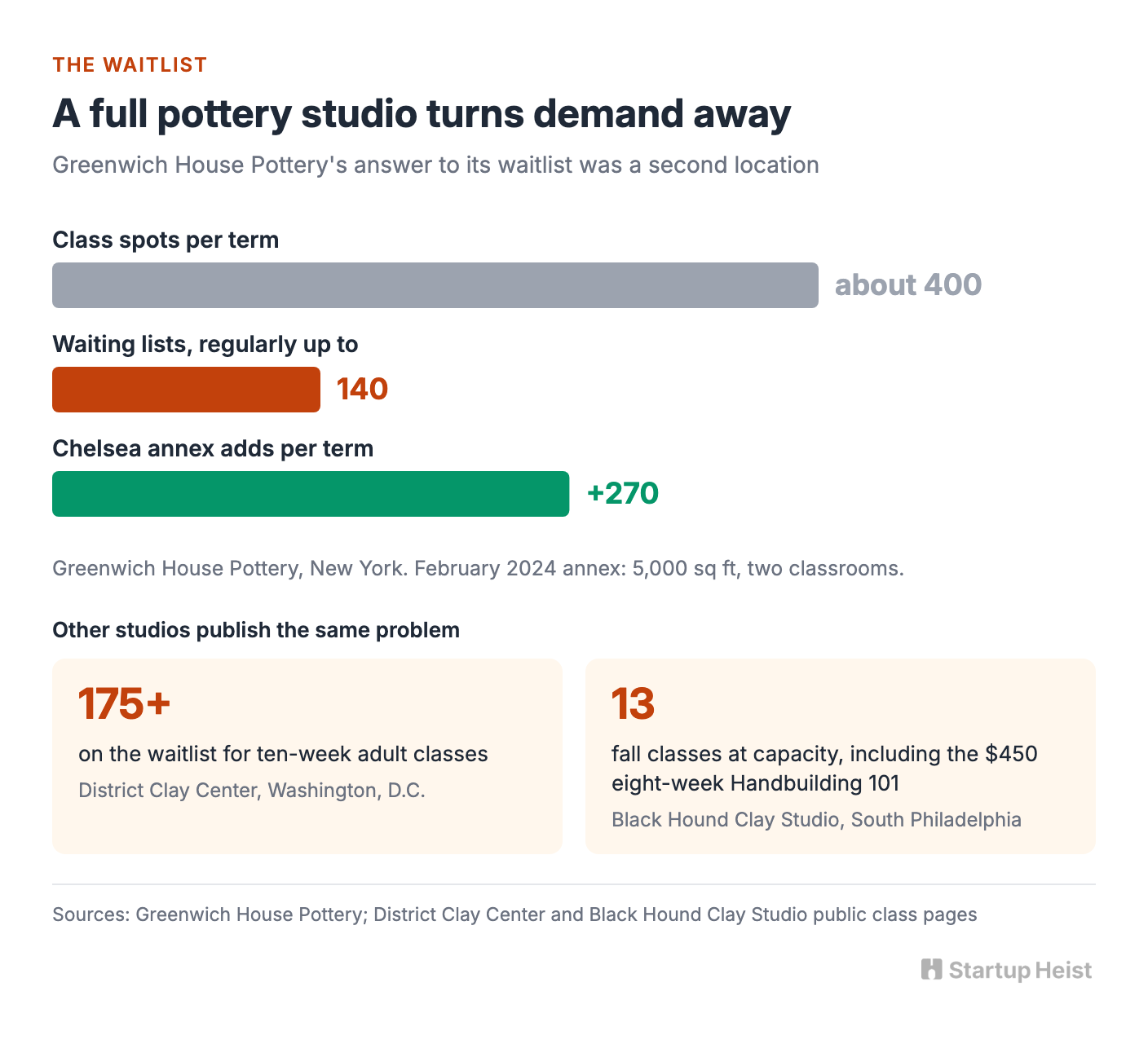
In February 2024, Greenwich House Pottery in New York did what a pottery studio does when demand outruns the building. The 122-year-old institution offers about 400 class spots per term, and its waiting lists had been regularly ballooning to 140 people. So it opened a 5,000-square-foot annex in Chelsea with two classrooms and room for 270 more students per term.
Few independent studios can pay for that answer. A yoga studio with a sold-out class adds another session. A pottery studio runs into physical ceilings: wheels, worktables, instructors, drying shelves, glazing labor and, eventually, kiln capacity. Once those fill, every extra customer lands on a waitlist and pays nothing.
Pottery studio waitlists are public. District Clay Center in Washington, D.C., tells visitors its ten-week adult classes are full and its waitlist runs past 175 people; spaces open once a month and usually fill the same day. Black Hound Clay Studio's South Philadelphia location lists 13 fall classes at capacity, including its $450 eight-week Handbuilding 101.
The heist is to move part of the class outside the studio. The wheels and kilns stay put. You take the portable half: clay, tools, an instructor and a beginner-friendly hand-building project.
Say a studio has 40 people on its waitlist. It invites them to a two-hour Tuesday night session at a brewery, café or community room, and 20 of them pay $75. The studio supplies its approved clay and its instructor, guests build their pieces off-site, and the pieces go back to the studio for drying, glazing and firing. Customers pick them up there a few weeks later.
The studio earns money from demand it was turning away, without signing another lease, and the venue fills a slow night. You run the machinery in between as a local overflow department for independent pottery studios.
Here's the opportunity:
The money: Run 20 events a month at a $300 average fee for $6,000 a month; at $450, $9,000. Boston brewery clay nights sell for $75 to $105 a seat.
Inside:
• The event P&L and how to price your fee
• A one-event MVP and the 15-seat presell rule
• A ready-to-send outreach email for studios
• The density moat and three paths to scale
The Format Is Proven. The Business Model Isn't.
Brewery pottery nights already exist. Pottery with a Purpose runs beginner clay workshops in breweries, sake bars, cafés and yoga studios across more than a dozen markets, including Boston, Atlanta, Austin, Denver, Phoenix and D.C. Its Boston-area tickets run from $75 for a workshop at Winter Hill Brewing in Somerville to $105 for a mug-making night at Hopothecary Ales in North Reading. It also sells corporate events, birthdays, bachelorettes and apartment resident nights. Whether adults will pay to sit at a brewery table and make things out of clay is a settled question.
Look at how those workshops finish, though. Pottery with a Purpose glazes and fires the pieces, then typically ships them to customers three to eight weeks after the class. Nothing routes the customer back into a teaching studio. The model suits a consumer workshop brand and wastes the moment for a studio with its own classes to sell. The question in front of you is narrower: can a pottery studio convert its own excess demand into profitable off-site events without creating a second operational headache?
Some studios and independent instructors already run their own brewery nights, which proves the demand and shows the cost: the person who should be teaching is also booking the room, selling tickets and driving wet clay across town. The software around them is crowded. ClassBento is a marketplace and booking layer, Eventbrite sells ticketing, and Kiln Fire and similar ceramics tools handle registration, memberships and firing fees. None of them is built to stand between one studio's waitlist and one brewery's back room on a Tuesday, and that gap is where you sit.
A studio owner should be able to tell you, "We have 63 people waiting for beginner classes," and hear back: "Give me three dates your instructor is free and tell me how many pieces your kiln can absorb. I'll turn that into an event." An owner will value that answer more than another dashboard.
Why Now
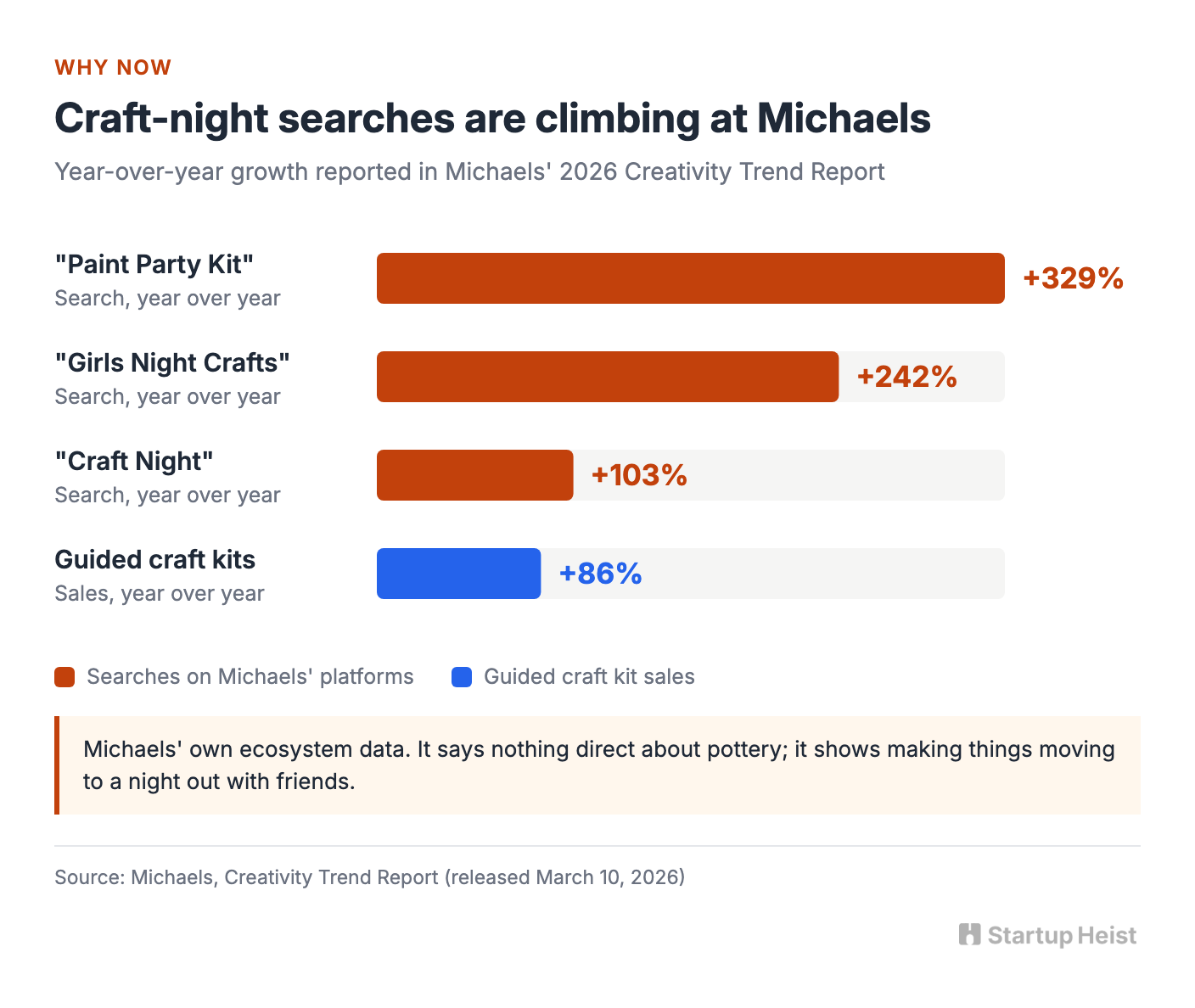
On March 10, 2026, Michaels released its annual Creativity Trend Report. Searches on its platforms for "Craft Night" rose 103% year over year, "Girls Night Crafts" 242% and "Paint Party Kit" 329%, while guided craft kit sales grew 86%. The numbers come from Michaels' own ecosystem and say nothing direct about pottery. They do show where the behavior is heading: making things has become something you do with friends on a night out, instead of alone at a kitchen table.
Pottery with a Purpose sells exactly that, marketing "mindful moments" and the chance to "unplug and hand-build pottery." For a studio, the same appetite opens a new offer to the people it turns away. A waitlisted customer used to have two choices: wait for next term or go elsewhere. Now the studio can write, "Your wheel class is still full. Want to join us for a studio-hosted clay night next Thursday?"
Nothing here waits on a regulatory unlock or a technical breakthrough. The demand is visible and the constraint is local, which is enough to test the idea this month.
Two Kinds of People Are Waiting
The biggest mistake is assuming everyone on a pottery waitlist wants the same thing. Someone waiting for a ten-week wheel course wants to learn ceramics; someone happy to buy a $75 brewery date night mostly wants a good Tuesday. Each needs its own product.
Unlock the Vault.
Join founders who spot opportunities ahead of the crowd. Actionable insights. Zero fluff.
“Intelligent, bold, minus the pretense.”
“Like discovering the cheat codes of the startup world.”
“SH is off-Broadway for founders — weird, sharp, and ahead of the curve.”


