


You're on your knees on cold tile, toothbrush in hand, scrubbing grout for the third Saturday in a row. At this point you're performing a little domestic shame ritual for the gods of mildew.
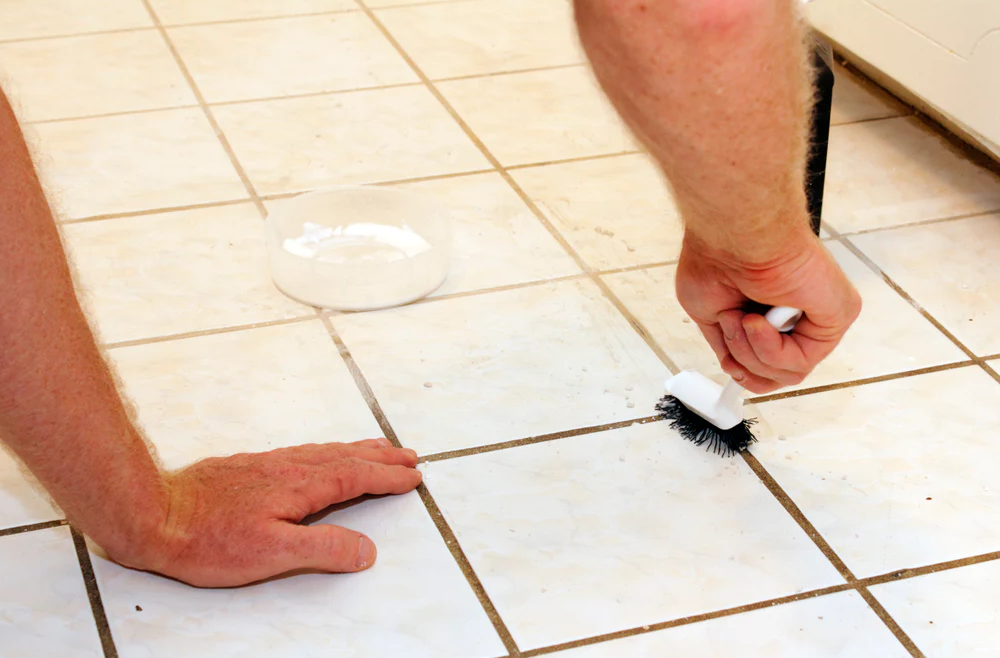
Meanwhile, the household cleaning tools market just crossed $60 billion and is heading toward $92 billion by 2035. Surface cleaners specifically—the category you're competing in with your toothbrush—will grow from $12 billion to $17 billion over the next decade. Professional grout cleaning companies charge $0.80 per square foot because manual scrubbing is genuinely time-intensive labor. And consumers already pay $40-80 for battery-powered spin scrubbers that claim to be 3-4x faster than manual brushing, even though independent testing shows most underperform expectations on truly embedded grime.
a $149-199 starter kit (ultrasonic wand, two heads, charging dock, concentrate bottle) with $24-39 quarterly subscriptions for replacement heads and chemistry refills. At 40% gross margin on hardware and 70%+ on consumables, a customer who stays subscribed for two years generates $350-550 in lifetime value.
The addressable market includes 78% of U.S. households who purchase cleaning products weekly, with urban households buying 2.4x more frequently than rural—and that's before counting Airbnb hosts managing multiple properties, professional cleaners, and property managers who'd buy in bulk.
You're offering a premium solution to a task they already hate and already spend money trying to solve.
Consumer ultrasonics just solved the packaging problem that kills the spin scrubber category.
At CES 2026, Seattle Ultrasonics showed a chef's knife whose blade vibrates 40,000+ times per second at 10W and cuts with up to 50% less effort. The ultrasonic module is consumer-safe, fits in a standard handle, runs on a rechargeable battery, and survives dishwashers at IP65 water resistance. First production run sold out at $399. Reviewers who were initially skeptical admitted that slicing tomatoes required almost no resistance.
Seattle Ultrasonics spent six years proving you can fit safe, effective ultrasonic modules into handheld consumer tools. The knife was the proof of concept. The grout wand is the category.
Industrial ultrasonics have solved hard cleaning problems for decades. Frequencies from 20-40 kHz create cavitation bubbles that implode with microscopic force, dislodging contaminants from surfaces without abrasive scrubbing. That physics works in jewelry cleaners, medical instrument sterilizers, and parts washers across manufacturing. Until Seattle Ultrasonics, consumer form factors couldn't handle the engineering constraints: water resistance, battery safety, heat dissipation, and vibration durability in a device people could actually use.
Their knife uses piezoelectric ceramic crystals mounted to the blade, expanding at microscopic levels to generate vibrations you can't see, hear, or feel in the handle. The blade behaves sharper than it physically is because ultrasonic energy reduces friction between blade and food. That same coupling geometry—energy into the contact edge, not the grip—works for a grout head.
So where else does that physics solve a consumer problem people actively hate? Start with the one chore that combines high disgust factor, repeat frequency, and visible transformation: grout.
The Wedge: Why Grout Wins Over Ice and Paint
You need a beachhead that's defensible, repeatable, and visually obvious. Three candidates emerge.
Ice scraper: seasonal, low willingness-to-pay
Kärcher's EDI 4 Electric Ice Scraper already owns powered scraping—rotating disc, plastic blades, lithium battery, retails around $60. Powered mechanical scraping works fine on flat cold glass. Ultrasonics help at material interfaces: food-to-blade, grime-to-grout. On thick ice you'd need hybrid approaches like fluid film or heated edges that stack cost in a category where consumers balk at $60. Keep ice as a future attachment rather than the flagship.
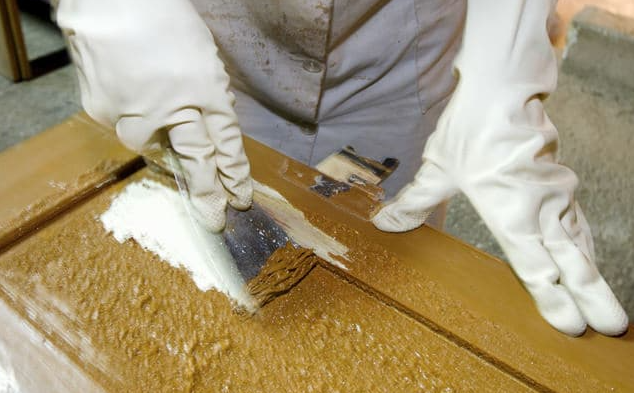
Paint stripper: liability-heavy
Unlock the Vault.
Join founders who spot opportunities ahead of the crowd. Actionable insights. Zero fluff.
“Intelligent, bold, minus the pretense.”
“Like discovering the cheat codes of the startup world.”
“SH is off-Broadway for founders — weird, sharp, and ahead of the curve.”


