


The creator economy is $205B racing toward $1.35T by 2033. 207 million creators worldwide are desperate for edge. When TikTok launched Creator Search Insights in 2025 showing what people are searching for, it went viral instantly. Reactive data, but creators treated it like gold.
A brand-new arXiv paper just flipped the premise: instead of waiting for search volume, generate the queries directly from fresh content.
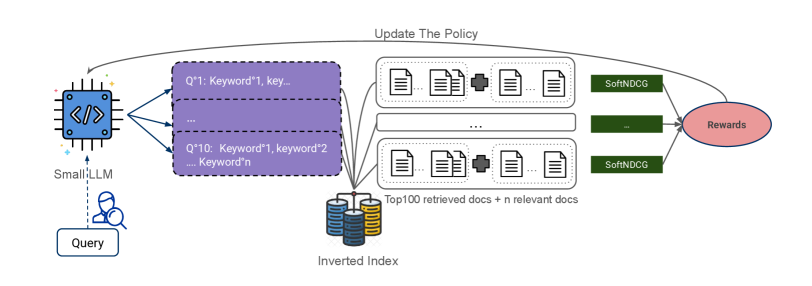
Turn posts into "search-style" queries, score them with engagement signals, catch trends before the language even solidifies.
This isn't another Exploding Topics dashboard. The wedge is bigger: synthetic search demand as a new primitive. The business is selling creators and solopreneurs a weekly execution backlog before the wave hits.
Every trend tool on the market is a firefighter showing up after the keyword catches fire. They hand you a dashboard of Google Trends spikes, TikTok volume charts, postmortems. You're reading the exhaust, not early intelligence.
The real money gets made before anyone knows what to search for—before the behavior has a name, before 40,000 creators are already posting about it.
Why trend tools are structurally late
Traditional trend discovery anchors to volume: scrape sources, watch spikes, summarize what's legible.
Exploding Topics—which Brian Dean sold to Semrush, now doing $3.2M ARR—combines machine learning with manual curation to identify trends "6 months before they go mainstream" across 13,000 topics. Impressive execution. Still reactive.
The workflow:
- Monitor keyword search volume across Google, social platforms, news
- Flag patterns showing consistent growth (filtering seasonal noise)
- Rank by proprietary "Trend Score"
- Publish weekly reports with human analysis
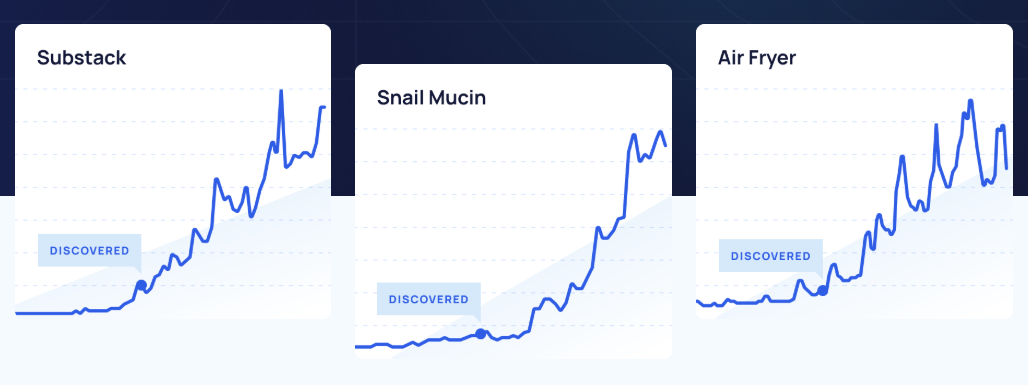
The limitation isn't execution. It's physics. You can't detect a trend until enough people search for it. By the time "cold plunge" has search volume, 10,000 wellness influencers are already posting recovery videos.
The January 2026 Real-Time Trend Prediction paper describes it precisely: "Existing methods relying on keyword monitoring fail to capture trends in their formative stages because users must first develop shared vocabulary before search patterns become detectable."
The technical shift
The RTTP paper introduces something genuinely new: generative query indexing for trends. And it's not a lab toy—this is production-deployed at Meta.
Content → Query Generation
An LLM reads fresh posts (Reddit threads, TikTok captions, YouTube comments, newsletter snippets) and generates "search-style queries" capturing what people would search for if they knew how to articulate it.
Example post: "I've been sleeping so much better since I started mouth taping before bed. Game changer for my energy levels."
Generated queries: "mouth taping for sleep," "how to improve sleep quality naturally," "why am I tired after 8 hours sleep," "alternatives to CPAP machine"
The LLM isn't summarizing. It's predicting the questions this behavior will eventually generate.
Deep Engagement Scoring
Not all signals are equal. The paper emphasizes "deeper interaction signals" over raw likes:

Unlock the Vault.
Join founders who spot opportunities ahead of the crowd. Actionable insights. Zero fluff.
“Intelligent, bold, minus the pretense.”
“Like discovering the cheat codes of the startup world.”
“SH is off-Broadway for founders — weird, sharp, and ahead of the curve.”


