


A founder extends a hand. The handshake is wet—not a little sweaty, but soaked. The kind that makes you instant-calculate whether it's nerves, a medical condition, or something they can't control. You shake anyway, but now you're both thinking about it.
That founder will spend the rest of the meeting wondering if you noticed. They'll grip the pitch deck tighter to hide it. They'll avoid the handshake at the end.
Micro-problems that hijack confidence. Conditions awkward enough that people delay care, Google in secret, and happily pay cash for a private fix. Hims & Hers proved the economics work—$599 million in Q3 2025 revenue (up 49% year-over-year), 2.5 million subscribers, and raised full-year guidance above $2.3 billion. They built it on stigmatized categories people won't tell their regular doctor about: sexual health, hair loss, anxiety, weight.
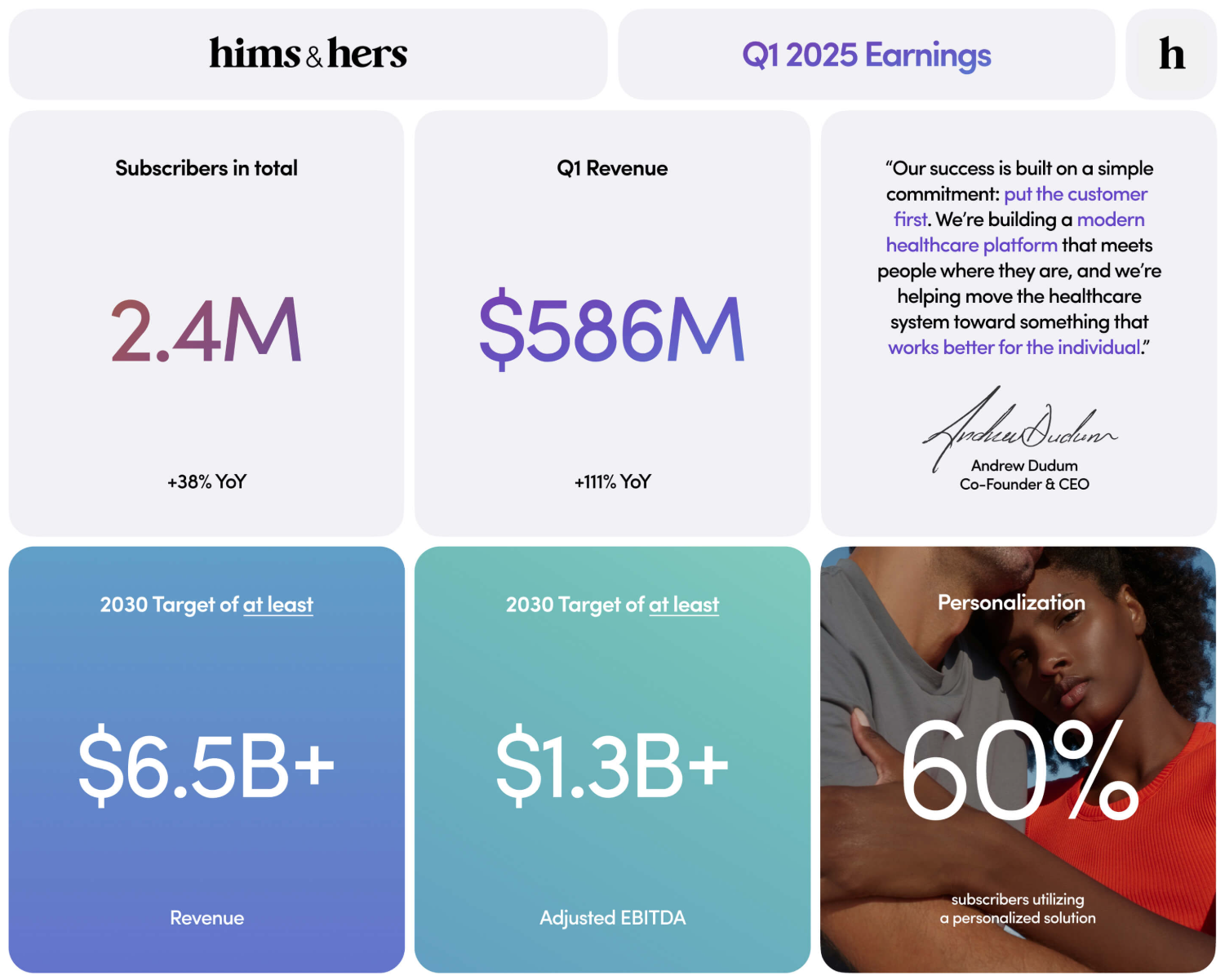
The telling stat: 20% of their subscribers now use the platform for multiple conditions. They're not shopping for a single product. They're shopping for a relationship with privacy.
The rails to build it have never been more turnkey. White-label asynchronous telehealth is established infrastructure—HHS explicitly describes async direct-to-consumer as standard care format, commonly used for intake and follow-ups. The "Shopify for telehealth" platforms exist. Clinician networks are real.
Launch one "Hims for [random niche]" brand and you'll get copied in 90 days. The bigger play: build the front door for "stuff people don't tell their PCP."
The infrastructure is proven
Asynchronous direct-to-consumer telehealth isn't experimental. It's accepted care infrastructure. Patients submit information, providers review later, treatment follows—the model works for intake, follow-ups, and entire care pathways in dermatology, sexual health, and beyond.

Bask Health and similar platforms market themselves as "Shopify for Telehealth"—white-label stacks with clinicians licensed across states, EMR integration, pharmacy fulfillment routing to all 50 states, and HIPAA-aware intake workflows. You handle marketing and patient experience. Licensed clinicians handle clinical decisions. The platform handles the pipes.
For controlled substances, the DEA and HHS extended COVID-era telemedicine flexibilities through December 31, 2026, while permanent rules get finalized. Even if your initial niches don't involve controlled meds, this extension signals regulators understand tele-prescribing is permanent infrastructure. You still need counsel and a serious medical director—state-by-state licensure and standard-of-care rules apply—but the rails aren't going away.
Pick the right battlefield
"Embarrassing" is too broad. You want shame clusters with high intent, cash-pay tolerance, and repeatable funnels.
Use the following 4 categories as your starting point. After establishing your scope, follow the MVP and playbook in the next section.

Unlock the Vault.
Join founders who spot opportunities ahead of the crowd. Actionable insights. Zero fluff.
“Intelligent, bold, minus the pretense.”
“Like discovering the cheat codes of the startup world.”
“SH is off-Broadway for founders — weird, sharp, and ahead of the curve.”


