


CES has two kinds of viral moments:
Type 1: The gimmick. Gets filmed. Gets laughed at. Gets forgotten.
Type 2: The format primitive. Gets filmed. Gets laughed at. Gets licensed for six figures.
A music-playing lollipop just became Type 2.
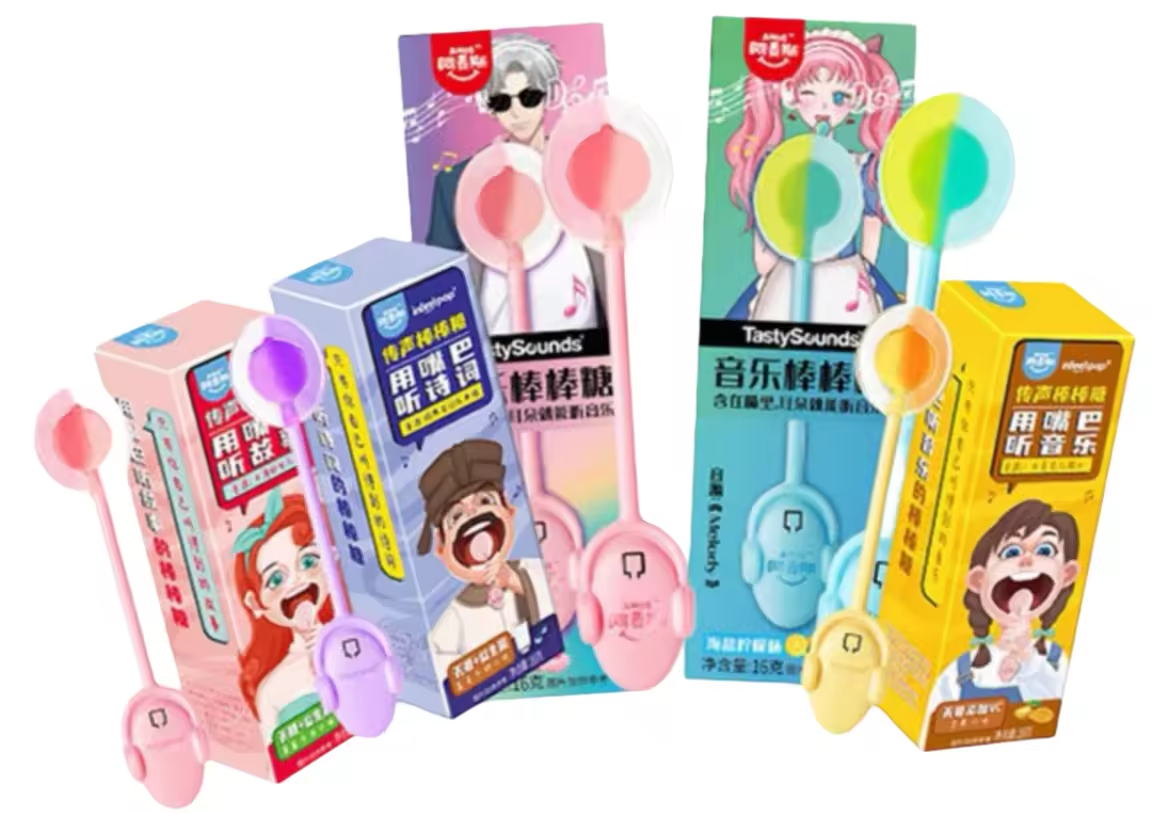
Lollipop Star debuted at CES 2026 and did something most exhibitors dream about: it created a reaction you can't fake. Bite down with your molars and a track plays inside your skull via bone conduction — no speakers, no earbuds, just vibrations traveling from candy stick through jaw to inner ear. The tech isn't new. Hasbro sold 2.5 million Tooth Tunes toothbrushes using the same principle back in 2007. What changed is the context: Lava Tech Brands paired it with exclusive artist tracks (Ice Spice, Akon, Armani White), priced it at $8.99, and positioned it as "pure flavor and sound" — edible media rather than novelty candy.
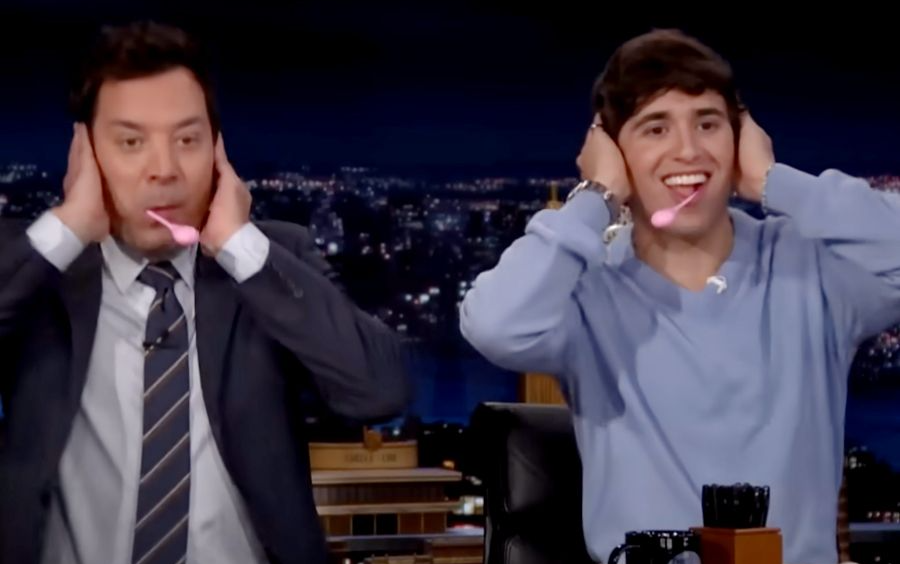
The cultural penetration is already happening. A Tonight Show segment featured Jimmy Fallon and Marcello Hernández testing it live — both couldn't stop laughing, exactly the kind of organic reaction that turns product demos into shareable moments.
The positioning matters because you're not really selling lollipops. You're selling the moment where someone bites down, their eyes go wide, and everyone within filming distance pulls out their phone.
Brands will pay $60,000+ to deploy that moment at scale.
Why Now (The Convergence)
CES 2026 made teeth-music culturally legible. Before last week, explaining "audio candy" required three sentences and a demo. Now it's: "You saw the CES lollipop, right?"
That recognition window is narrow. Maybe 6-9 months before copycats flood the zone and the format loses its "holy shit" coefficient. But right now, three trends are converging:
Global experiential marketing spend hit $128.3 billion in 2024, finally surpassing pre-pandemic levels with over 10% year-over-year growth. More importantly, 74% of Fortune 1000 marketers are increasing spend in 2025, with typical allocations between $500K-$1M per brand annually. Money is sitting in approved budgets waiting for something fresh to deploy against.
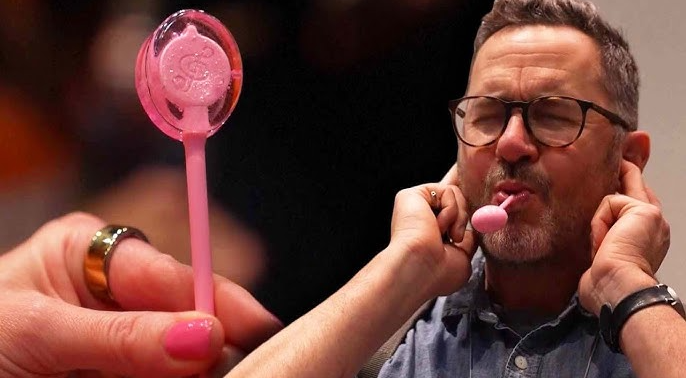
Research from VML Intelligence shows 63% of consumers actively crave multisensory brand experiences, and 72% want experiences engaging as many senses as possible. Brands using sensory elements see 70% higher recall than those that don't. The data is settled: multisensory activations aren't creative indulgence, they're conversion infrastructure. Trend reports consistently show these experiences materially shift favorability and purchase intent.
Most experiential activations have the same problem: everyone experiences the same thing simultaneously. Edible audio flips this: the sensation feels private (it's inside your head) while happening socially (everyone's reacting together). That contrast — intimate but shared — drives visceral reactions. Coverage across CNET, Mashable, and Digital Trends repeatedly emphasizes the surreal "music in your head" sensation that makes the moment filmable rather than the audio fidelity itself.
The timing advantage: you have a newly viral format, existing budgets, proven demand for sensory experiences, and a technological gimmick that creates performable, camera-ready reactions.
You're not building a hardware business. You're building a format business.
The Real Opportunity (Not What You Think)
Most people see this and think: "I should white-label edible audio products."
Wrong angle.
The defensible business isn't selling hardware. It's selling format + fulfillment. You become the team that can reliably ship an edible-audio moment at scale, which includes:
Unlock the Vault.
Join founders who spot opportunities ahead of the crowd. Actionable insights. Zero fluff.
“Intelligent, bold, minus the pretense.”
“Like discovering the cheat codes of the startup world.”
“SH is off-Broadway for founders — weird, sharp, and ahead of the curve.”


