


In 1876, a schoolteacher named Anna Wright walked into the Philadelphia World's Fair and bought her nine-year-old son a box of wooden blocks.
They were Friedrich Froebel's "gifts" — geometric shapes designed in the 1830s for the world's first kindergarten. Cubes, cylinders, triangles. Kids sat at gridded tables and assembled them.
That nine-year-old was Frank Lloyd Wright. He later wrote: "The smooth shapely maple blocks… are in my fingers to this day."
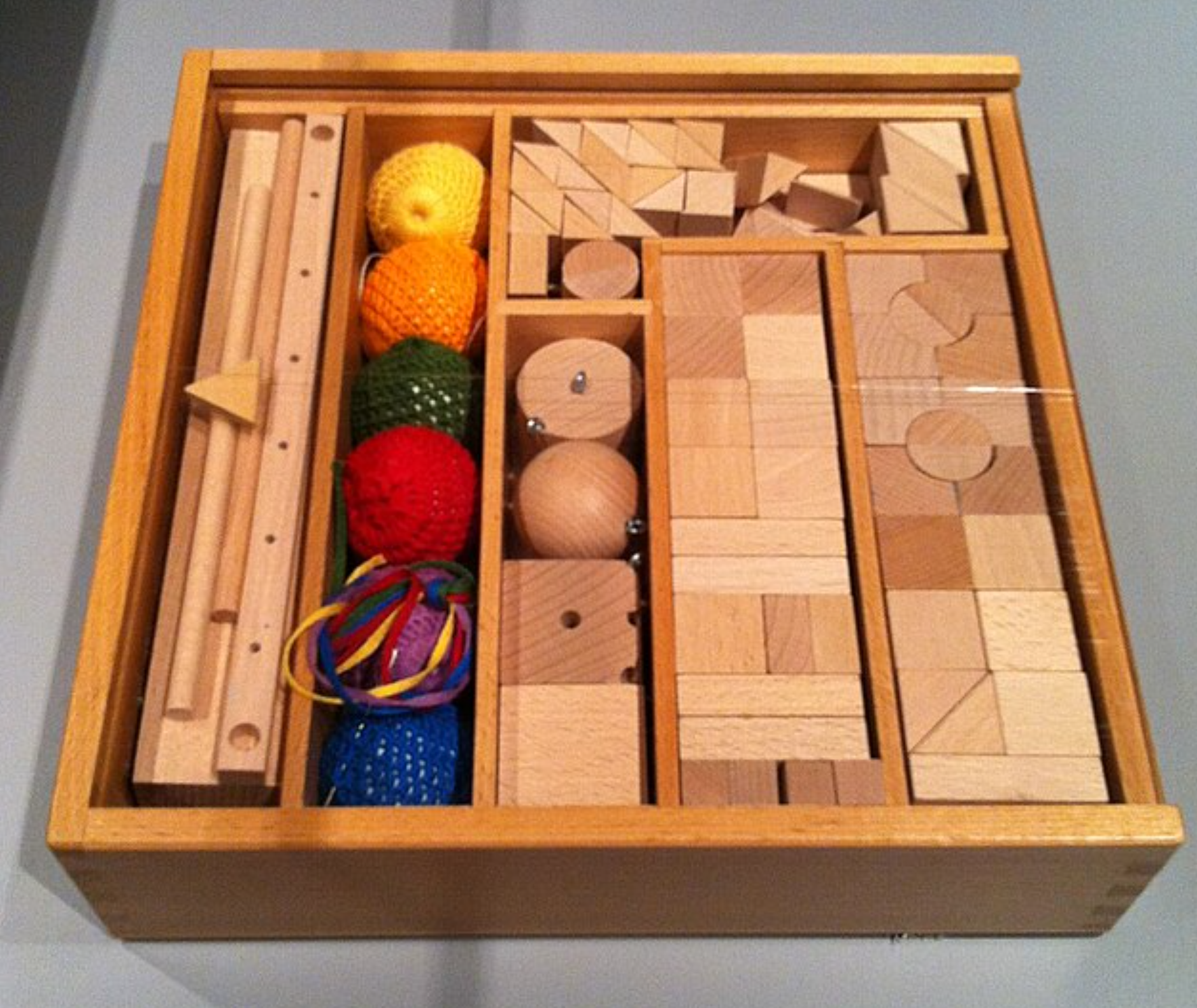
Wright didn't mean it as metaphor. The geometric vocabulary of Fallingwater, the Guggenheim, Unity Temple — it starts at that table. And Wright wasn't alone. Le Corbusier played with Froebel's blocks. So did Buckminster Fuller, Paul Klee, and the founders of the Bauhaus.
One set of children's blocks shaped the visual language of the 20th century. Froebel gave kids a grammar: simple forms, clear constraints, infinite recombination. The blocks taught children how to see.
On March 1, LEGO took this logic to a new level.
The SMART Brick looks like a standard 2×4 brick. Inside: sensors, wireless networking, a sound engine. No app required. The intelligence lives in the brick. A decade of R&D and 20+ patents went into building a computing platform in a form factor kids already trust — launched through Star Wars to teach the grammar before opening up the system.

LEGO built the runtime but not the curriculum. The adults who need structured physical play (parents, teachers, therapists) don't have tools yet. Schools will pay $1,500–$6,000/year for turnkey solutions. Clinics will pay up to $10,000/year for protocols that work. Educational play is a $55–90B market growing 8–12% annually.
Read the full playbook here:

LEGO shipped compute into millions of homes. The creator economy layer between their hardware and paying parents, teachers, and therapists is wide open.
From the Vault:

Robot fleets degrade silently from sensor contamination. The warranty-safe compliance layer preventing mystery downtime remains unbuilt across OEMs.

Coinbase and Google shipped agent payment rails. Nobody built the governance layer that makes CFOs approve production deployment.


