


The closet audit always reveals the same graveyard.
A $120 hoodie that fits perfectly but faded to charcoal six washes in. Leggings with the right compression but wrong color. That Carhartt jacket you'd wear every day if it didn't look sun-bleached. The structural integrity is flawless. The aesthetic? Dead on arrival.
Most people don't want a replacement. They want the original back—just not looking like it survived a decade in a college dorm. DIY Rit dye turns into a Pinterest fail. The local dry cleaner can't help. The garment lands in the "maybe donate" pile, where it sits for 18 months before guilt-cycling to Goodwill.
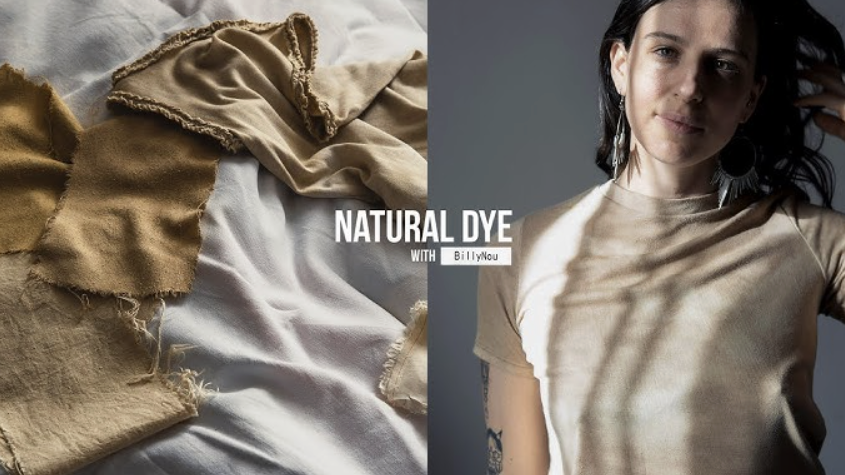
A mail-in service with one brutally simple promise—send your faded basics, get them back Factory Black—could hit $12,000-$17,000 in monthly profit at 500 bags per month on a $49 price point. Not custom color matching. Not artisanal slow-fashion theater. Just industrial-strength black that hides stains, unifies mixed wardrobes, and turns "expensive trash" back into rotation-ready pieces. At scale, the real money lives in B2B: resale platforms and brand take-back programs facing new EPR mandates will pay $3-$6 per garment for refurbishment that upgrades unsellable inventory to Grade A.
The regulatory tailwinds are already law. The market demand is proven. The garments are sitting in closets. Someone just needs to make "Back to Black" feel as inevitable as same-day delivery.
Why now
This isn't sustainability virtue signaling. Three forcing functions are colliding.
1. Secondhand is exploding into a $367B global market
The resale economy isn't niche anymore—it's infrastructure. ThredUp's 2025 Resale Report projects the global secondhand apparel market will hit $367 billion by 2029, growing at a 10% CAGR. The U.S. market specifically grew 14% in 2024—its strongest year since 2021—and is tracking toward $74 billion by 2028.
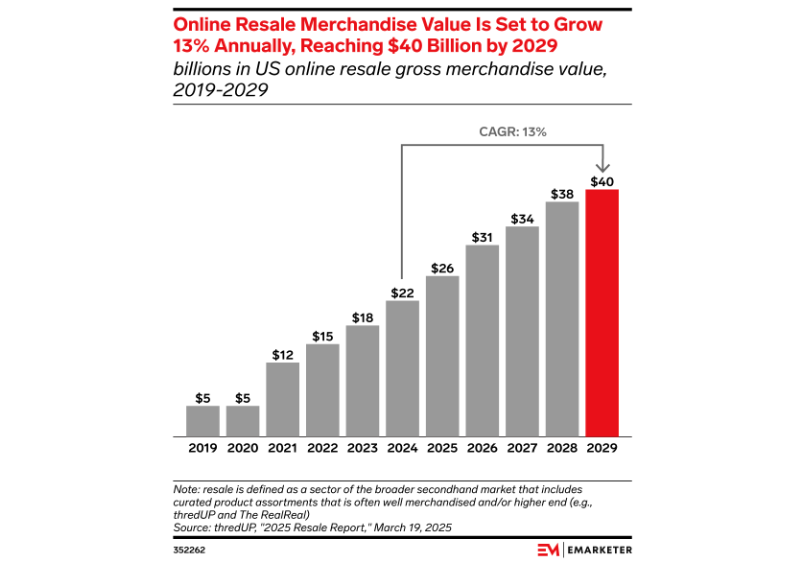
Online resale grew 23% in 2024 and is projected to nearly double by 2029, reaching $40 billion with a 13% CAGR. Platforms like ThredUp, Poshmark, The RealReal, and Depop aren't experimental—they're mainstream infrastructure processing tens of millions of garments annually. ThredUp alone processes roughly 17 million garments per year, with sophisticated quality grading that routes items into different condition tiers.
The cultural momentum is legit. "Underconsumption core" went from TikTok meme to consumer behavior. Gen Z and Millennials plan to spend 46% of their apparel budget on secondhand in the next 12 months. Tariff pressure is accelerating the shift—59% of consumers say if new policies make apparel more expensive, they'll seek secondhand alternatives (69% among Millennials).
More garments will route into "reuse/refurbish/resale" workflows. Refurbishment stops being craft and starts being critical infrastructure in the circular economy.
2. Returns are bleeding $890 billion annually—and it's a fit/appearance crisis
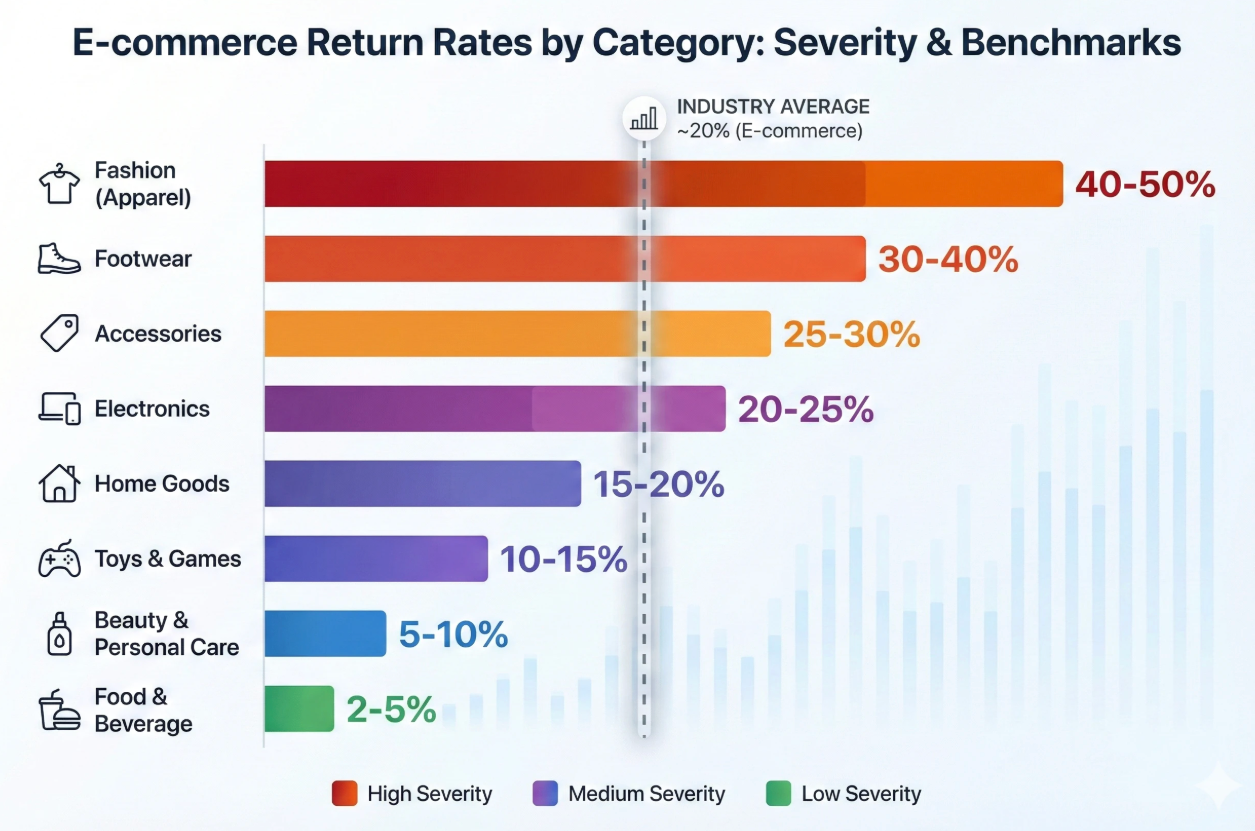
Fashion e-commerce has a violence problem. U.S. retailers handled $890 billion in returns in 2024—roughly 16.9% of all retail sales. For apparel and footwear specifically, return rates run 25-40% for online purchases, depending on category. Swimwear and fast fashion regularly hit 50%.
Size and fit issues account for 53-77% of all apparel returns. But there's a secondary returns driver nobody talks about: appearance mismatch. Color looks different in person. Fabric feels cheaper than expected. The garment doesn't photograph well for resale.
Processing these returns costs brands $5-$10 for every $100 in sales. Less than half of returned clothing is resold at full price. Many items hit markdown purgatory or outlet channels because they're out of season, slightly worn, or just don't look fresh enough to command original retail.
Resale platforms face the exact same problem. Faded blacks, tired-looking basics, and garments that are structurally sound but aesthetically "meh" either don't sell or require aggressive pricing to move. Items that fail quality grading purely on color degradation get downgraded from Grade A to Grade B/C, destroying unit economics.
There's no software fix for a hoodie that looks washed out. But there is a physical process fix: restore it to black.
3. Policy is shifting from "encourage" to "mandate"—and fast
Extended Producer Responsibility (EPR) for textiles just went from theory to law.
The EU Waste Framework Directive (revised version) officially entered into force on October 16, 2025. It mandates that all EU Member States establish EPR schemes for textiles and footwear by April 17, 2028—30 months from enactment. Micro-enterprises get at most one extra year, but the direction is set.
Under these schemes, producers (brands, retailers, importers) pay fees to finance collection, sorting, refurbishment, and recycling of post-consumer textiles. Fees will be eco-modulated based on sustainability criteria like durability, repairability, and recycled content. France has been running its Refashion EPR since 2007; the Netherlands launched in July 2023 with targets requiring 50% reuse/recycling by 2025 and 75% by 2030.
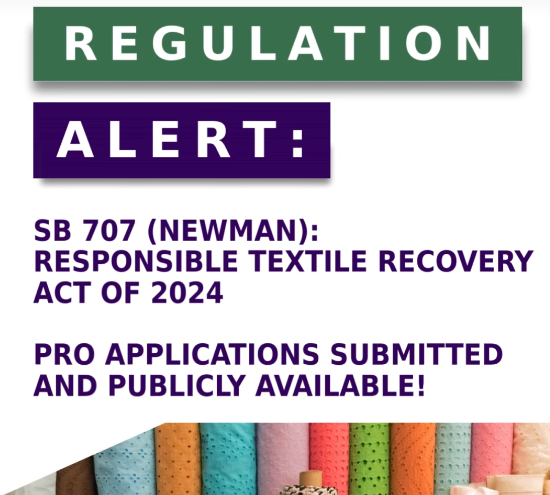
In the U.S., California's SB 707—the Responsible Textile Recovery Act of 2024—is the first American EPR for textiles. Producers must join a Producer Responsibility Organization (PRO) and implement reuse/repair/recycling programs by mid-2026 (roughly 18 months away). This isn't voluntary. It's enforceable law with penalties mirroring California's packaging regime.
Brands and resale platforms will be contractually and financially obligated to route garments toward reuse pathways before disposal. Refurbishment services that can take "Grade B" inventory and convert it to "Grade A" become compliance infrastructure, not nice-to-haves.
The market gap (utility, not artistry)
Mail-in overdye services exist, but they're positioned as artisanal slow-fashion experiences, not operational solutions.
Green Matters Natural Dye Company offers mail-in services explicitly supporting natural dyes with educational content. They'll overdye your garment to natural black using botanical sources. It's beautiful. It's also craft-forward and positioned around uniqueness, not standardized refurb outcomes.
SUAY (Los Angeles) runs community dye baths with transparent per-item pricing: tops start around $10-$22, dresses $18-$35, outerwear $30-$50. The vibe is intentional, inclusive, values-driven.
Touch Threads charges $40-$65 for custom hand-dye service. Again, priced like a treat, not a utility.

These businesses serve a real audience. But they're not solving for scale. They're not solving for "I have 200 faded black tees from a failed product drop and need them resellable."
What's missing is the utility layer: fast, consistent, operationally disciplined, priced like shoe repair. Think Zappos for garment refurb, not Etsy.
Black is the cheat code. It hides stains that would disqualify resale, unifies mixed-fabric wardrobes without color-matching hell, has universal demand across demographics, and simplifies acceptance criteria (you're not matching "dusty rose"—you're hitting a jet black standard).
That narrow focus is how you win: do one thing at industrial quality.
The constraint that becomes the moat
Dyeing sounds simple until you read a textile chemistry textbook.
Different fibers require fundamentally different dye systems:
- Cotton/linen/rayon → reactive dyes or direct dyes (water-soluble, bond chemically to cellulose)
- Polyester → disperse dyes (require high heat ~200°C to penetrate hydrophobic synthetic fibers)
- Nylon → acid dyes (fast uptake, darker results than other fibers)
- Wool/silk → acid dyes (protein fibers)
- Acrylic → basic dyes
Blend fabrics are even messier. A polyester-cotton blend technically needs a two-bath process: disperse dyes for the polyester component, reactive dyes for the cotton component. Getting uniform color across both fiber types requires either sequential baths or sophisticated one-bath formulations with temperature staging.
Construction details matter too: polyester thread on a cotton garment won't take reactive dye the same way the fabric does, creating contrast stitching. Elastane degrades under high heat. Metal zippers can discolor. Screen prints can crack. Seams can shadow differently than body fabric.
And dyeing creates regulated wastewater. The EPA's Textile Mills Effluent Guidelines (40 CFR Part 410) govern discharge from textile facilities and are built into NPDES permits. You can't just dump dye bath runoff down the drain.
The business is a routing + acceptance + partner coordination + outcome guarantee engine. The moat isn't chemistry knowledge. The moat is knowing:
- Which garments will survive the process (and which to reject upfront based on fiber mix, construction, and condition)
- Which partner facility can handle which fiber class
- How to produce predictable "Factory Black" outcomes across variable inputs
- Which failure modes kill customer satisfaction (thread contrast, seam shadowing, zipper discoloration, residual stains showing through)
After 6 months and 500 garments, you'll have logged more empirical data on real-world consumer garment dye outcomes than most textile mills. That database—fabric composition × construction details × dye process × outcome quality × failure type × customer satisfaction—becomes proprietary intelligence.
The business model (DTC wedge → B2B scale → platform play)
Phase 1: DTC $49 "Back-to-Black pack" (prove unit economics)
Launch narrow. Make it feel like a life hack. Follow this simple first-step playbook:
Unlock the Vault.
Join founders who spot opportunities ahead of the crowd. Actionable insights. Zero fluff.
“Intelligent, bold, minus the pretense.”
“Like discovering the cheat codes of the startup world.”
“SH is off-Broadway for founders — weird, sharp, and ahead of the curve.”


