


A few weeks ago, a former Disney star launched an AI app called 2wai that lets you talk to avatars of your dead relatives. The internet torched it—"Demonic," "Nightmare fuel," "Black Mirror IRL." Newsweek, Forbes, Yahoo, everyone piled on.
But 22.6 million people watched the promo video. Whatever you think of the product, that's a lot of people who clicked on "have a conversation with an AI human."
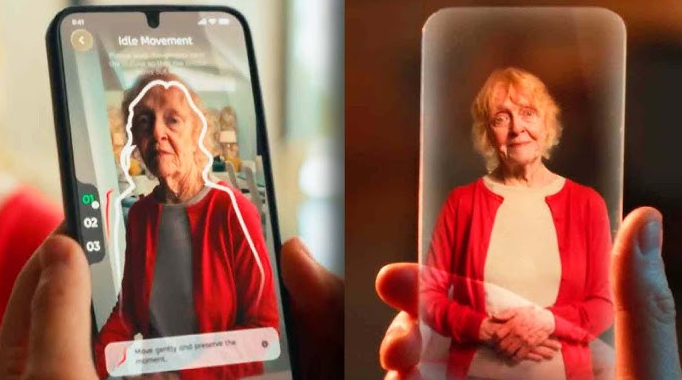
2wai bet that conversation on grief—talking to people who are gone. That was the wrong bet. But the underlying tech is now consumer-ready: AI avatars you can actually talk to, in a way that feels real enough to trigger emotional responses.
Your heist: Use that same tech for something people actually need—practice.
Build the conversation simulator ambitious people use before every high-stakes moment. The raise ask. The hard feedback. The breakup. The boundary-setting call with a parent. All the conversations people currently rehearse in the shower or wing entirely.
The Signal Behind the Noise
The 2wai controversy obscured a more important truth: the market for "digital twins" is exploding. Not the creepy grief-tech kind—the industrial kind. Grand View Research projects the digital twin market will hit $155.84 billion by 2030, growing at 34% annually. MarketsandMarkets pegs it even higher—$149.81 billion by 2030 at a 47.9% CAGR.
Industry is already convinced of the power of simulations for optimizing complex systems. But nobody's brought that same rigor to human conversations—the systems that actually determine your career, your relationships, your bank account.

The evidence that simulated practice works is solid:
The clinical side: A systematic review in JMIR Mental Health found that VR therapy for social anxiety shows medium-to-large effect sizes across 18 studies, with 83% demonstrating symptom reduction. Columbia University's Clinic for Anxiety and Related Disorders is building VR programs specifically for teens because, as they put it, "role play with your therapist surely doesn't feel the same as interacting with a same-aged peer."
The corporate side: PwC ran the largest study of VR soft skills training ever deployed at enterprise scale. Employees learned up to four times faster in VR than in classrooms, were up to 275% more confident applying what they learned, and felt 3.75 times more emotionally connected to the content.
The negotiation side: Harvard's Program on Negotiation is literally telling people to use AI chatbots to rehearse salary talks. MIT ran an experiment with an AI program called MindMeld that coached participants in real-time during live negotiations. The headline from Samuel Dinnar at MIT's engineering leadership program: "Especially when it comes to salary negotiation, people often decide not to negotiate, due to lack of preparation or fear of negotiating." AI training could change that.
The infrastructure for simulated conversation practice is being built across a dozen different verticals: clinical anxiety, corporate L&D, sales enablement, procurement. What's missing is the horizontal play—a default simulation layer for any high-stakes human conversation, regardless of context.
The Opportunity: "Flight Simulator" for Hard Conversations
Every serious conversation in your life is a tiny startup bet:
Ask for a raise → changes your lifetime earnings. Lay someone off → changes your culture and your reputation. Set a boundary with a parent or partner → changes the trajectory of that relationship. Negotiate equity with a cofounder → changes how much of the company you actually own.
Right now, most people "practice" these moments in the shower, in their Notes app, or by trauma-dumping to a friend. The lucky ones pay $300-500/hour for an executive coach who can role-play with them.

The leadership development market alone is worth $82 billion in 2024 and projected to hit $225 billion by 2034. U.S. companies spend over $160 billion annually just on leadership programs. Yet according to Fortune Business Insights, 60% of new managers underperform or fail in their first two years.
They're not failing because they lack technical skills. They're failing because nobody taught them how to deliver hard feedback, navigate a difficult direct report, or push back on their own boss. Those conversations are where careers are made or broken—and the training for them is still almost entirely sink-or-swim.
Nobody owns "the sim you run before every big talk." That's the opportunity.
Product: The Digital Twin Sandbox
Call it TwinRun. ("Fly the sim before you talk.")
The core concept: a persistent digital twin of you that practices hard conversations in a visual, game-like environment powered by AI. Any scenario where you'd normally wing it and regret your word choices later.
What it looks like for a user

Unlock the Vault.
Join founders who spot opportunities ahead of the crowd. Actionable insights. Zero fluff.
“Intelligent, bold, minus the pretense.”
“Like discovering the cheat codes of the startup world.”
“SH is off-Broadway for founders — weird, sharp, and ahead of the curve.”


