


The Skincare Brand's Missing Retinoid Playbook
An old prescription acne cream just pulled 46 million TikTok views. The people watching need moisturizers and cleansers, and thousands of independent skincare brands already sell them. The money is in a reviewed merchandising service that turns trustworthy skincare education into measurable sales, built as a service first and software second.
The Signal: 46 Million Views and a Prescription Label
Tazarotene is a topical retinoid prescribed for acne and psoriasis, and it has been on pharmacy shelves for decades. In the 30 days before October 20, 2026, it collected 46.4 million TikTok views, according to Exploding Topics, which also reports a 1,600% jump in views and 471% growth in search interest over five years. Those are vendor estimates, and 46 million views come from far fewer than 46 million people.
The more useful commercial signal sits on the prescribing label. The prescribing information for Arazlo, a tazarotene lotion, says patients may experience dryness, peeling, redness and itching, and that depending on severity, clinicians should instruct them to use a moisturizer, apply it less often or stop. It also says to avoid cosmetics with a strong drying effect. Mayo Clinic's patient guidance is plainer: use a moisturizer as needed to ease the irritation.
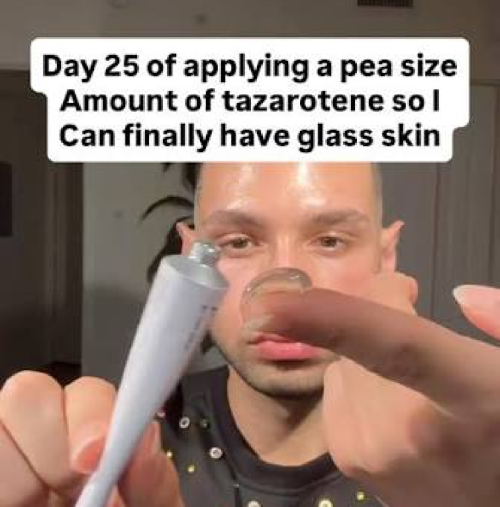
A prescription that's suddenly everywhere sends a lot of new users shopping for ordinary products. They want to know the difference between a gel moisturizer and a rich cream, what makes a cleanser gentle, and how to keep a retinoid routine simple without piling on products that make things worse. Their dermatologist handles the medication questions, and the product questions land on skincare brands. Yet the typical independent store is organized around "hydration," "radiance" and "anti-aging" instead of the questions these shoppers are actually asking.
On present evidence, the gap supports an attractive small business, and you should plan it as one. Here's the opportunity:
The money: Fifty merchants at $149/month is $7,450 MRR, plus $750–$1,500 in setup fees each. Circana credits cleansers and moisturizers for mass skincare's 6% growth.
Inside:
• Five-brand concierge pilot with fixed scope
• Setup and retainer pricing plus merchant math
• Cold audit email and the agency channel
• 90-day plan with a green/yellow/red call
A Large Market With a Narrow Opening
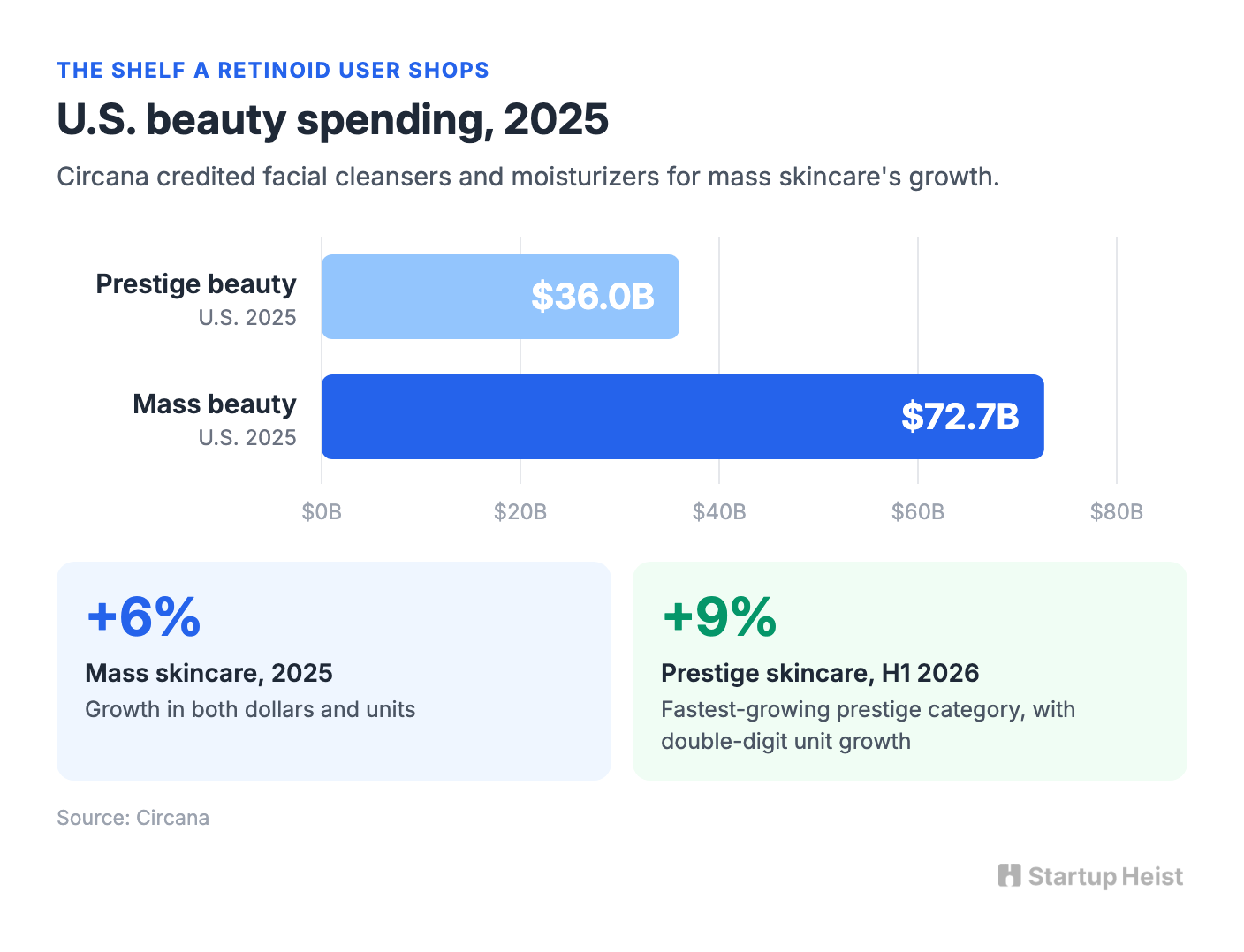
Americans spent $36 billion on prestige beauty and $72.7 billion on mass beauty in 2025, according to Circana. Mass skincare grew 6% in both dollars and units, and Circana credited facial cleansers and moisturizers for the growth, which is exactly the shelf a retinoid user shops. In the first half of 2026, prestige skincare was the fastest-growing prestige category, up 9% with double-digit unit growth.
Those numbers prove that people buy cleansers and moisturizers. They say nothing about how many merchants will pay for this service. A business charging $99 a month only reaches brands that meet three conditions: they sell products that form a coherent routine, they have enough traffic or email reach to make a new collection matter, and they believe better merchandising is worth paying an outsider for. Nobody publishes that count, so size this one from the merchant up.
Curology shows the consumer behavior is real. The telehealth brand sells prescription formulas next to its own Gel Moisturizer (614 reviews) and Cream Moisturizer (221 reviews), each priced under $20, so the supporting routine is part of what customers buy. An independent moisturizer brand can't copy Curology's prescribing business, and it doesn't need to. A brand selling a fragrance-free cleanser, a light moisturizer and a rich cream already has the raw material for a useful collection. What it lacks is the editorial, regulatory and merchandising skill to present those products without getting into trouble.
Bundling Is Already a Commodity
Before building anything, look at what a Shopify merchant can install today.
| Existing solution | What it does | Published pricing |
|---|---|---|
| Fast Bundle | Bundles, mix-and-match, upsells, discounts | $19, $49 and $139/month, tiered by bundle sales |
| Bundles.app | Inventory-synced kits and multipacks | From $19/month |
| RevenueHunt | Product-recommendation quizzes | Free up to 100 responses; paid from $39/month |
| Curology | Prescription formulas plus its own cleansers and moisturizers | Direct-to-consumer product sales |
Fast Bundle alone carries more than 3,500 reviews. Software that puts three products in a box is solved and cheap, so rebuilding a $19 plugin and sprinkling in prescription keywords leads nowhere, and a recommendation quiz is no more novel. Even the compliance check has an app. Claim scanners such as Aplomb already read Shopify product pages for risky FDA and FTC language and suggest rewrites, with a free tier and paid plans from $29 a month.
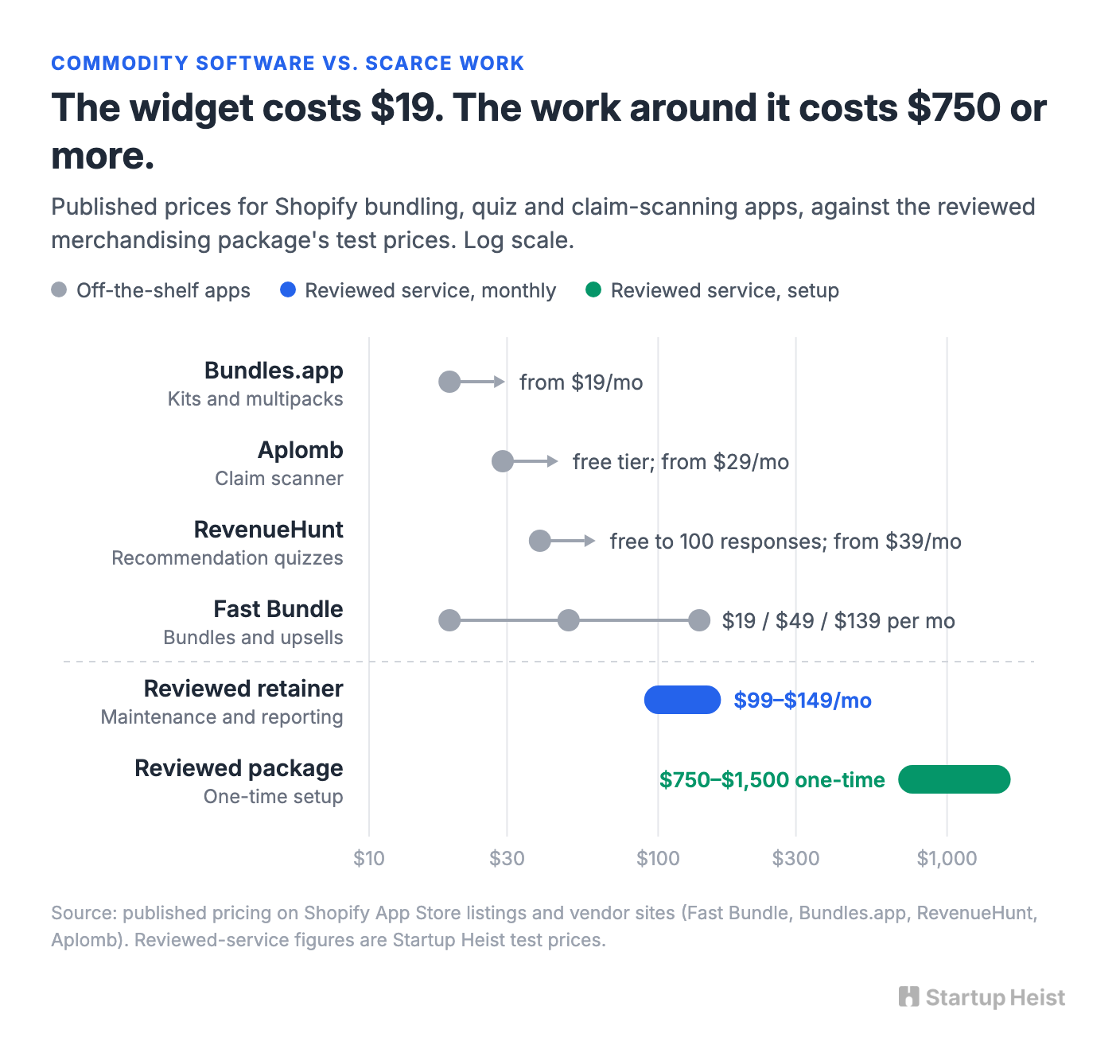
What's scarce is the work around the widget. A bundle app answers "how do I sell these three products together?" and a scanner catches a risky sentence once someone has written it. The harder questions are which products belong together, what the brand can truthfully say about them, how the page should read, and whether the change produced profit the brand wouldn't have earned anyway. Answering them takes education written from scratch, sign-off from a clinician and advertising counsel, and ecommerce merchandising, skills that rarely sit inside a five-person beauty brand.
The Constraint That Defines the Business
This business can't start as an AI engine that spits out "Prescription Survival Kits."
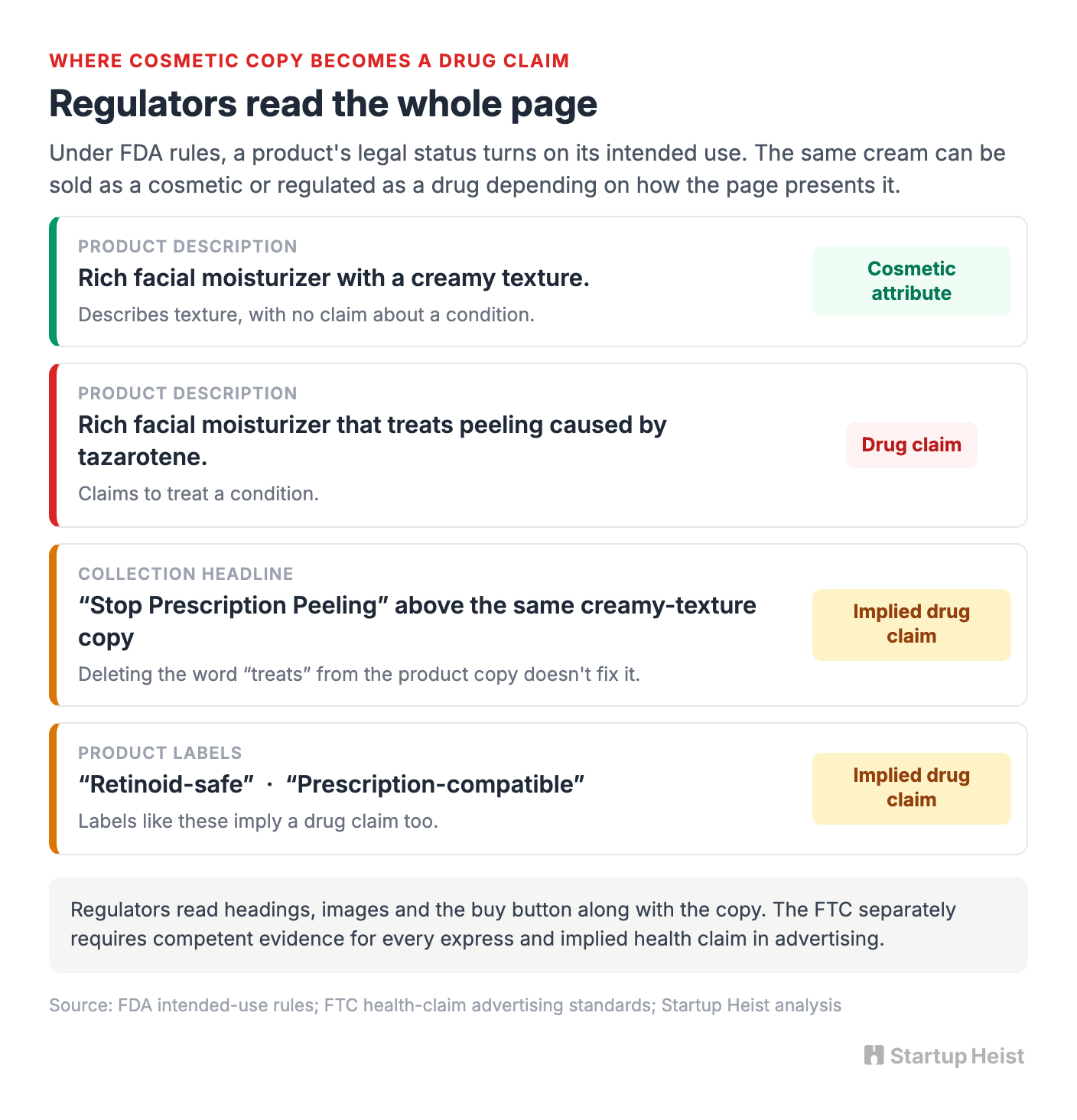
Under FDA rules, a product's legal status turns on its intended use. A moisturizer marketed with claims to treat, mitigate or prevent a condition can be regulated as a drug, whatever is inside the jar. The FTC separately requires competent evidence for every express and implied health claim in advertising.
Compare two lines of copy:
- "Rich facial moisturizer with a creamy texture."
- "Rich facial moisturizer that treats peeling caused by tazarotene."
The second is a drug claim, and deleting the word "treats" doesn't fix it. The same cream sitting under a headline reading "Stop Prescription Peeling" still implies one, and so do labels like "retinoid-safe" and "prescription-compatible." Regulators read the whole page, including headings, images and the buy button.
Selling on TikTok Shop doesn't loosen any of this. Its U.S. health-content guidance, dated September 2, 2026, bans medical claims for non-OTC products, limits OTC drug claims to the Drug Facts label, prohibits prescription drug sales, and forbids positioning a product as superior to prescription treatment. Moving the checkout to Shopify leaves federal advertising law exactly where it was.
Faced with that risk, many brands publish nothing at all. A founder who builds the review step into the product can sell them the content they've been avoiding.
The Product: A Reviewed Merchandising Package
Picture an independent brand called Fieldwork Skin. It sells 12 products on Shopify, including a gentle cleanser, two moisturizers, a facial mist and several treatments. It wants to reach shoppers building simple routines, including people arriving from retinoid conversations. Its marketing lead could write a blog post with product links, but she doesn't know which statements need a source, how a regulator would read the page, or whether it will sell.
You deliver five things.
Unlock the Vault.
Join founders who spot opportunities ahead of the crowd. Actionable insights. Zero fluff.
“Intelligent, bold, minus the pretense.”
“Like discovering the cheat codes of the startup world.”
“SH is off-Broadway for founders — weird, sharp, and ahead of the curve.”


