


Google Search broke in 2024. Users started typing "before:2023" into their queries—not to find old information, but to dodge the synthetic garbage flooding results. When people hack the search box itself just to escape your algorithm, the problem runs deeper than UI polish.
Trust collapsed at the incentive level.
Here's what makes this interesting: if you execute this right, you're looking at multiple paths to $100K+ MRR. The consumer play (paid search subscriptions) could hit $5-20K MRR with 500-2,000 users. The real money lives in the API layer—AI teams desperate for clean data inputs will pay $5-50K/month for trusted retrieval infrastructure. One enterprise contract beats 100 prosumer subscriptions.
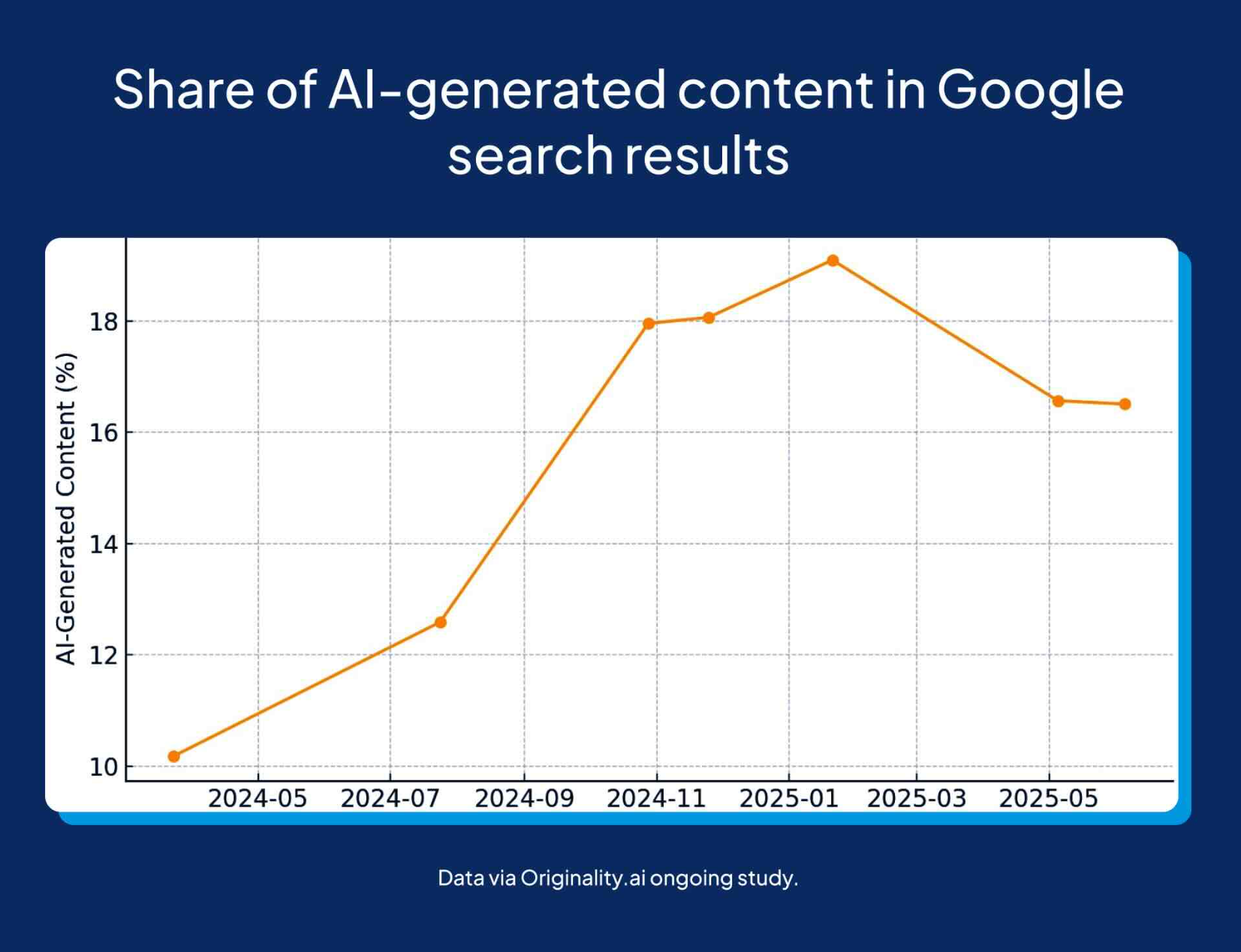
Google saw it coming. Their March 2024 core and spam updates explicitly targeted "scaled content abuse" and expired domain manipulation, aiming to cut low-quality content by roughly 45%. By early 2025, AI-generated content still represented 17-19% of top search results according to Originality.ai's live tracking. The slop bounced back faster than Google could patch it.
The web crossed a threshold where synthetic content now scales faster than trust systems can filter it. Independent studies from Graphite and other SEO tools confirm AI content sits in the low-to-mid teens percentage across top results—this isn't a spike, it's structural.
You Can't Out-Google Google
The opportunity isn't "better search." It's becoming the web's bouncer.
A search engine that wins by refusing more than it crawls. Your moat isn't coverage, it's the allowlist. Your value is what you exclude.
Search.Kitchen → 500 trusted recipe blogs, zero content farms
Search.Code → official docs, GitHub, Stack Overflow, engineering blogs with maintainer reputation
Search.Health → peer-reviewed journals, Mayo Clinic, NIH, university medical centers
The market flipped from information scarcity to trust scarcity. When that happens, three things follow:
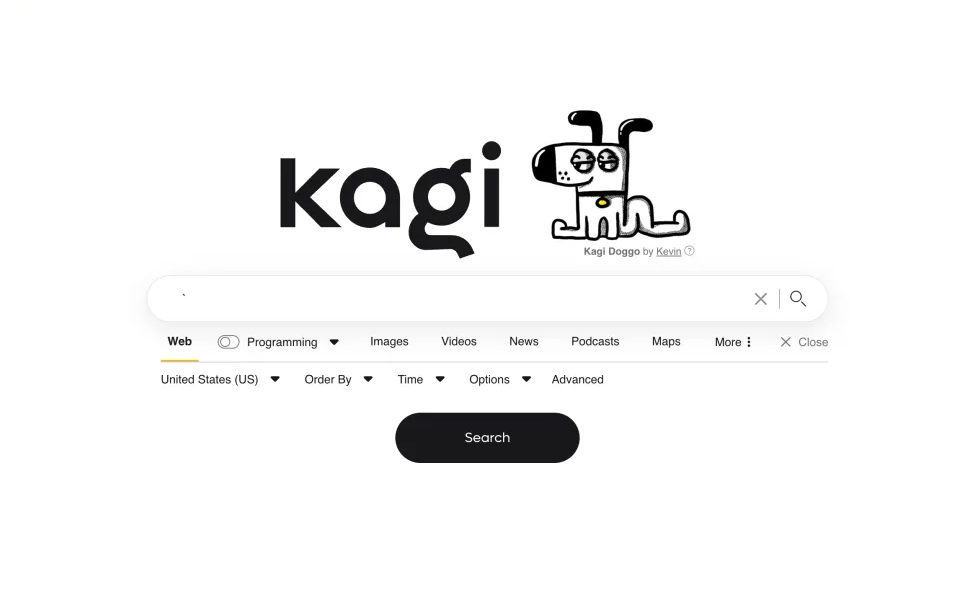
People pay for less. Kagi built a paid search engine now serving users across 18+ countries. Their plans run from $5/month (Starter) to $10/month (Professional with unlimited searches) to $25/month (Ultimate). The product exists on quality, privacy, and controls—users block entire domains, boost trusted sources, and create custom "Lenses" that constrain results to pre-approved lists. Reviews don't debate whether cleaner search has value, they debate whether the price is worth it. That's a solved problem, just a pricing conversation.
Platforms panic and patch. Google's March 2024 core update aimed to reduce low-quality content by 45%. Their January 2025 Quality Rater Guidelines told human reviewers to apply the "Lowest" rating if "all or almost all" of a page's main content is AI-generated with no added value. These aren't product refinements—they're admissions of lost control.
Users invent folk remedies. "site:reddit" and "before:2023" aren't features, they're symptoms of broken trust. Google's own data shows AI Overviews now appear in 50%+ of queries, up from 25% in August 2024. Users route around search results because they don't trust them anymore.
The Trap: Building a Cute Vertical That Dies Quietly
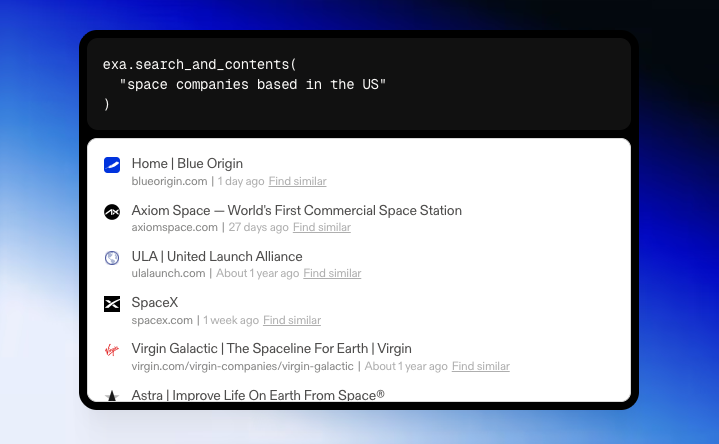
Stop at "Search.Kitchen powered by Exa" and you hit ceilings fast.
Vertical search is a proven pattern—travel, jobs, shopping all carved out niches when general search produced too much noise. Developer content is clearly impacted by SEO/AI sludge, and devs increasingly rely on constrained sources (GitHub, official docs, Stack Overflow) instead of generic search.
But the historical risks remain:
Curation becomes unpaid labor. Maintaining allowlists forever turns into drama. Who decides what's "trusted"? Why isn't my food blog included? You become a permanent referee in taste wars.
Incumbents copy features. Kagi already offers Lenses. Google can keep patching. Your "curated vertical" becomes a checkbox feature in someone else's roadmap.
Habit costs compound. Competing with the default browser bar is like starting a religion. Distribution burns cash daily. Even great products die in obscurity.
You might build a nice indie SaaS—maybe $5-20K MRR if you execute well. But it's not infrastructure.
The Real Play: Allowlist as an Asset Class (3 Layers Starting with Verticals, Always)
The heist is making curation into infrastructure.
Unlock the Vault.
Join founders who spot opportunities ahead of the crowd. Actionable insights. Zero fluff.
“Intelligent, bold, minus the pretense.”
“Like discovering the cheat codes of the startup world.”
“SH is off-Broadway for founders — weird, sharp, and ahead of the curve.”


