


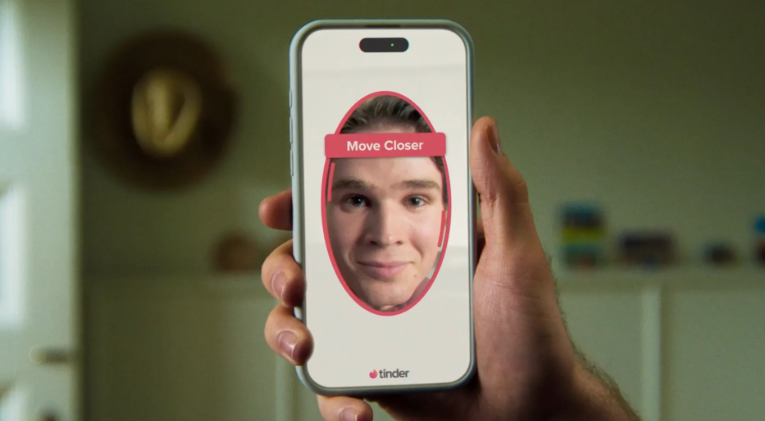
Tinder just made facial verification mandatory for new U.S. users. Bumble rolled out ID checks across 11 markets. Both platforms are scrambling because the same pattern keeps repeating: trust collapses faster than they can patch it.
Match Group—Tinder's parent—saw a 7% drop in paying users in Q2 2025. Bumble's quarterly app revenue fell 3.8%. The platforms know verification is the only functional response left. Tinder's Face Check rollout showed a 60% reduction in exposure to bad actors and a 40% drop in suspicious behavior reports. Those aren't marginal improvements. They're survival metrics.
But apps can verify a face matches a photo. They can check an ID is real. What they can't do—what they'll never do—is build a cross-platform reputation layer. They won't share verification status. They won't flag behavioral patterns. They won't create a portable trust credential that users can carry from Tinder to Raya to that $500-a-plate dinner club in Tribeca.
That's the opening. And if you can crack consumer willingness to pay for trust, the unit economics are absurd:
Sell a $49 remote verification badge with $1.50 in costs. 97% gross margin on a product people desperately want.
You're not building a tech company with cloud costs eating 60% of revenue. You're building a badge business with software margins.
Why This Is Suddenly Real
Dating apps generated $6.18 billion in 2024, projected to hit $8.9 billion by 2030. Over 350 million people use these platforms globally. Tinder alone has 90 million users.
Those numbers look healthy. The underlying mechanics are rotten.
Verification is becoming table stakes, not a differentiator. In October 2025, Tinder expanded mandatory Face Check—facial liveness detection—across the U.S. New users must record a video selfie during onboarding. The system confirms you're a live human, your face matches your photos, and you're not recycling the same face across multiple accounts.
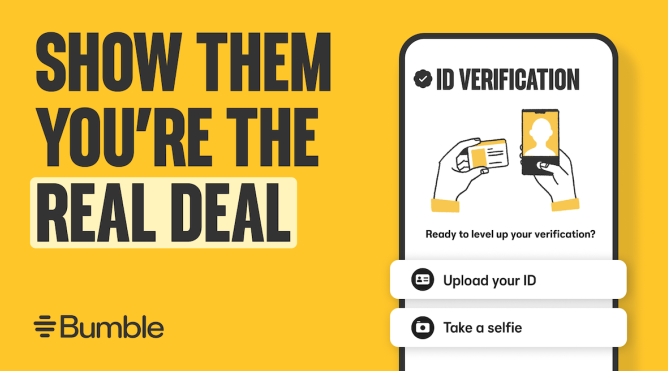
Bumble launched ID verification in March 2025. Users submit government-issued IDs for authentication. Research commissioned by the company found that 80% of Gen Z daters are more likely to meet someone who's ID-verified. Early tests showed verified members see a significant increase in matches. Users can now filter to see only verified profiles.
The platforms are moving fast because the alternative is watching their subscriber base erode.
AI torched the last currency: believability. A 2025 survey by Match and the Kinsey Institute found that 26% of U.S. singles now use AI to enhance dating—a 333% jump from the previous year. Norton's global study revealed that 60% of dating app users believe they've had a conversation with someone whose messages were AI-generated.
ChatGPT is now fooling human judges more than 70% of the time in Turing test scenarios. Apps like Rizz—which suggest responses to uploaded screenshots of conversations—hit 1.5 million monthly active users in their first year. People aren't just using AI for pickup lines. They're outsourcing entire conversations, then showing up to dates as a different person.
The fraud isn't hypothetical. It's structural.
Romance scams are a recurring hemorrhage. The FTC reported $12.5 billion in total fraud losses in 2024. Romance scams alone accounted for $1.14 billion in reported losses in 2023, with a median loss of $2,000 per victim. That's the highest median loss for any category of imposter scam.
More than one in four people (26%) report being targeted by AI chatbots posing as real people on dating apps or social media. Romance scams increased 20% in Q1 2025 compared to Q1 2024, with victims losing an average of $8,000 per incident. Older adults—who often have more disposable income—lost $2.4 billion to fraud in 2024, a fourfold increase from 2020.
People will pay to avoid humiliation, financial loss, and wasted time. The question is: will they pay you, or will they accept whatever free verification their app provides?
The Core Insight
Apps can verify a face. They can check an ID. But they can't verify personhood standards across the internet.
Tinder can tell you: "This looks like the same face as the profile photo."
Tinder can't tell you if that same person is running scams on three other apps, if they no-show every date, if their "photo truthiness" has drifted 18 months, if they're a rotating operator behind multiple identities, or if their behavior on Bumble suggests they're a serial flake.
Cross-platform reputation is the moat—if you can build it. Dating apps won't cooperate. They're competitors. They have no incentive to share data or create a neutral verification layer that users can port between platforms. But they also can't build it alone without cooperation.
You're not competing with apps on basic ID checks. You're building infrastructure they need but can't create themselves. The hard part is convincing apps to send you behavioral signals without triggering privacy blowback, and convincing users to pay for something apps give away for free.
Start With Consumer Verification
You start by selling badges directly to users—but you need to answer why someone pays $49 when Tinder and Bumble verify for free.
The answer: portability, depth, and status.

Unlock the Vault.
Join founders who spot opportunities ahead of the crowd. Actionable insights. Zero fluff.
“Intelligent, bold, minus the pretense.”
“Like discovering the cheat codes of the startup world.”
“SH is off-Broadway for founders — weird, sharp, and ahead of the curve.”


