


That fluorescent-lit break room vending machine. Stale chips for $1.75, mystery soda from 2019, some guy cursing because his dollar got rejected for the third time. That's what most people think "vending" means.
At LAX right now, there's a different machine entirely. Glowing kiosk that looks like it escaped from a Glossier store—twenty charging cables, sleek power banks, AirPods alternatives, touch screen, Apple Pay. You're late, your phone's at 2%, you tap for a $35 power bank and you're back at your gate in 90 seconds.
Next terminal: K-beauty machine dispensing sheet masks, mini SPF, oil blotters. $18-28 items, beautiful branding, line of people.
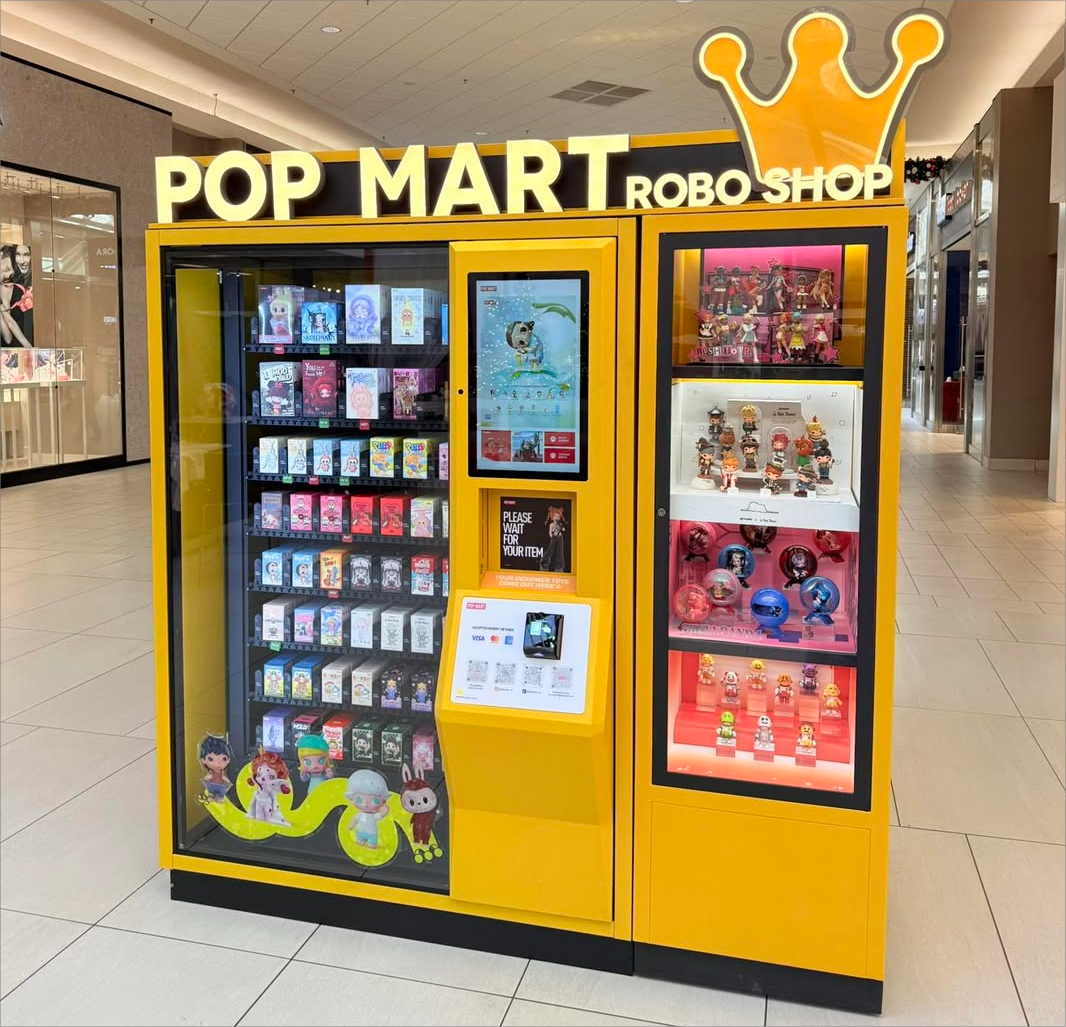
Around the corner: bright yellow Pop Mart machine. $28 blind-box collectibles. The Labubu dolls inside resell for $300+ on eBay. There's a crowd.
No staff. 24/7 operation. Sephora margins, not Frito-Lay.
Stop fighting over $2 snacks. Build the non-food, high-margin vending infrastructure while traditional operators are still counting quarters.
The market data nobody's connecting yet
The intelligent vending machine market hits $17.7 billion in 2025 and tracks toward $53 billion by 2035—11.6% annual growth driven by AI, IoT, and cashless payments. But those numbers mask what's actually happening.
Traditional U.S. retail vending sits around $11 billion, mostly snacks and drinks growing low single digits. The corner printing money? Non-food categories most operators don't associate with vending yet.
Let's look at beauty. Global cosmetics vending was $432 million in 2023, forecast to hit $1.3 billion by 2032—12.8% annual growth in a category most operators don't know exists. In the U.S. specifically, beauty and personal care vending reached $91.6 million in 2023 with roughly 10-11% annual growth projected. Premium skincare through vending machines generated $50 million in 2025 alone, up 30% year-over-year. Ulta Beauty piloted SOS smart vending machines in about ten U.S. stores for in-store sampling and digital advertising. L'Oréal is testing AR-powered virtual try-on in Armani machines.
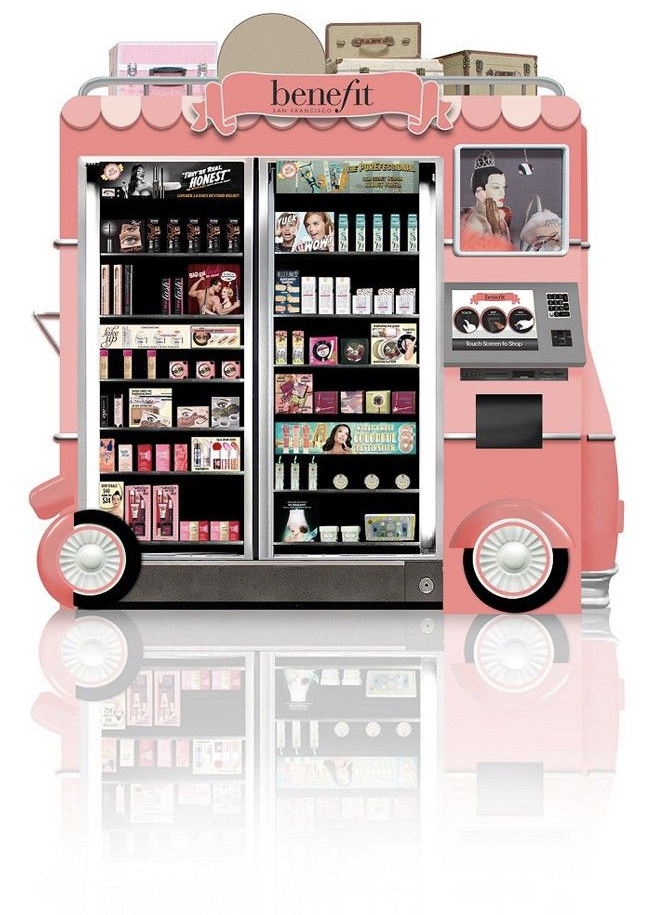
Tech accessories are equally absurd. Phone accessory sales through vending grew 30% last year. A $15 charger has better margins than twenty candy bars. At BWI and LAX, tech vending kiosks run 24/7 dispensing everything from USB-C cables to Bose headphones. Travelers pay premium because urgency beats price sensitivity every time. Apple stopped including charging cables with AirPods—creating a whole new emergency purchase category.
Collectibles already proved the model many times over. Pop Mart—the Chinese toy company behind Labubu and other blind-box characters—operates 2,500+ "Robo Shops" (vending machines) across 30+ countries alongside 500+ staffed stores. In 2025, they hit roughly $44 billion market cap, exceeding Hasbro, Mattel, and Sanrio combined, with plush toy category seeing massive year-over-year sales growth.
At Miami's Dolphin Mall, Pop Mart's vending machine created lines so long the TikTok videos went viral. In San Francisco's Stonestown Galleria, security got posted at the machine after fights broke out over $28 Labubu dolls. One involved pepper spray. The machines sell out every morning within minutes—mostly to resellers flipping toys for 2-10x on eBay and StockX. Single customers were buying so many that machines crashed.
Kylie Cosmetics rolled out airport vending machines at major U.S. terminals since at least 2019, treating them as 24/7 billboards that pay rent instead of charging it.
The question isn't whether this works. The question is whether you're early or late.
The core opportunity
Build a network of beautifully branded, smart vending "micro-stores" selling high-margin non-food products—beauty, wellness, tech accessories, collectibles—in high-intent locations. Graduate into the software and distribution platform powering this category.
Short term: a 5–10 machine route generates $2K-4K per machine monthly in the right locations. Enough to replace a salary or fund the next phase.
Long term: data, location contracts, and brand relationships become the moat as you become Shopify meets DoorDash for unattended non-food retail.
Why this works when "passive income vending" doesn't
TikTok is full of vending operators flexing snack profits. The secret they don't tell you is that most are battling over the same three locations—laundromats, break rooms, and office lobbies—with commoditized products at razor-thin margins. They're selling dreams, you are the customer.
We're talking about a different game entirely. Real business means going in with a plan, not selling Cheetos for loose change and asking people to like and subscribe.
The categories: travel K-beauty and skincare (sheet masks, mini SPF, cleansers, hydrating mists), phone accessories and emergency tech (chargers, cables, power banks, wireless earbuds, international adapters), wellness and OTC products (electrolytes, sleep aids, vitamins, travel-size first aid), collectibles and blind boxes (Labubu-style designer toys, creator collabs, IP tie-ins).
The locations: airports, hotels, premium malls, tourist corridors. Gyms, yoga studios, upscale office lobbies. Entertainment venues, arenas, universities, coworking spaces. Places where people have money and urgency, not just boredom. Where someone who forgot their charger will pay $25 without flinching because their flight boards in 30 minutes.
The economics matter most. Traditional snack vending moves $2 transactions at 30-40% gross margin with 10-15% location rev-share. Non-food premium vending averages $25 transactions (mix of $15-50 items) at 50-70% gross margin with 20-25% location rev-share. Landlords take more because your revenue is higher and they can justify the space.
Each machine becomes a mini-flagship store instead of a snack dispenser.
Unit economics for a premium airport kiosk
Beauty/tech combo machine in an airport concourse. Conservative assumptions: $25 average ticket, 15 transactions daily, $375 daily revenue, $11,250 monthly.
Gross margin at 60% yields $6,750. Location takes 20% rev-share ($2,250), leaving $4,500. Payment fees, telemetry, and maintenance run about $600 monthly. Net: $3,900 per month.
All-in machine cost (hardware + wrap + initial inventory) runs $18,000-22,000, so you're looking at 5-6 month payback in a solid location. Even halving the transaction volume—7-8 daily transactions because you picked a B-tier spot or your product mix is off—still gets payback within 12-15 months, then the machine throws off $1,500-2,000 monthly.
Five to ten machines means $8K-20K monthly recurring before your own labor. At that point you're deciding whether to scale the machine count or build the platform.
The quick route: 5-10 machine cash flow
Unlock the Vault.
Join founders who spot opportunities ahead of the crowd. Actionable insights. Zero fluff.
“Intelligent, bold, minus the pretense.”
“Like discovering the cheat codes of the startup world.”
“SH is off-Broadway for founders — weird, sharp, and ahead of the curve.”


