


Late December 2025, a simple site hits Hacker News: kids draw on paper, scan it, tap a theme, and thirty seconds later their sketch moves on screen. FunSketch generates immediate interest—users share drawings, discuss running it at art festivals, talk about school applications.
The technology works. Parents film it. Kids go wild. Meta validated the mechanic publicly with Animated Drawings, their research project that demonstrated "kid drawing comes to life" at scale before making it available for public use. Newer AI video tools like Higgsfield explicitly market "turn child's art into animated cartoon" as a primary use case. Apps like Drawings Alive and AniMagic already ship this to consumers. The core technical question is settled.
The opportunity isn't another app fighting for App Store oxygen. It's a packaged event system that camps, museums, party venues, and schools can run safely, reliably, and repeatedly—turning that thirty-second "wow" into a wedge between US summer camps ($4.6 billion annually serving 26 million kids), global children's entertainment centers ($11.5 billion in 2022, projected to $28-30 billion by 2032), and birthday party spending that averages $314 per celebration with 20% of parents dropping over $500.
Kid Content Machine:
The Pixar booth you can drop into any venue with children.
Why This Window Exists Now
The tech became commodity. Sketch-to-animation pipelines that required research labs eighteen months ago now ship as product features. Meta open-sourced the core approach. Commercial tools productized it. The hard part isn't the model anymore—it's the operational wrapper that makes it work in a chaotic room with spotty WiFi and twelve kids tapping simultaneously.
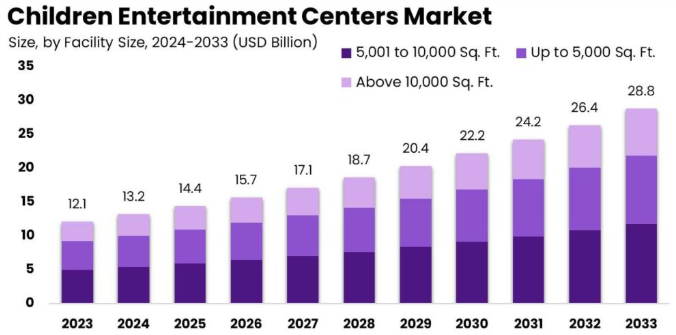
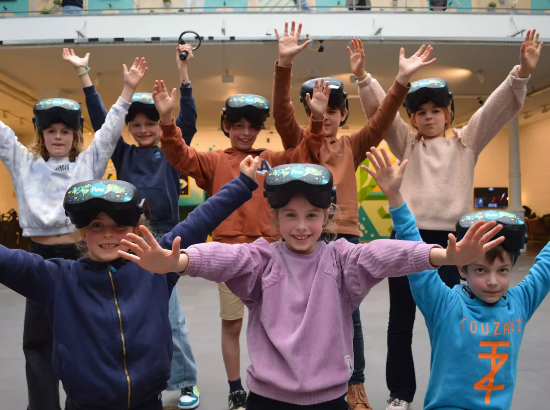
Entertainment infrastructure is starving for new programming. Camp directors face constant pressure to rotate activities and differentiate offerings. The global children's entertainment center market hit $11.5 billion in 2022 and projects to $28-30 billion by the early 2030s—roughly 9-10% annual growth. AR and VR gaming zones show the fastest activity-level growth. These venues need repeatable, high-engagement activities that produce parent share moments.
Children's museums face post-pandemic attendance challenges—55% report lower attendance than 2019. They need interactive programming that drives repeat visits. Parents spend an average $314 on birthday parties, with 20% spending $500+. Indoor play venues and party operators compete on unique experiences. The US summer camp industry hit $4.6 billion in 2025, serving 26 million campers annually across 20,000+ camps. Established camps average $1.5-3 million in annual revenue.
The compliance moat appeared. COPPA requirements around child data collection create genuine barriers. Schools and camps won't touch tools that create privacy headaches. The Federal Trade Commission hit Disney with a $10 million civil penalty in December 2025 for unlawfully collecting and using children's personal information on YouTube without parental consent. The settlement forced structural compliance changes across Disney's digital properties. Institutions need "administratively safe" tools with controls, logs, and minimal data retention.
The Category They're Actually Buying
Parents spend real money on experiences, not software. The 2024 What to Expect survey found average birthday party spend at $314—not counting gifts. That jumps from $279 for one- to two-year-olds to $344 for six- to nine-year-olds. Twenty percent spend over $500. Some go well above: NYC-based party planners start budgets at $5,000 for elaborate themed events.
The US children's entertainment center market represents a significant slice of the $11.5 billion global industry (2022 figures), projected to reach $28-30 billion globally by the early 2030s. AR and VR gaming zones show the fastest growth. Physical play activities still dominate with 34% market share, but tech-enhanced experiences drive premium pricing.
Summer camps represent a $4.6 billion US industry serving 26 million children annually. The American Camp Association's 2024 economic impact study found the broader youth camp ecosystem—when including indirect and induced impacts like transportation, food supply, and local spending—contributes $70 billion to the national economy. Direct camp operating revenue sits in the $3.4-4.6 billion range.
Institutions pay for structured, repeatable formats that work every time—complete experience kits, not software licenses or API access.
Your offer isn't "AI animation." Your offer is: "Run a magical, structured creation experience for 12–120 kids in 45 minutes, safely."
Not every camp, museum, or party venue is reachable. Many lack screens, staff bandwidth, or budget. Much of industry revenue flows to food, rent, and labor. But penetrate 5-10% of US camps and entertainment centers at $2,000-5,000 average annual contract value and you're building toward a nine-figure business. The wedge is real because you're selling something institutions already budget for—programming that differentiates them and produces parent share moments.
The format matters more than the feature. Institutions don't buy "AI animation technology." They buy "a 45-minute block we can run on Tuesday afternoons that works with our existing iPads and makes parents pull out their phones." The repeatable structure, the safety guarantees, the take-home artifacts—that's what gets purchased. This positioning has been validated repeatedly in edtech and museum programming: compliance and operational reliability beat technical sophistication when schools and camps write checks.
The Actual Product
Kid Content Machine sells a plug-and-play system for running "Draw → Animate → Premiere" events.
Core Kit Components
Unlock the Vault.
Join founders who spot opportunities ahead of the crowd. Actionable insights. Zero fluff.
“Intelligent, bold, minus the pretense.”
“Like discovering the cheat codes of the startup world.”
“SH is off-Broadway for founders — weird, sharp, and ahead of the curve.”


