


December 11, 2025. Meta ships infrastructure for something that's been happening messily for years: turning creator posts into ads at scale.
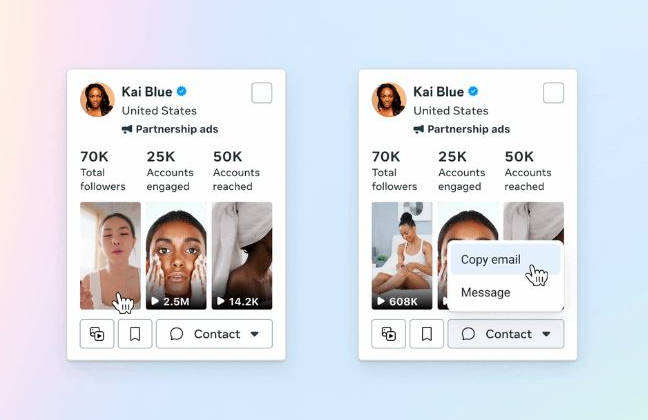
The update lands in Ads Manager with zero fanfare. New filters in the Partnership Ads Hub. An API for Facebook creator content. "Ad codes" so creators can grant permissions without DM ping-pong. Professional Mode profiles now eligible for partnership ads.
Boring if you're not reading the subtext. Strategic if you are.
Meta doesn't build infrastructure for experiments. When a platform with 3 billion users ships workflow tools, it's validating behavior that's already proven. When that behavior has a $37 billion market behind it, the infrastructure gap becomes the opportunity.
The signal hiding in the release notes
U.S. creator ad spend hit $37 billion in 2025, up 26% year-over-year. Growing four times faster than the media industry overall, according to IAB's December report. Spend more than doubled from $13.9 billion in 2021 to $29.5 billion in 2024.
Nearly half of advertisers now consider creators a "must buy," ranking them just behind social media and paid search.
The demand is validated but the infrastructure is fragmented.
Meta's December updates:
- Discovery expansion: Instagram UGC and affiliate posts now surface in Partnership Ads Hub alongside branded content
- Performance metrics in-platform: Views, likes, comments, shares, saves visible before you turn a post into an ad
- Facebook Partnership Ads API: Programmatic access to creator content opportunities
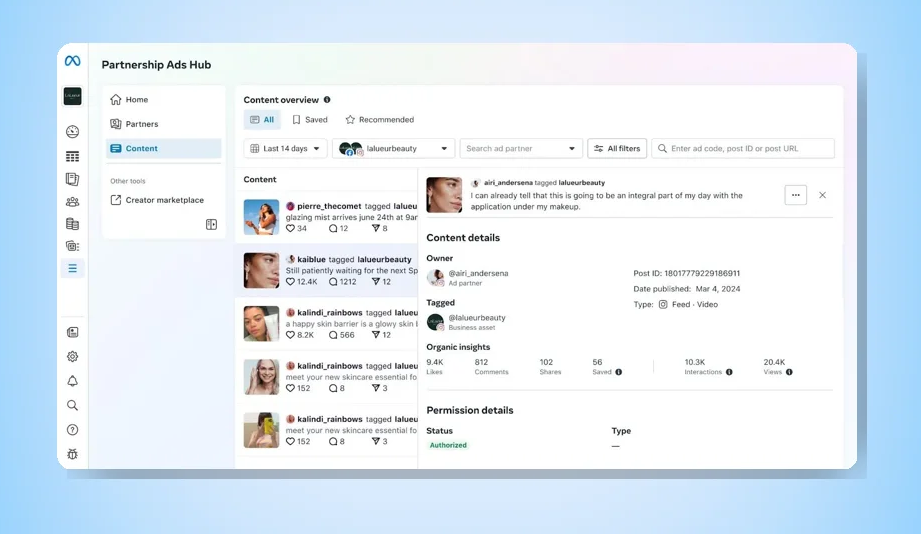
- Streamlined permissions: Creators can proactively share ad codes; brands don't need to chase approvals
- Expanded creator eligibility: Professional Mode profiles (100M daily active users) can now run partnership ads
Meta's internal data shows partnership ads deliver 19% lower cost per acquisition and 13% higher click-through rates versus standard campaigns.
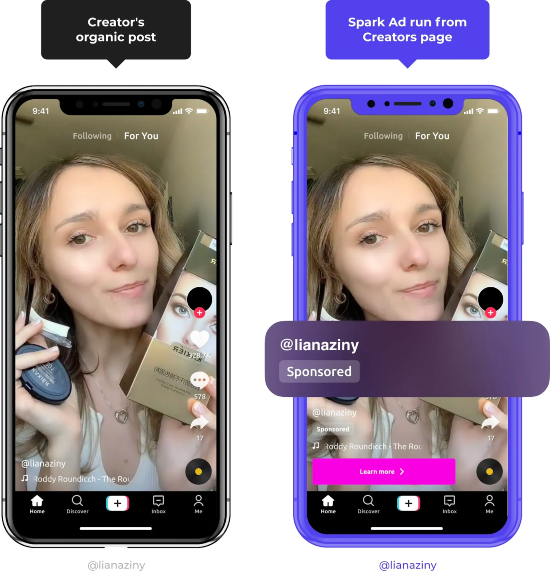
TikTok's Spark Ads generate 142% higher engagement and 43% higher conversion rates compared to standard in-feed ads.
Organic creator posts consistently outperform brand creative in paid environments. Platforms see it. Brands see it. Agencies see it. The challenge isn't awareness. It's execution at scale.
Why this market exists: the bottleneck is operational
The IAB report flagged the core issue: 33% of advertisers cite "finding the right creator" as their top difficulty. Brands need better attribution, consistent reporting, discovery tools, and audience authentication standards.
The creator economy ecosystem is "highly fragmented, with varying partnership models, siloed budgets, and limited standardization," per Zoe Soon, VP of IAB's Experience Center.
Here's fragmentation in practice:
A mid-market DTC brand running performance creative finds an organic TikTok post mentioning their product. The post has 80k views, strong completion rate, positive sentiment. They want to run it as a Spark Ad.
The workflow:
- DM the creator asking for a Spark code
- Wait for response (maybe days, maybe never)
- Negotiate usage terms via text
- Get the code, manually enter it into TikTok Ads Manager
- Set up campaign, run spend
- Separately, check if the same creator posted on Instagram
- Repeat the permission dance for Meta Partnership Ads
- Track performance across two dashboards
- Try to remember which creators drove which results six weeks later when planning the next sprint
Scale this across 10 creators, 3 platforms, 5 campaigns per month. You're operating in spreadsheets and DMs instead of systems.
Enterprise tools like CreatorIQ ($36k/year), Grin ($25k-40k/year), and Aspire ($24k+/year) help with relationship management and UGC collection. They're built for influencer campaigns: finding creators, managing collaborations, collecting assets. They don't predict which post will print money as an ad before you spend. They don't programmatically license rights at machine speed. They don't route creative intelligently across Meta, TikTok, YouTube based on format and audience.
Creative scoring tools like AdCreative.ai, Memorable, and Motion analyze ad performance and predict engagement. They operate post-creation, scoring what you upload rather than discovering what's already viral in the wild.
Nobody built the cross-platform creative underwriting system.
The heist: build the Creative Yield OS
Think like a quant fund, not a creator marketplace.
Unlock the Vault.
Join founders who spot opportunities ahead of the crowd. Actionable insights. Zero fluff.
“Intelligent, bold, minus the pretense.”
“Like discovering the cheat codes of the startup world.”
“SH is off-Broadway for founders — weird, sharp, and ahead of the curve.”


