


Editor's Note:
Most Startup Heist opportunities are fast-moving, founder-ready plays you can steal and execute with a small team.
This one is different.
Today’s opportunity is a world-saving monster — huge, industrial, and not something a solo builder can spin up tomorrow.
But the business model is real. The money is real. The environmental upside is massive. And if you operate anywhere near climate tech, mining, data, or public policy, this might be the highest-leverage category you’ll ever see.
Stand at the edge of any abandoned pit lake and you'll see the same thing: a mining company's worst nightmare filled with water.
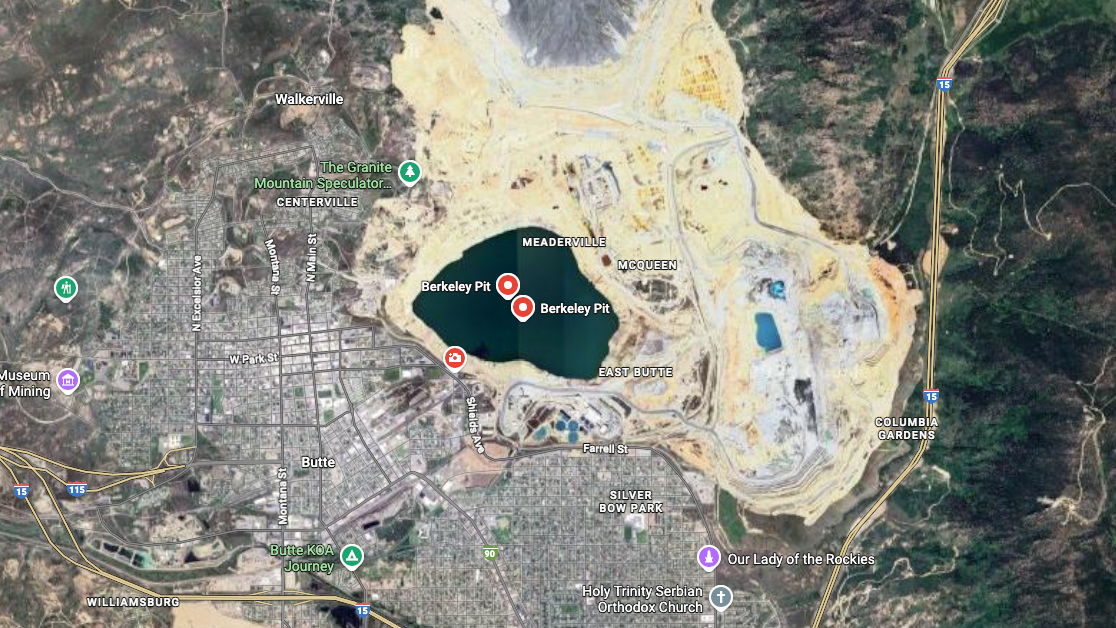
Berkeley Pit in Montana charges tourists $2 to gawk at its toxic soup that kills migrating geese on contact. The Mir Mine in Russia creates its own weather system, sucking helicopters into its 1,700-foot vortex. Germany has 500 of these holes. Australia has 1,800. The U.S. stopped counting at 500,000 total abandoned mines, with pit lakes representing the most expensive cleanup category.
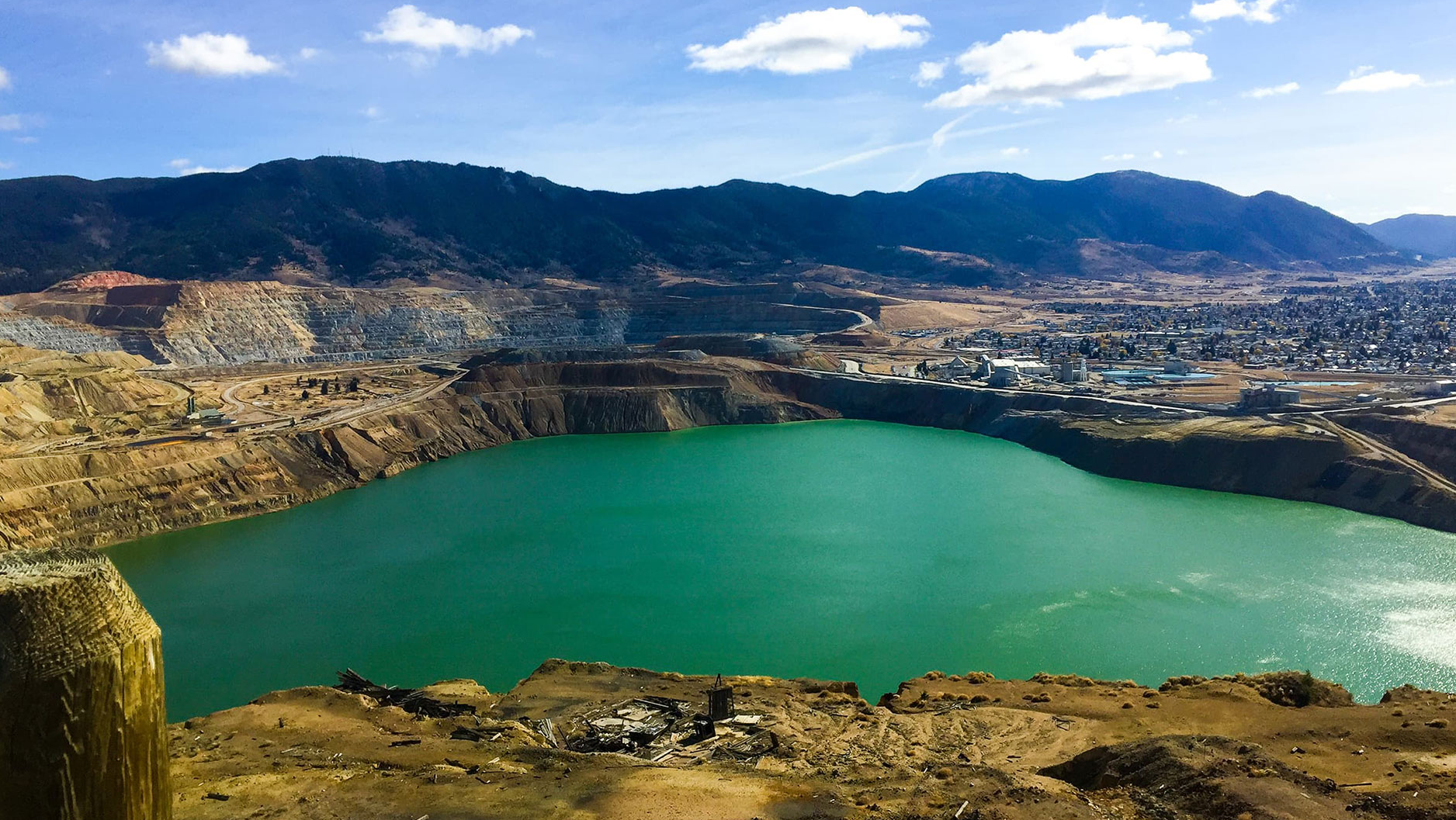
Each one sits on corporate balance sheets as a perpetual liability—closure costs averaging $75,000 per hectare for simple sites, over $1 million per hectare for acid-generating disasters. Mining companies provision billions for these obligations. The global mining industry's total closure bill exceeds $200 billion, with pit lakes claiming the nastiest slice.
Now somebody is turning this into a business: A company called Aquarry is turning these toxic holes into carbon banks. They've been selected by the National Renewable Energy Lab accelerator, the only company using pit lakes for carbon dioxide removal. NREL calls it "ocean alkalinity enhancement, but in pit lakes."
More importantly, Microsoft—which has purchased roughly 18 million tonnes of durable carbon removal over the past two years—is writing nine-figure checks to anything that can verifiably suck carbon from the sky. They've committed over $2 billion to direct air capture and enhanced weathering projects.
The chemistry that makes pit lakes perfect for carbon storage has been understood since the 1990s. The buyers are now ready. The liabilities are everywhere.
But nobody owns the system to connect them.
The Chemistry
Here's what happens when rain hits an abandoned pit:
The exposed rock walls contain metal sulfides—pyrite, chalcopyrite, arsenopyrite. Water and oxygen hit these minerals, creating sulfuric acid. The pH drops to 2 or 3, dissolving more metals. Iron, aluminum, copper, arsenic, and cadmium leach into the water. The pit becomes a giant battery, generating acid for centuries.
Mining companies traditionally neutralize this with lime—millions of dollars annually, forever. Glencore spends $30 million per year just maintaining water treatment at its closed Mt. Lyell mine in Tasmania.
But alkaline treatment does something else: it supercharges the water's ability to absorb CO₂.
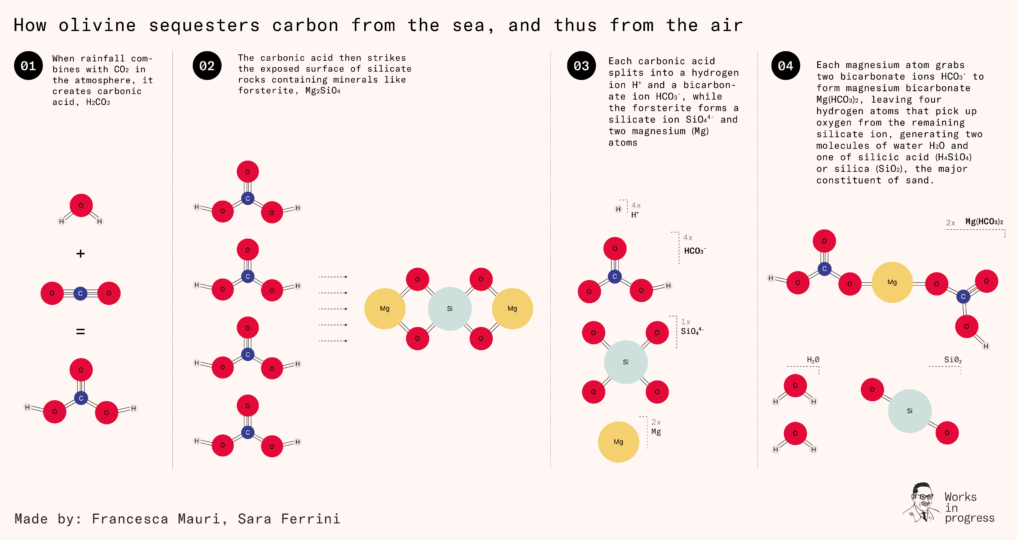
When you add crushed olivine, serpentine, or even steel slag to acidic water, you trigger a cascade:
- The alkaline minerals neutralize acid (Mg₂SiO₄ + 4H⁺ → 2Mg²⁺ + H₄SiO₄)
- This raises pH and alkalinity
- Atmospheric CO₂ dissolves into the water as bicarbonate
- The bicarbonate reacts with dissolved metals to form carbonates
- These carbonates precipitate and sink, locking carbon for millennia
One tonne of olivine can theoretically capture 1.25 tonnes of CO₂, with practical ranges of 0.8–1.1 tonnes in real-world conditions. Deep Science Ventures' analysis suggests a single large pit lake (100 million cubic meters) could store a few million tonnes of CO₂ through alkalinity enhancement. The Renard diamond mine in Quebec, where Aquarry is running trials, has three pits with 15 million tonnes of crushed kimberlite waste rock already on site.
The reaction is self-limiting and controllable. Unlike ocean alkalinity enhancement, you're working in a contained system. Unlike enhanced rock weathering on farmland, you can measure every input and output.
The International Mine Water Association found that using terminal pit lakes in closure can reduce closure costs by 50-85% compared to alternatives like backfilling and perpetual treatment. The water quality improves. The liability shrinks. The carbon gets banked.
Nobody patented this because the chemistry is basic textbook stuff. But the system to deploy it at scale? That's the $50 billion opportunity.
The Real Business: Pit Lake Intelligence Engine
Forget the romantic idea of being a carbon credit broker. The real opportunity is becoming the intelligence layer for the entire pit lake CDR industry.
The Data Moat
Start with what nobody else has: comprehensive pit lake intelligence.
There are approximately 10,000 pit lakes globally, but nobody knows exactly where they all are, who owns them, or what they're worth as carbon sinks. Mining companies track their own liabilities. Regulators track their jurisdictions. Nobody tracks the system.
Build this:
The Global Pit Lake Registry
- Satellite imagery analysis to identify every pit lake on Earth
- Ownership tracking through mining claims databases
- Geological analysis from public drilling records
- Water chemistry estimates from commodity type
- Depth modeling from historical mining plans
- Regulatory status from environmental filings
Feed this into a scoring engine:
Carbon Convertibility Score (CCS)
- A Grade (top 5%): Copper/nickel mines with ultramafic waste rock, stable water levels, near infrastructure
- B Grade (next 15%): Coal mines with limestone overburden, manageable acid generation
- C Grade (next 30%): Variable chemistry, needs detailed study
- D Grade (bottom 50%): High risk, complex chemistry, remote location
The Nevada Copper mine at Yerington—5 pits, 350 million tonnes of waste rock, existing rail access—scores an A. The data says it could sequester 2 million tonnes CO₂ over 20 years. The mine is in bankruptcy with $400 million in cleanup obligations.
That's not public information. That's proprietary intelligence worth millions to the right buyer.
The Origination Machine
With intelligence comes deal flow. But you're not a broker—you're a project developer.
Unlock the Vault.
Join founders who spot opportunities ahead of the crowd. Actionable insights. Zero fluff.
“Intelligent, bold, minus the pretense.”
“Like discovering the cheat codes of the startup world.”
“SH is off-Broadway for founders — weird, sharp, and ahead of the curve.”


