


Think non-dilutive funding infrastructure for the creator economy: a solo SaaS builder raises $40K against future cash flow, backers earn a capped return, and the platform charges setup fees, success fees, and a cut of every distribution.
The revenue-based financing sector is projected to hit $42 billion by 2027, and nobody is serving the fastest-growing segment of the economy — the micro-business that's too small for venture capital and too weird for a bank.
The stock market was built for factories, balance sheets, and corporate wrappers. The next wave of value is being created by individuals: a solo developer shipping AI agents, a niche educator with a trusted audience, a media operator with distribution, a one-person software shop throwing off real cash flow.
Steve Yegge's recent "BAGS and the Creator Economy" framing captures a structural shift worth paying attention to. The productive unit of the economy is shrinking while output per person is rising. Yegge released Gas Town in January 2026, a multi-agent orchestrator coordinating 20 to 30 AI coding agents simultaneously, and says he's approached a million lines of code in a single year — rivaling his entire four-decade career. That's leverage traditional finance doesn't yet know how to price.

The old market structure has no clean way to finance it. And that does not mean the winning startup idea is "Robinhood for creators."
That version gets you killed.
The real opportunity is compliance-first capital infrastructure for one-person businesses: the legal, payments, underwriting, disclosure, and investor rails that let an indie builder sell a slice of future revenue to supporters, customers, or aligned backers.
Multiply that across dozens of raises per quarter and you're running a high-margin infrastructure business with compounding data advantages.
Call it creator equity if you want. Structurally, it's closer to micro private equity plus revenue-based financing than fandom speculation. Getting that distinction right is the entire game.
Why This Exists Now
The creator economy hit $205 billion in 2024. Goldman Sachs expects it to nearly double to $480 billion by 2027. Over 207 million creators are active globally. This is an economic sector with real infrastructure needs, and money is already following it — just through the wrong pipes. Creator-economy ad spend hit $29.5 billion in 2024 and is projected at $37 billion in 2025, growing 4x faster than the overall media industry. Brands underwrite creator businesses indirectly through sponsorship budgets. The leap to "investors fund creators through structured capital products" is the next logical layer.

AI is compressing the firm. U.S. solopreneurs now represent over 41.8 million individuals contributing more than $1.3 trillion to the economy. Solo-founded startups surged from 23.7% in 2019 to 36.3% by mid-2025. A complete solopreneur tech stack — vibe coding tools, AI assistants, no-code automation — runs $3,000 to $12,000 annually, a 95–98% cost reduction versus traditional staffing. One person can now ship software, content, support systems, and distribution with leverage that used to require a department.
The macro tailwinds are real. So is the startup angle. But only if you build the rails, not the casino.
What the Market Keeps Getting Wrong
The lazy version of this idea is "fan ownership." Sounds exciting. Spreads well on social media. It's also where founders walk into a buzzsaw.
The SEC's posture is a warning sign you can't afford to ignore. Regulation Crowdfunding caps raises at $5 million through an SEC-registered intermediary. It limits non-accredited investor contributions. Securities purchased through crowdfunding generally can't be resold for one year. And as recently as February 2026, the SEC released updated compliance interpretations tightening enforcement clarity on how caps are measured, how income limits are calculated, and what filings are required. The regulator is sharpening its tools, not relaxing them.
SEC data tells the rest of the story: between 2016 and 2024, roughly 8,500 Reg CF offerings were initiated seeking approximately $8.4 billion. Only about $1.3 billion was actually raised across roughly 4,000 offerings. The average successful raise was $346,000. The median issuer had about $80,000 in total assets and $10,000 in revenue. These are micro-businesses trying to access capital through a system that barely acknowledges they exist.
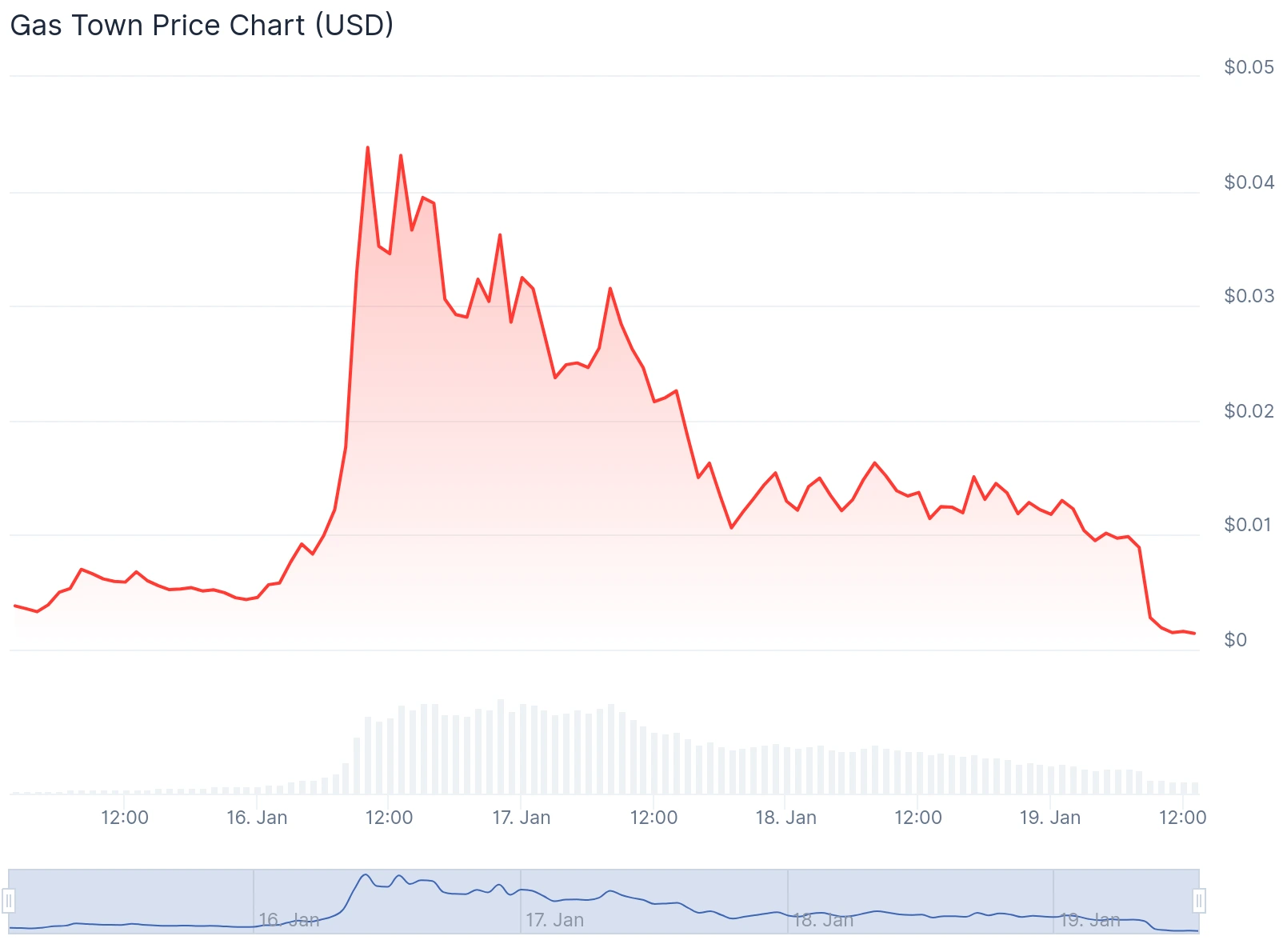
The Yegge/BAGS saga puts a fine point on the risk. Within 48 hours of Yegge engaging with the BAGS token platform, the associated $GAS token rocketed to a $60 million market cap, generated roughly $270,000 in trading fees directed to him, and collapsed 83% when he said he was going back to building software. The market punished him for doing the serious work.
A public, liquid, retail-first marketplace where people speculate on creators immediately drags you into securities law, broker-dealer questions, KYC/AML, and a trust problem that kills the category before it matures.
Start there, and you're building a regulatory magnet. Start with private revenue-share infrastructure, and you're building a business.
The Winning Wedge: Revenue Share Agreements as Infrastructure
The best initial product isn't tradable creator equity. It's Revenue Share Agreements (RSAs) as infrastructure.
A creator or indie founder raises money for a defined project or business line. Backers receive a contractual claim on a percentage of future revenue, up to a defined cap or for a defined term. The platform handles onboarding, disclosures, payment rails, reporting, and distributions.
A Concrete Example
A solo SaaS builder raises $40,000 to launch a vertical workflow tool. They agree to share 8% of top-line revenue until investors receive 1.8x back ($72,000 total). Revenue from Stripe connects directly. The platform calculates and distributes monthly payouts. Everyone gets a dashboard. The agreement is standardized, auditable, and clear.
For the builder: $40,000 of non-dilutive growth capital. Full ownership. Full control. The total cost is $32,000 (the spread between the raise and the 1.8x cap) paid only if the product generates revenue. If it doesn't work, investors absorb the downside. If it works well, the builder pays back at a multiple still cheaper than equity dilution.
For the investor: a structured income play tied to a real business. Capped upside, lower risk if the underwriting is sound. More like private credit than startup equity.
Proof Points
Royalty Exchange has demonstrated that investors will buy future cash flows when the asset is legible. The platform has facilitated over 1,000 catalog transactions and attracted 30,000+ registered investors processing royalty assets with documented historical income.
The revenue-based financing sector is projected to reach $42 billion by 2027. Players like Clearco, Capchase, Lighter Capital, and Pipe have proven the mechanics work for SaaS and e-commerce businesses. Lighter Capital offers up to $10 million in non-dilutive financing for companies with at least $200,000 in annual recurring revenue.
The gap: existing RBF providers underwrite conventional startups and SMBs, not personality-led, audience-native, one-person internet businesses. Royalty Exchange serves existing IP catalogs, not active builders shipping new products. The category bridge between music royalties, RBF, and creator financing is wide open.
One important caveat: even "private" revenue-share structures can be characterized as securities if they look like passive investment contracts — especially when marketed broadly or pooled across issuers. The legal architecture here isn't window dressing. It's the foundation. A strong securities counsel relationship is a prerequisite, not a phase-two hire.
The Actual Business
Think of it as AngelList for one-person businesses, with Stripe-native cash flow tracking and a compliance spine that's load-bearing, not decorative.
Five structural layers make this defensible — the first one is where most competitors never even start:

Unlock the Vault.
Join founders who spot opportunities ahead of the crowd. Actionable insights. Zero fluff.
“Intelligent, bold, minus the pretense.”
“Like discovering the cheat codes of the startup world.”
“SH is off-Broadway for founders — weird, sharp, and ahead of the curve.”


