


Every agency in 2026 uses AI. The good ones, the bad ones, the ones charging $25K a month for brand strategy. The difference is that nobody can prove how they use it. When a deliverable lands in a client's inbox as a polished Google Doc, there's no way to tell whether it took 12 hours of human craft or 12 minutes of prompt-chaining.
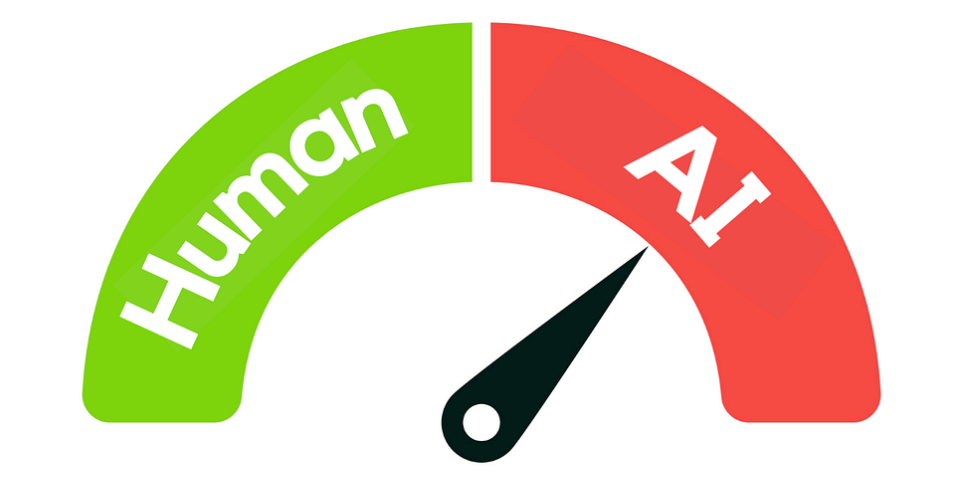
That ambiguity is creating a trust problem worth real money. Clients are quietly running AI detectors on deliverables (detectors that are famously unreliable). Legal teams at Fortune 500 brands are asking pointed questions about AI usage in contracts, and agencies are winging the answers. Meanwhile, the IAB just released its first AI Transparency and Disclosure Framework, EU transparency rules for AI-generated content kick in August 2, 2026, and $60 million in seed capital just flowed into provenance infrastructure. The regulatory and standards pressure is real — but nobody is building the practical tooling for the people who actually need it.
- 20 boutique agencies at 10 seats each gets you to $13,800 MRR
- Done-for-you policy setup engagements at $3,000–$5,000 a pop stack services revenue on top.
A solo founder with a sharp product can clear $200K in year one.
Forget AI detection. Detection is adversarial and commoditizing fast. The wedge is proof: an auditable, client-friendly record of how AI was used, where humans edited, who approved, and what policy was followed.
Why This Is Real
$60M in provenance infrastructure. Entire, led by ex-GitHub CEO Thomas Dohmke, just raised a $60 million seed to make AI-assisted work auditable — capturing agent context and decisions as "checkpoints." That capital is aimed at developer workflows and AI-generated code collaboration, not agencies. But it validates the core problem at infrastructure scale: organizations need auditable records of how AI contributed to their work. The agency-facing implementation layer is wide open.
The ad industry is formalizing disclosure. The IAB's new framework advocates a risk-based, materiality-driven disclosure model for AI in advertising — covering synthetic humans, digital twins, AI-generated images, video, audio, and chatbots. That creates direct pressure on agencies to show they have a responsible process, not just a policy slide buried in a pitch deck. The expectations are being written. Implementation in day-to-day agency workflows hasn't started.

EU transparency rules have a date on the calendar. Article 50 transparency obligations for AI-generated content become applicable August 2, 2026. Draft guidance pushes a "multi-layered" marking approach — metadata, watermarking, and logging. This matters even for U.S. shops: if your client is a multinational brand, their compliance obligations flow downstream to every vendor in the chain. A 15-person agency in Austin doing social content for a CPG brand with EU distribution is in scope.
Provenance standards exist, but they're not agency-friendly. C2PA / Content Credentials are essentially nutrition labels for digital content. LinkedIn already surfaces them on images and video. The standards are there. But agency workflows are messy, multi-tool, multi-person operations. Nobody is translating these standards into something a creative director can hand to a client during a quarterly review.
The Sharp Insight: Arm Creatives, Don't Police Them
Most "AI content" tools are built like lie detectors. That puts you in an arms race you'll lose. Models get better at sounding human faster than detectors get better at catching them.
The posture that wins distribution: assume AI is everywhere and help good actors prove responsible use. The IAB's own framework backs this up — trust in AI-assisted advertising depends on credible, understandable transparency rather than blanket detection or labeling.

This shifts the buyer away from compliance departments (who move slowly and buy reluctantly) toward the actual economic buyer: agency owners trying to win pitches, account directors drowning in revision cycles, and CMOs who want risk containment without slowing production down.
The product isn't a surveillance dashboard. It's a workflow receipt — a clean, client-facing artifact that documents the work the agency already wants credit for.
The Product: A Transparency Report That Feels Like a Client Deliverable
What the client sees
Your client shouldn't see server logs. They should see a single-page report that answers five questions:
Unlock the Vault.
Join founders who spot opportunities ahead of the crowd. Actionable insights. Zero fluff.
“Intelligent, bold, minus the pretense.”
“Like discovering the cheat codes of the startup world.”
“SH is off-Broadway for founders — weird, sharp, and ahead of the curve.”


