


On January 7, 2026, a TikToker named Stan Fukase shoved coconut sablé cookies into a tub of Greek yogurt, refrigerated it overnight, and lost his mind at the result. He called it "Japanese cheesecake." Within three weeks, the trend had ripped across every major food outlet in America — TODAY, Allrecipes, BuzzFeed, The Takeout — and NIQ data showed Biscoff biscuit volumes rocketing 30% year-over-year in the UK, with value sales spiking nearly 11% in a single week. Lotus Biscoff started amplifying the trend on its own TikTok, racking up over a million combined views. When the brand that makes the cookies is spending money to keep a trend alive, you're looking at a commercial window with real legs.
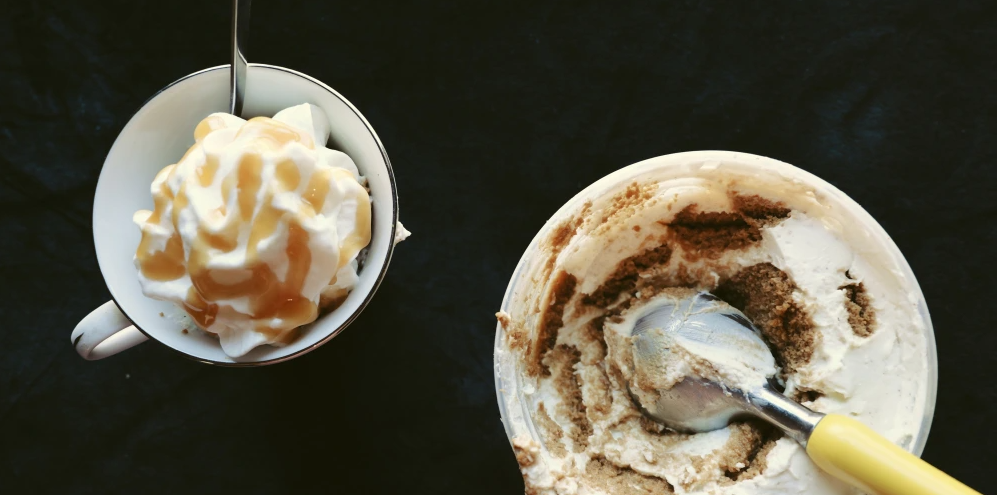
This is one of the more unusual food business ideas we've covered — a ghost kitchen startup built to ride viral TikTok recipes as they happen.
We've seen the pattern before. When baked feta pasta went viral in 2021, one 30-second recipe video moved an estimated $10 million in specialty cheese. The Japanese cheesecake trend checks every box that historically predicts real purchase conversion: two cheap ingredients, zero cooking, visually satisfying, endlessly customizable. TikTok creates demand faster than any retail or meal-kit company can respond. The edge is being the "last mile" that turns saved videos into paid orders while everyone else is still commenting "recipe??"
The Play: Build a Viral Kit Studio
A single trend SKU is fragile. A repeatable launch machine is a business.


Think about what you're actually selling. It's not yogurt and biscuits. It's speed:
- Detect a rising food trend (monitor TikTok trending sounds, hashtag velocity, Google Trends spikes)
- Decide if it's "kit-able" (cheap ingredients, easy assembly, visual payoff, delivery-safe)
- Source components locally
- Ship in under 60 minutes or same-day
- Collect first-party demand data
- Rotate to the next trend
Treat "Japanese Cheesecake" as your first case study and cash-flow test. If it works, you've proven a model you can run 20 times a year. A word of honesty: the "viral kit engine" only becomes a real business once you've proven at least 2–3 trend cycles of launch → sales → clean wind-down in one city. Until then, this is a promising low-cost food startup concept with a clear path to something bigger.
Where the Moat Comes From
1. Execution Speed + Templates

Anyone can copy a recipe. Far fewer can consistently ship a new "viral kit" in 48 hours. The defensible asset is your operational playbook: packaging and label templates you can swap graphics on while keeping the structure, a supplier rolodex organized by category (dairy, cookies, toppings, cups, seasonal), a standardized photography style for delivery app listings, and a tested naming and offer structure that converts on each platform.
Each new trend launch gets faster because the system already exists. Your tenth kit launch should take a fraction of the effort your first one did. These templates are copyable in theory — the real barrier is the willingness and operational capacity to actually run this play repeatedly under real constraints like permits, staffing, and platform compliance.
2. Distribution Relationships

You win by locking in the same "I want it now" funnels every time: commissary or ghost kitchens that can assemble and store product, local micro-fulfillment partners for rapid delivery, and repeatable delivery channels you've already onboarded.
The ghost kitchen infrastructure is mature enough to support this. The global market hit roughly $88 billion in 2025 and is projected to reach nearly $197 billion by 2032. Pop-up kitchen formats — the exact model you'd use — account for the largest share at 53%. You're not pioneering new infrastructure. You're plugging into existing capacity with a novel demand signal. That said, these kitchen partners are rarely exclusive. You earn priority through volume and reliability, not contracts.
3. Data You Can't Buy Off the Shelf
Across multiple trend cycles, you'll accumulate intelligence no one else has: which viral foods actually convert into paid orders (and which don't), which neighborhoods buy at what price points and with what repeat rate, what packaging and naming drives conversion on delivery platforms, and how long each trend's commercial window lasts before it decays.
That dataset becomes leverage for partnerships with CPG brands, grocers, or meal-kit companies who want to ride these waves but can't move fast enough on their own. Fair warning: this moat is aspirational until you have several trend cycles in at least one city and can show a potential partner that your predictions reliably beat their intuition. Plan on 6–12 months of disciplined experimentation before this data carries real weight.
MVP: What You Build in 7–10 Days
Offer Design (Start with 2 SKUs)

Unlock the Vault.
Join founders who spot opportunities ahead of the crowd. Actionable insights. Zero fluff.
“Intelligent, bold, minus the pretense.”
“Like discovering the cheat codes of the startup world.”
“SH is off-Broadway for founders — weird, sharp, and ahead of the curve.”


