


Americans paid $42.6 billion for electrolyte drinks in 2024. They spent another $17.2 billion on functional water — the kind with vitamins, minerals, or "pH balance" printed on the label. That's $60 billion for water that isn't just water anymore.
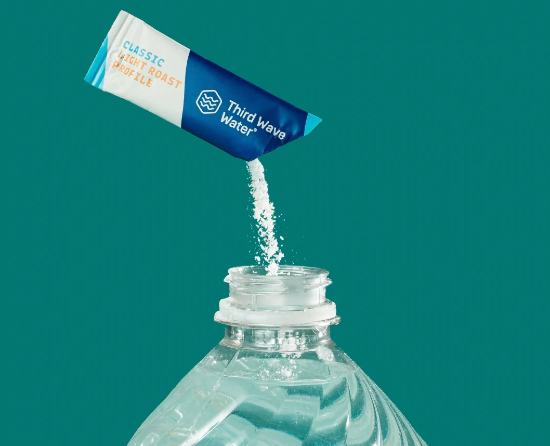
Third Wave Water sells mineral packets that turn distilled water into "coffee water" for $1.25 per gallon. The company does $1 million annually with 11-50 employees — proving both demand and unit economics work at small scale. They appeared on Shark Tank in 2017. Barbara Corcoran offered $100,000 for 25% plus a $1 royalty. The deal fell through post-show, but Third Wave Water kept growing.
The real opportunity isn't replicating their coffee play. It's owning water profiles as a category before someone else does. RO systems now capture 29% of the home water treatment market and growing. Every household with an RO system sits on "empty water" that needs remineralization. Third Wave Water validated coffee. Nobody's claiming the other 90% of use cases.
The coffee proof-of-concept already works
Third Wave Water started in 2015 with $4,000 in sales. By 2016: $66,000. After Shark Tank in 2017, they sold 10,000 units in two weeks. Today they employ 11-50 people and run commercial systems in cafes through a lease model called Tethys.
The product is simple: one packet per gallon of distilled or RO water. The packet contains calcium, magnesium, sodium in specific ratios that match Specialty Coffee Association standards. Cost per cup ranges from $0.08 to $0.75 depending on the profile.
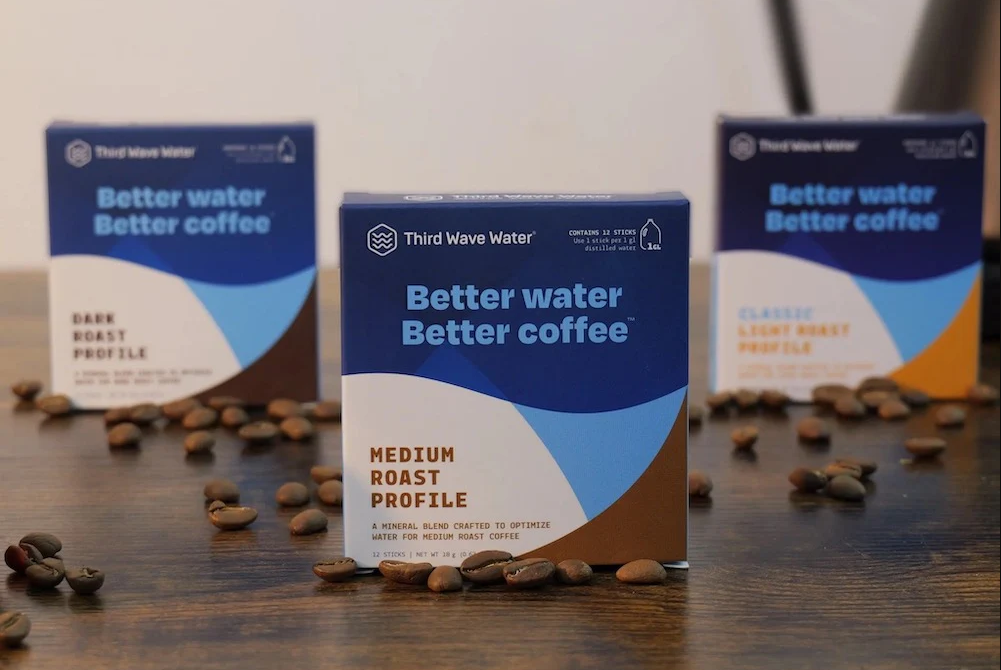
They now offer multiple profiles — Classic, Espresso, Dark Roast, Light Roast — with different mineral ratios for different beans and brew methods. Specialty coffee shops use them. Home enthusiasts subscribe.
The business works because coffee is 98% water, and serious coffee people will pay $15-20 per bag of beans. Adding $1.25 per gallon of water is a small premium to protect that investment.
The bigger play: water as an adjustable setting
The functional water market is projected to hit $28.7 billion by 2033, growing at 5.9% annually. The electrolyte drink market will reach $74.2 billion by 2034 at 5.7% annually. These numbers represent finished RTD beverages sold through grocery and convenience channels — not your direct market. But they prove the underlying shift: people don't think of water as a commodity anymore.
Your actual addressable market is much smaller: coffee nerds, home bakers, tea enthusiasts with RO or distilled water. That's still real money if you execute well, but this is a $5 million business on the high end, not a $50 million unicorn play.
The insight is about use-case specificity. Water for espresso. Water for pizza dough. Water for tea. Water for athletic recovery. Water for daily sipping.
Each has an optimal mineral profile. The profiles are small variations — different ratios of calcium, magnesium, potassium, sodium. Those variations matter for taste, texture, and function.
Most people with RO systems or distilled water dispensers are sitting on completely blank water with no profile at all.
Why the NYC water myth actually helps
New York bagel makers swear their water makes the difference. NYC tap water is soft — about 13.5 mg/L of calcium versus a national average of 50.6 mg/L. The mineral ratio is roughly 1 part calcium to 5 parts magnesium.
Josh Pollack, who runs Rosenberg's Bagels in Denver, spent a year sending NYC water samples to Colorado State University for testing. Then he paid for a custom mineralization system to recreate NYC water 1,700 miles away. The New York Times said his bagels were "chewy and flawless."
The Florida-based Original Brooklyn Water Bagel Co. chain uses a 14-stage water treatment system to replicate Brooklyn tap water at 19 locations. They call it "Brooklynizing the water."
New York WaterMaker licenses equipment to pizzerias and bagel shops nationwide for under $8/day, claiming to replicate NYC tap characteristics.
The science is less conclusive. The American Chemical Society tested it in 2015. America's Test Kitchen ran side-by-side batches with NYC water versus Boston water. The difference was minimal. Food scientist Kenji López-Alt did his own experiment in 2019 with six different waters at minerality levels ranging from 20 to 300+ ppm. His conclusion: water chemistry matters, but it's second-order compared to technique, fermentation time, and flour quality.
The myth persists anyway because:
- The cultural belief is strong
- Multiple businesses profit from replicating it
- Water chemistry does have a real effect, just not as dramatic as folklore suggests
- People are paying for the story as much as the performance
For a business model, that's actually ideal. You don't need water to be the primary variable — you need it to be a real, measurable variable that passionate practitioners can taste and talk about. The science backs that up. The Specialty Coffee Association publishes water quality standards because minerals genuinely affect extraction. Water chemistry influences gluten development in dough. These effects are real, just not magic.
You're selling ritual and identity as much as chemistry. When someone says "I use Stone Oven water for my pizza dough," they're signaling seriousness about their craft. That signal has value.
The product that sells vs. the business that scales
Stop selling packets. Start owning profiles.
Core strategic shift: Packets are a commodity anyone can copy. Profiles are intellectual property. Once you name them and people start using that vocabulary, you control the category.
Start narrow: Water flights for coffee obsessives
The first product is a sampling kit. Call it a Water Flight. Four profiles, four one-gallon doses, same coffee beans. The customer brews identical coffee with each water profile and tastes the difference side by side.
Critical constraint for MVP: Start with extreme profiles:
Unlock the Vault.
Join founders who spot opportunities ahead of the crowd. Actionable insights. Zero fluff.
“Intelligent, bold, minus the pretense.”
“Like discovering the cheat codes of the startup world.”
“SH is off-Broadway for founders — weird, sharp, and ahead of the curve.”


