


Your Oura Ring says your recovery score crashed to 42. Your partner's snoring hit 87 decibels last night. The data doesn't lie.
Over one-third of American adults now sleep separately from their partners at least occasionally—20% do it occasionally, 15% do it consistently, according to the American Academy of Sleep Medicine. That's roughly 40+ million people navigating separate bedrooms with guilt, using tools built for individuals, spending money on acoustic products positioned for "noisy apartments" instead of couple sleep optimization.
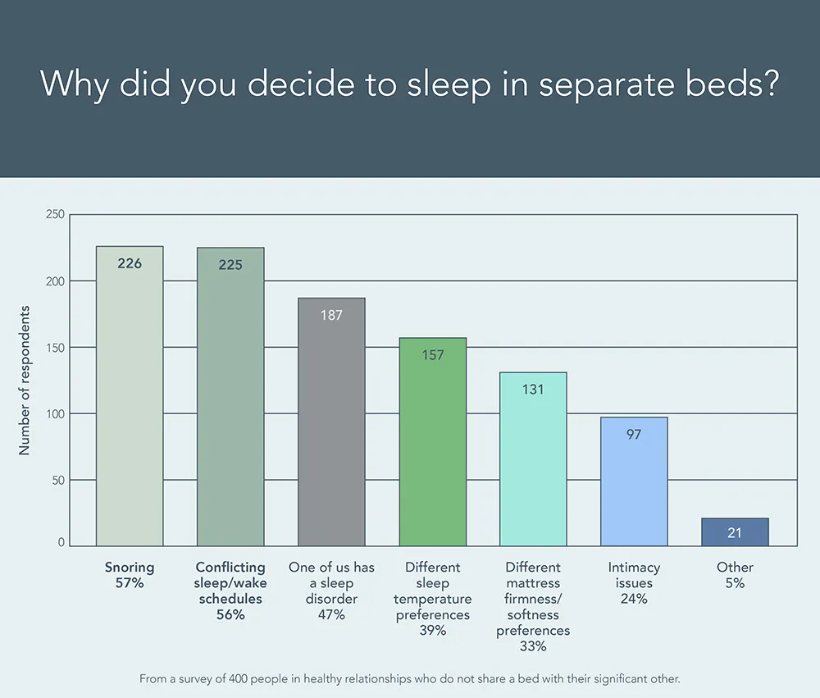
The building acoustic insulation market sits at $4.96 billion in 2024, growing to $6.8 billion by 2030. The smart ring market exploded from $340.9 million to a projected $2.5+ billion by 2032. Oura Ring alone generated $500 million in 2024 revenue, up 120% year-over-year, with CEO Tom Hale projecting $1 billion in 2025 and potentially close to $2 billion by 2026.
Nobody's connecting these dots. Nobody's positioning acoustic solutions for the sleep divorce market. Nobody's building the coordination layer that makes separate sleeping work without the guilt.
The wearables created proof. Culture granted permission—Barbara Corcoran and Cameron Diaz publicly endorsed separate bedrooms in 2024. The RAND Corporation suggested rebranding "sleep divorce" as "sleep alliance" to destigmatize further. Among 35-44 year-olds (peak earning years, peak stress years), the numbers skew even higher.
What's missing is the operating system for couples who live together but don't always sleep together.
The Coordination Tax Nobody's Solving
Sleep divorce creates a coordination problem couples currently solve with awkward texts and guilt.
"Should I come to bed tonight?"
"Did you want to sleep together or separate?"
"I feel bad taking the guest room again."
This friction—the emotional labor of negotiating sleep arrangements every night—is the actual pain point. The snoring just triggers it.
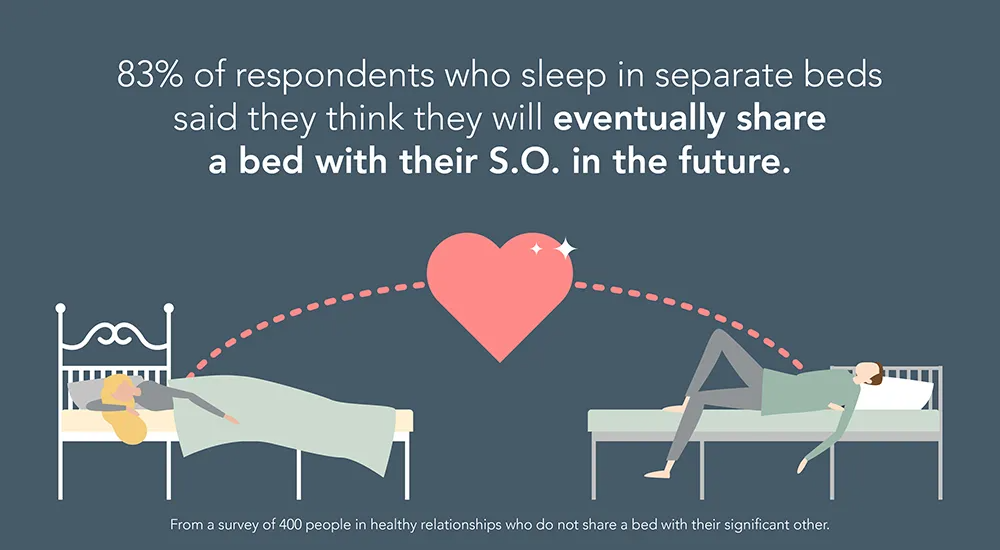
Existing relationship apps completely miss this. Paired ($15/month, 100k+ daily users) focuses on intimacy exercises and conversation starters. Between handles private couples chat. Couple Joy gamifies relationship tracking. Sleep Cycle has a "partner link" feature to separate tracking for couples in the same bed. Oura Ring maintains individual focus despite 80% smart ring market share and high-80s retention at 12 months (most wearables crater in the low 30s).
Nobody treats "couple who sleep separately some nights" as the default use case.
Your Google Calendar doesn't solve this because the job isn't scheduling—it's reducing emotional friction around a sensitive decision couples make every single night. You need shared vocabulary ("visit nights," "quiet hours"), visible patterns, and connection anchors that make separate sleeping feel like relationship optimization instead of relationship failure.
The Fast Path to $1M ARR
Start with software, scale to commerce, own the standard.
Launch an app for couples practicing sleep divorce. Core features:
Unlock the Vault.
Join founders who spot opportunities ahead of the crowd. Actionable insights. Zero fluff.
“Intelligent, bold, minus the pretense.”
“Like discovering the cheat codes of the startup world.”
“SH is off-Broadway for founders — weird, sharp, and ahead of the curve.”


