


Think specialty coffee's third wave, applied to the soil your food grows in. A two-person team can validate with a 500-unit launch (~$37K revenue), scale to $444K in year one at 5,000 customers with 60–65% gross margins, and reach $1M+ in year two on organic growth and earned media alone.
The flavor-first positioning in premium growing media is unclaimed. The science backing it is real. And younger consumers are spending more on gardening than any generation since the pandemic peak.
Selling expensive dirt sounds like a punchline. It's also a $6 billion global market growing at mid-single-digit CAGRs, with the premium segment worth over $2 billion and climbing faster than commodity mixes. Professional and specialty potting soils are forecast to outpace the broader category as consumers increasingly pay for story, values, and perceived quality over raw specs.
Three trends are converging to create a niche product business that most founders would never think to build.
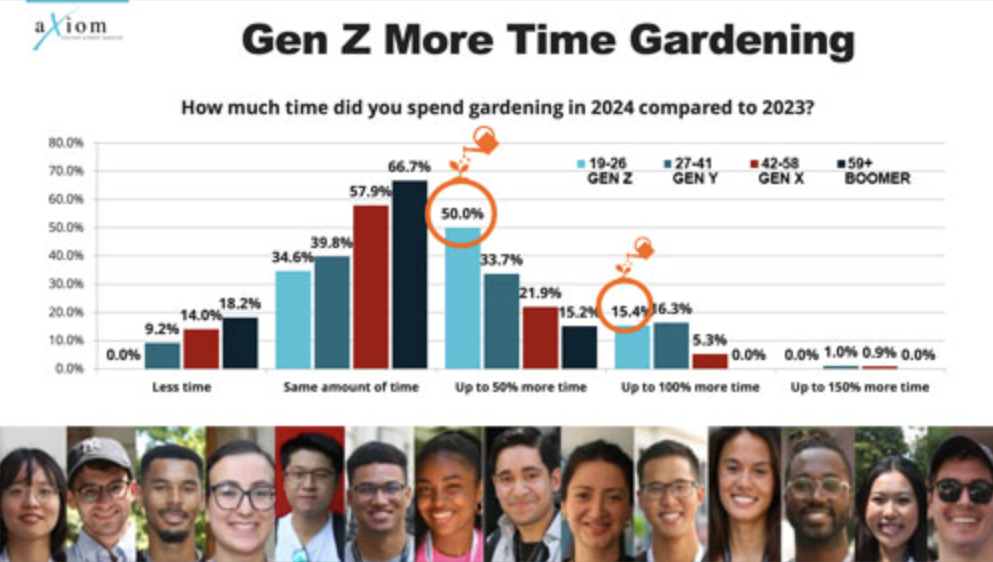
Generational spending. Axiom's 2026 Gardening Outlook Study found that 63.8% of Gen Z and 66.7% of millennials spent more time gardening in 2025 — roughly double the rate of Gen X. On budgets, 53.6% of Gen Z and 61.1% of millennials increased their gardening spend. A record 64% of all respondents plan to plant more and expand their gardens in 2026. This is the cohort most likely to buy identity-rich products online, document the process, and pay extra when a product feels like a lifestyle signal instead of a commodity.
Cultural gap. The modern premium-food consumer obsesses over every variable downstream: the knife, the olive oil, the tinned fish, the heritage flour, the coffee processing method, the salt flakes. Soil is one of the last major inputs in home-grown food still marketed like a bag of commodity mulch from a hardware store parking lot. Nobody has applied the DTC playbook that works in specialty food to the substrate your food actually grows in.
Scientific backbone. A 2021 study in Frontiers in Plant Science found that cultivation approach strongly affects the bacterial microbiome of tomato fruit, and that those microbial communities correlate with aroma and flavor chemistry. Hydroponic systems showed lower microbiological complexity than soil-based systems, with different microbial assemblages linked to measurable differences in flavor-related compounds. The science supports a real connection between growing medium and taste. It doesn't support slapping "Tuscan Terroir" on a bag and charging $40 — causality and effect size are nuanced, and results vary by environment. But "substrate influences flavor" is a defensible, marketable claim when framed honestly.
The Core Insight
Soil is sitting at the same inflection point coffee was at before the third wave. The specialty coffee market hit roughly $100 billion in 2024 and is projected to reach $167–183 billion by 2030 at 9–10% CAGR. That growth was driven by language: origin, roast profile, processing method, tasting notes. Those words gave consumers a framework for caring about something they'd previously treated as a commodity. The vocabulary for growing media doesn't exist yet beyond "organic" or "premium." Whoever builds that framework first owns the category.
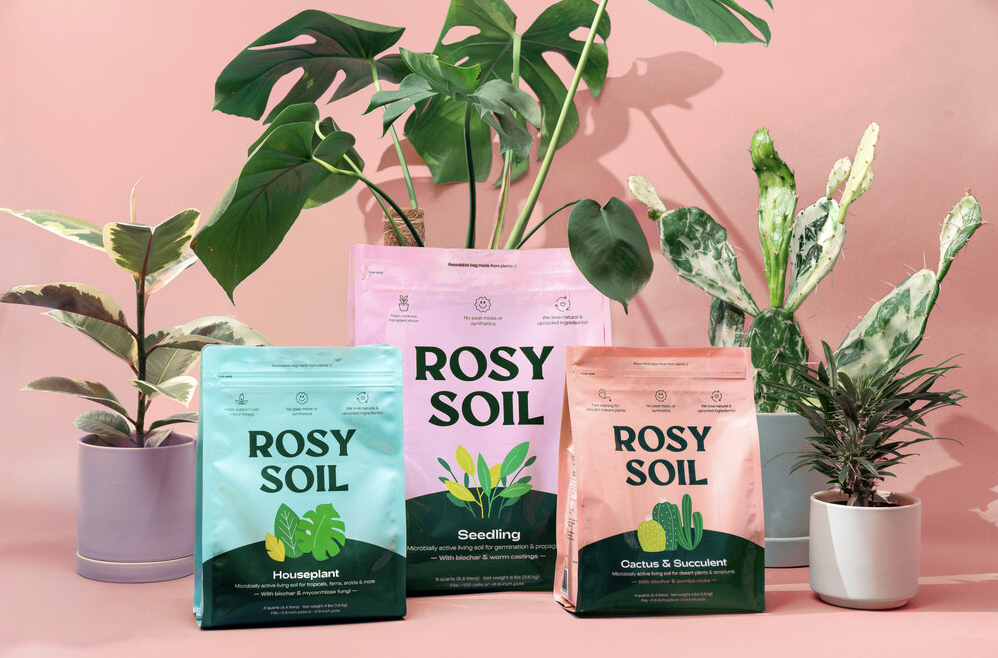
Rosy Soil has already proven demand at smaller scale. The biochar-based soil brand raised $3.6 million in seed funding, got cold-emailed by Target to stock its shelves, and expanded to over 600 Target stores and 940+ independent retail locations by late 2025. Houseplant mixes start at $19.99. Rosy Soil's positioning is sustainability-first: peat-free, carbon-negative. That proves retailers and consumers will support premium substrate SKUs when the story and design are right. The flavor angle — soil as sensory infrastructure for edible growing — remains wide open.
What the Opportunity Is (and What It Isn't)
The lazy version of this business is artisanal dirt with nice packaging. You sell bags of potting mix with romantic origin names ("Amalfi Coast Blend," "Kyoto Garden Mix"), mark them up 4x, ride the meme cycle, and flame out when the PR hook fades and nobody reorders.
That version fails for three specific reasons.
Regional-soil theater becomes a trust problem. USDA APHIS explicitly prohibits importing foreign soil into the U.S. without permits because it can introduce pests and pathogens. Commercial sale of imported products containing organisms of unknown identity isn't authorized unless the material has been treated to destroy all organisms and contaminants. Interstate movement faces its own restrictions and safeguards.
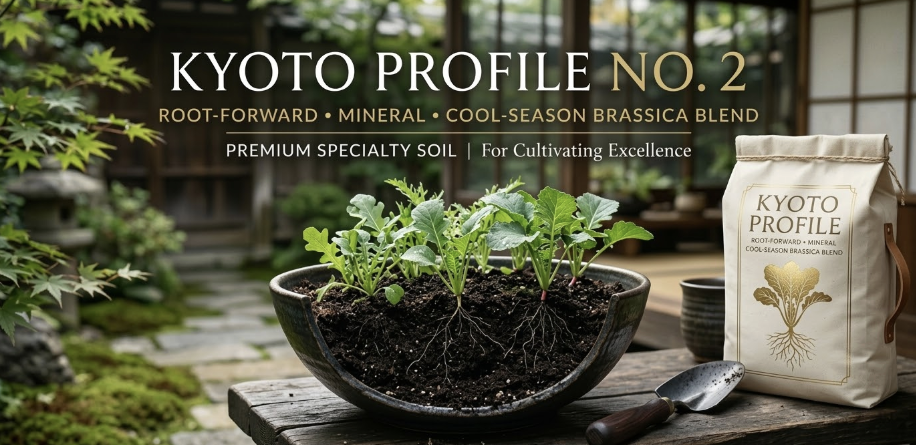
The smarter move: sell region-inspired flavor profiles blended domestically from regulated inputs. Don't sell "soil from Kyoto." Sell "Kyoto Profile No. 2: root-forward, mineral, cool-season brassica blend." Legally sane. Commercially stronger.
Overselling magic kills retention. A balcony gardener doesn't just need soil. They need container depth, light, watering discipline, pest control, cultivar matching, and a little luck. If you sell miracle dirt, you inherit every failed tomato. That kills repeat purchases faster than anything.
Shipping dirt as a standalone SKU is a margin trap. Dense product. Ugly freight economics. Seasonal demand spikes. Potential spoilage if you position it as "living." Freight costs for dense, low-value-per-kg goods like soil are a known margin killer in ecommerce, and you don't want your entire business model dependent on mailing heavy bags one order at a time.
The version worth building solves all three. Instead of a dirt brand, you build a Flavor Biome System for premium edible growing.
The Flavor Biome System: What You Actually Sell
The product is a bundle, not a bag.
A growing medium profile formulated around a target flavor outcome (high-acid tomato, volatile-rich basil, mineral-forward root vegetable). A crop-specific playbook covering container depth, watering cadence, light requirements, harvest timing, and common failure modes, delivered via QR-linked digital guide. Cultivar pairing with recommended seed varieties matched to the substrate profile. Container specs covering minimum volume, drainage, and material recommendations. A feedback loop with post-harvest taste scoring, optional Brix readings (sugar content measurement), and grow-log submission that feeds back into product improvement. And a membership layer with seasonal recipes, limited-run profile drops, community benchmarks, and grow-performance data.
The category language matters. "Premium soil" is generic. "Living soil" is crowded. "Terroir" is romantic but vague. "Flavor Biome" is specific enough to own and weird enough to remember.
3-Tier Product Architecture
Tier 1: Hero Kits
Start with two flagship kits. Each one is a complete system:
Unlock the Vault.
Join founders who spot opportunities ahead of the crowd. Actionable insights. Zero fluff.
“Intelligent, bold, minus the pretense.”
“Like discovering the cheat codes of the startup world.”
“SH is off-Broadway for founders — weird, sharp, and ahead of the curve.”


