


Walk Score tells you how close stuff is. It has no idea whether your body can actually get there.
That single blind spot is a multibillion-dollar measurement gap hiding in plain sight. Cities under ADA settlement orders are already writing checks — Baltimore committed $44 million to sidewalk improvements, Los Angeles pledged $1.4 billion over 30 years, and over 200 jurisdictions have entered DOJ compliance agreements since 2000.
The Gap Nobody Measures
Walk Score rates every U.S. address on a 0–100 scale based on proximity to amenities. A decay function penalizes anything beyond a 30-minute walk. The algorithm factors in block length and intersection density as rough proxies for pedestrian friendliness. It does not assess whether sidewalks exist, whether crossings are safe, whether a wheelchair can navigate the route, or whether the path is shaded, obstructed, or terrifying at dusk.
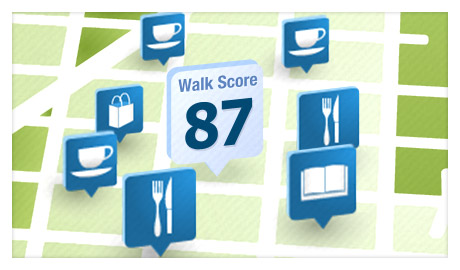
Walkability commands real money despite this. Redfin's analysis of nearly one million home sales across 18 major metros found that homes in highly walkable neighborhoods sold for 23.5% more — roughly $77,668 — than comparable homes in car-dependent areas. A Zillow study found a 15-point Walk Score increase boosted home values by an average of 12%. In San Francisco, moving a home from "somewhat walkable" to "very walkable" added over $188,000 in estimated value. Realtor.com data shows the share of listings emphasizing walkable features more than doubled between October 2024 and October 2025. Among Gen Z and millennial respondents, 90% want walkable communities, and about a third said they'd pay significantly more for it.
The market is already paying a premium for "walkable" based on a metric that breaks down exactly where it matters most: at the curb cut, the broken sidewalk, the six-lane crossing with no signal. A better measurement layer doesn't need to manufacture demand. It just needs to become the input people trust.
Why the Timing Works
Computer vision can extract micro-features from street imagery at scale. Researchers at the University of Washington's Makeability Lab demonstrated that deep learning models can detect missing curb ramps, surface damage, and obstacles from Google Street View with commercially useful accuracy. A 2025 study from Oregon State and Harvard predicted built environment quality metrics — including a "safe for walking" dimension — at 120 million U.S. street locations using CV on street-view imagery. A separate pipeline called SAGAI showed that vision-language models can generate structured spatial indicators, including sidewalk width estimates, from Street View without task-specific training. The hard research is done. The opportunity now is productizing it — a prime AI startup idea for anyone who's worked in proptech, urban planning, or accessibility tools.
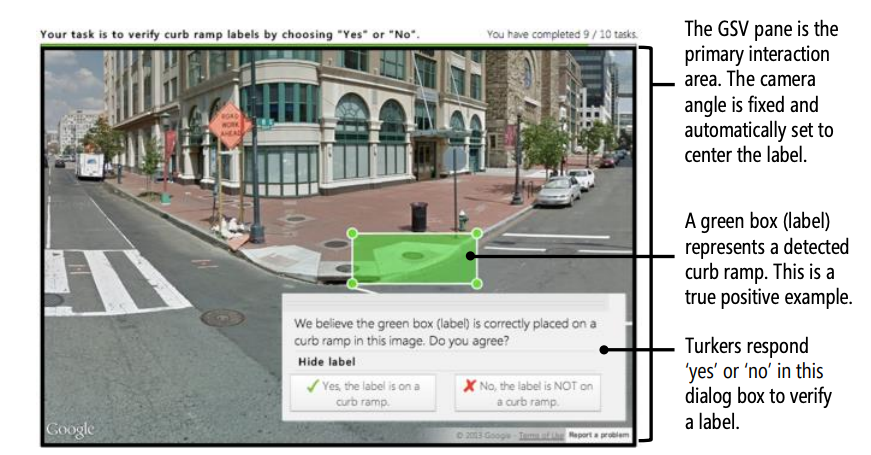
Crowdsourced validation already works at city scale. Project Sidewalk has deployed in over 40 cities across 8 countries. Volunteers have contributed more than 1.1 million sidewalk accessibility labels covering over 21,350 km of streets — the largest open sidewalk accessibility dataset ever collected. Combining five validators per segment pushed recall to 92%. In Newberg, Oregon, community data led to two new sidewalk repair programs. In Chicago, it guided equitable infrastructure spending. There's also an emerging open standard worth knowing about: the OpenSidewalks Schema models sidewalks, crossings, and curb interfaces as traversable graph edges and nodes, exactly the structure a commercial product needs.
ADA litigation is creating massive municipal budgets for exactly this data. Los Angeles committed $1.4 billion over 30 years after settling ADA litigation. Portland settled at $113 million. In November 2024, Baltimore announced a $44 million consent decree after their own study found only about 1.3% of more than 37,000 surveyed curb ramps met ADA standards. Similar ADA sidewalk and curb-ramp settlements in Boston, Philadelphia, and New York require tens of millions to billions in pedestrian right-of-way spending. A study of 401 local government entities found only 13% had ADA transition plans readily available. These settlements typically oblige cities to inspect and document their entire pedestrian network and maintain ongoing inspection programs — exactly the kind of work a Street Quality Graph makes cheaper and faster. Cities need this data. Most don't have it. The ones that do collected it through expensive, slow, manual field audits.
You'd be building the product cities need to spend money they've already been court-ordered to spend.
The Product: A Street Quality Graph
The product isn't a single score. It's a segment-level dataset — a "Street Quality Graph" (SQG) — powering multiple outputs for multiple buyers. Think of it as the difference between a restaurant having a Yelp rating and having a health inspection report. Walk Score gives you the rating. The SQG gives you the inspection.
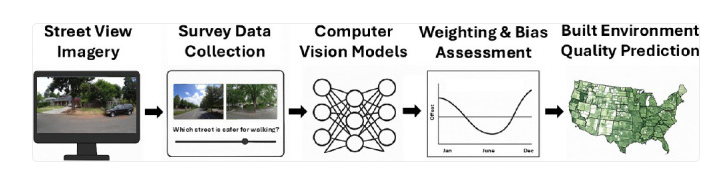
This is a horizontal data product with vertical outputs — a B2B SaaS idea built on a single underlying asset that serves three distinct revenue surfaces.
Data per street segment:
Model-derived (CV with confidence scores): sidewalk presence (none / one side / both sides), crossing stress proxy (width, exposure, signal type), shade proxy (tree canopy), traffic adjacency and exposure, comfort probability by mobility mode (wheelchair, stroller, pedestrian).
Human-verified (ground truth): curb cut present/missing, obstruction frequency (construction, parked cars, trash bins, utility poles), surface issues (cracks, steep grade, uplift), timestamped "cannot pass" flags.
Outputs customers actually buy:
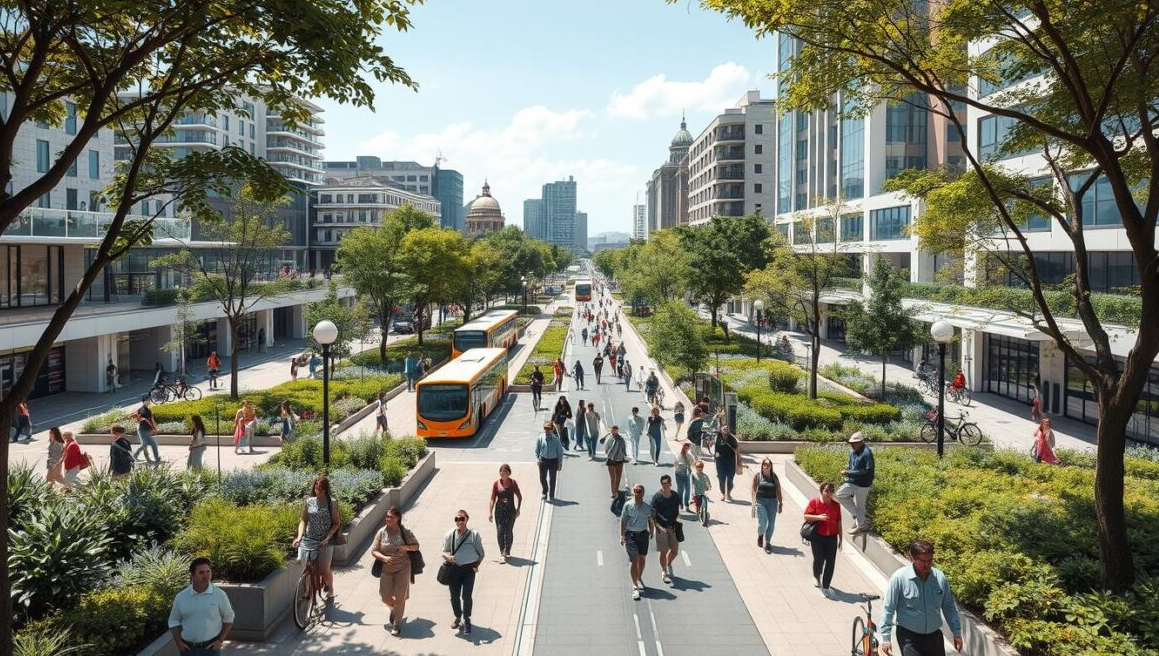
Routing: wheelchair-safe, stroller-safe, and low-stress walking routes. Real estate: a "Comfort Walk" badge with route previews to key POIs, embedded directly in listing pages. Cities: heatmaps of worst corridors, fix-priority lists, and before/after improvement tracking tied to verification timestamps.
Unlock the Vault.
Join founders who spot opportunities ahead of the crowd. Actionable insights. Zero fluff.
“Intelligent, bold, minus the pretense.”
“Like discovering the cheat codes of the startup world.”
“SH is off-Broadway for founders — weird, sharp, and ahead of the curve.”


