


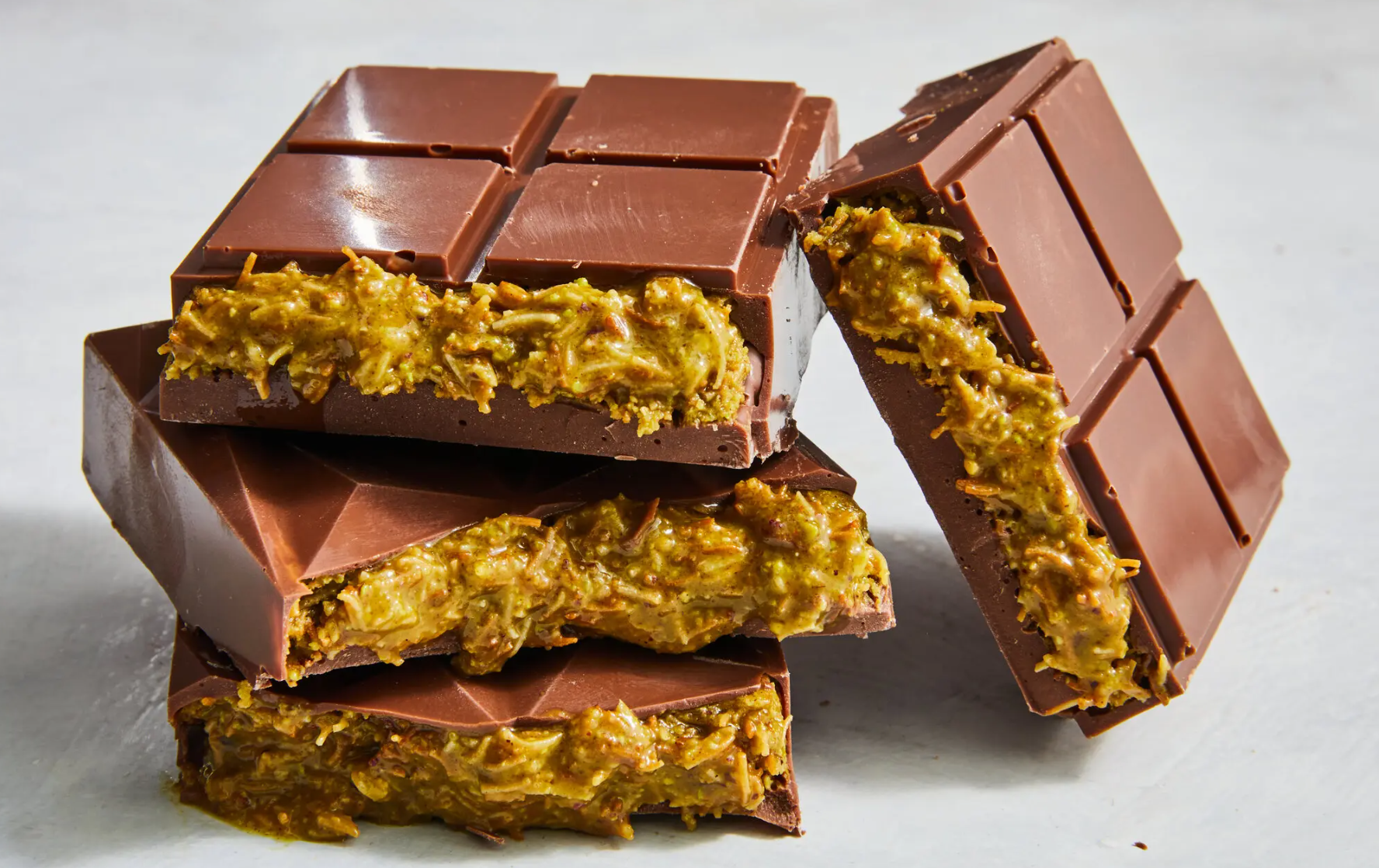
In the early 1980s, a group of perception researchers did something weird: they filmed syrup oozing down glass and made people watch it.
Then they measured how long people couldn't look away.
The answer? Humans are neurologically addicted to viscous flows moving at 1–3 centimeters per second.
Faster? Your brain gets bored. Slower? Never triggers the dopamine hit.
But nail that Goldilocks zone and attention locks in like a tractor beam.
Marketers call it "oddly satisfying." Neuroscientists call it sensorimotor reward coupling.
Here's what it actually is:
your brain is a prediction machine that gets high on being right.

That's why a slow pour, a clean snap, or a perfect drip will outperform a Super Bowl ad every time. It's not creativity. It's not even storytelling. It's just physics triggering chemistry.
Half the stuff selling on TikTok right now isn't selling a product — it's selling a neurological pattern your ancestors evolved to track honey dripping from a tree.
Once you see it, you can't unsee it.
Now that you understand why humans are hardwired to stare at ooze, let's talk about the people quietly making $180K in three weeks selling the ability to create the ooze.
Because the smartest operators on TikTok Shop aren't selling things.
They're selling the format.
Silicone molds. Pistachio paste. Kataifi shreds. The raw ingredients of a viral moment, packaged as a kit: the ingredients cost almost nothing.
That gap between commodity inputs and viral-format output is where operators are sprinting to six figures while everyone else is still trying to figure out what "Dubai chocolate" even means.
Why now?
Platforms are subsidizing it. TikTok Shop is paying for your customer acquisition.
Creators are amplifying it. Every unboxing is free advertising.
Consumers are addicted to it. They don't want to buy chocolate. They want to feel like they made the thing they saw on their phone.
If you dig a little deeper, the real play isn't even the kits.
It's understanding that TikTok has order caps. That pistachio supply is constrained. That smart operators are routing demand across networks of probation-stage shops like they're running a shadow logistics empire.
Stripped to its essence, it's an infrastructure play.
And the operators who move first get compounding advantages long after the trend dies — because they're selling the system for manufacturing viral formats. Trends come and go, but the system will always be there.
Read the full playbook here:
Smart operators hit seven figures selling Dubai chocolate DIY kits while TikTok Shop's order-volume caps create an accidental moat against casual sellers.
From the Vault

Twitch launched vertical clips. YouTube Shorts exploded 3x. Nobody owns the 60-minute window between stream-end and viral distribution.
Onfire proved developer forum monitoring drives $50M in deals. The real opportunity: unifying scattered signals into one revenue timing engine.


