


Twenty-four percent of tattooed Americans regret at least one of their tattoos. That's roughly 21 million people waking up every morning looking at permanent ink they wish they could erase.
The regret rate has climbed steadily over the past decade, tracking right alongside the explosion in tattoo popularity itself. Thirty-two percent of U.S. adults now have at least one tattoo—roughly 88 million people. The math is simple: as tattoos go mainstream, regret scales with them.
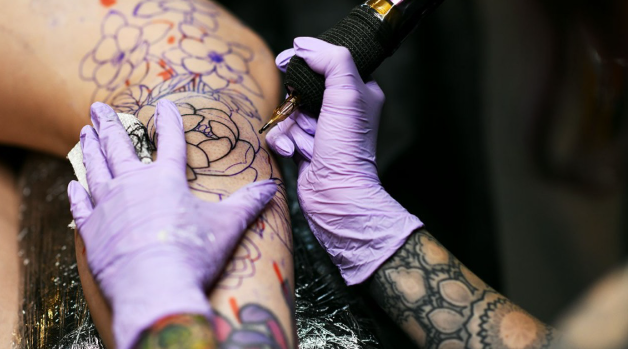
Here's what most people don't know: cover-ups cost $300-800 and take 1-2 sessions. Laser removal costs $1,000-$5,000+ and takes 6-12 months of painful treatments. Yet there's no marketplace connecting people in that emotional moment—when they're Googling "can this be covered"—with artists who specialize in exactly that work.
Build that marketplace.
The Market Signal
Regret doesn't hit immediately. According to research tracking tattoo recipients, 51% don't experience full regret until two or more years have passed. Another 48% say the tattoo they regret most was one they got spontaneously. The emotional trajectory is predictable: impulse decision, slow-building dissatisfaction, eventual search for solutions.
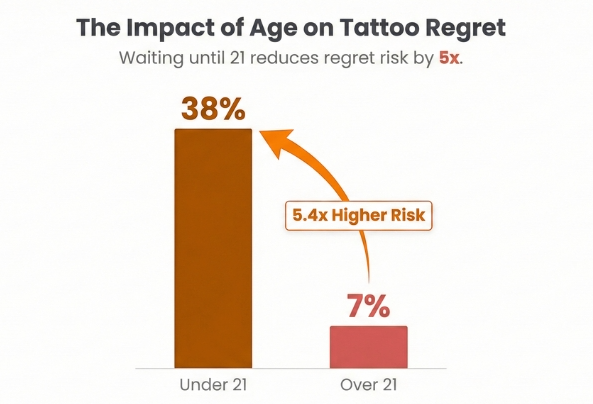
The demographics tell you who's searching. People tattooed before age 21 have a 38% regret rate. After 21, that drops to 7%. Women report higher regret rates than men across every study. Geographic patterns show regret clusters in cities (career concerns) and the South (cultural factors).
The search behavior is crystal clear. People don't search for "tattoo artist." They search:
- "can this be covered"
- "cover up vs laser removal"
- "tattoo cover-up specialists near me"
- "how to fix a tattoo I hate"
That search volume represents millions of people looking for help every year, most of them unaware that cover-ups are even an option. The removal industry has dominated the conversation because they've built the infrastructure—clinics, marketing, SEO. The U.S. tattoo removal market alone is growing at mid-teens CAGR and expected to hit multiple billions over the next decade. That growth proves people will pay thousands to fix mistakes.
General tattoo marketplaces like Tattoodo ($24M raised, 10,000 artists) don't specialize in regret cases. They're discovery platforms for people getting new tattoos, not fixing old ones.
Nobody owns the cover-up category.
Why Cover-Ups Work (And Why They're Underserved)
Cover-ups occupy a strange middle ground in the tattoo industry. They're harder than fresh tattoos—you're working over existing ink, managing color saturation, designing around what's already there. Not every artist takes cover-up work. Many shops treat them as filler jobs or turn them away entirely.
For artists who like the challenge, cover-ups are premium work. Clients pay more because the job is technically difficult. Sessions run longer. The emotional payoff—turning someone's regret into something they're proud of—creates intense client loyalty and organic referrals.
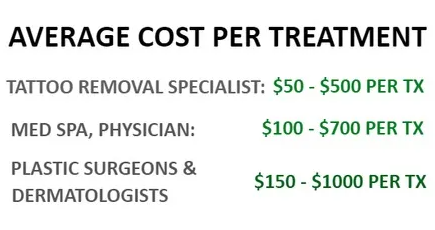
The economics speak for themselves. Laser removal clinics charge hundreds of dollars per session, with chains like Removery charging $175-600 per session. You need 5-10 sessions, meaning $1,000-$5,000+ total cost over 6-12 months. The process is painful and there's no guarantee of complete removal.
Cover-ups are different: $300-800 depending on size and complexity, 1-2 sessions typically, 2-4 weeks timeline, immediate visual improvement.
Here's what removal clinics won't advertise: many people who start laser treatment eventually opt for a cover-up tattoo instead. They realize partway through that complete removal isn't worth the pain, the waiting, or the scarring. They just want something they don't hate looking at every morning. The exact conversion rate isn't tracked publicly, but talk to any cover-up specialist and they'll tell you: partial-fading-then-cover-up is a common path.
Catch people before they spend thousands on laser sessions. Position cover-up artists as the first option, not the fallback plan they discover after failed removal attempts.
The Platform: Remorse.com
Build a category-defining destination for people in a specific emotional state: tattoo regret. Let's call it Remorse.com. Own the emotional keyword. When someone searches "tattoo regret" or "cover up specialists," that domain tells them exactly what you do before they even click.
Core offering:

Unlock the Vault.
Join founders who spot opportunities ahead of the crowd. Actionable insights. Zero fluff.
“Intelligent, bold, minus the pretense.”
“Like discovering the cheat codes of the startup world.”
“SH is off-Broadway for founders — weird, sharp, and ahead of the curve.”


