


Ten years ago, "automation" meant picking your poison: hire a priesthood of RPA consultants or write DIY scripts that broke the moment a vendor redesigned a login screen.
A third category is emerging—browser automation as a first-class developer environment.
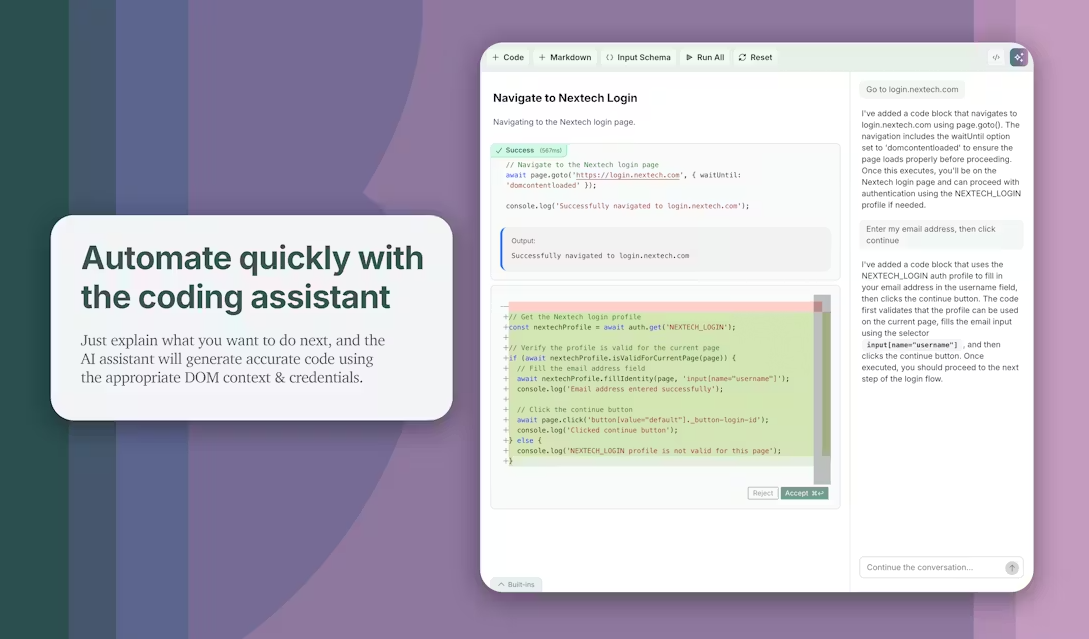
BrowserBook out of Y Combinator shows what this looks like: a Jupyter-style workspace with an inline browser, Playwright code generation, built-in auth handling, screenshot helpers, and deployment via API. The entire write-test-debug loop compressed into one interface. The founders spent YC building healthcare workflow automations and realized the tooling didn't exist, so they built it.
At the same time, business leaders are getting a crash course about AI agents. Salesforce recently told enterprise customers they need to decide when to "script versus set free"—when deterministic, rule-based automation beats probabilistic agent behavior. High-stakes ops demand repeatability. Creative interpretation has no place there.
The gold rush is obvious. What's not obvious: where the gold is.
The Trap: "Automation App Store" Is a Feature, Not a Company
Templates are commoditizing fast.
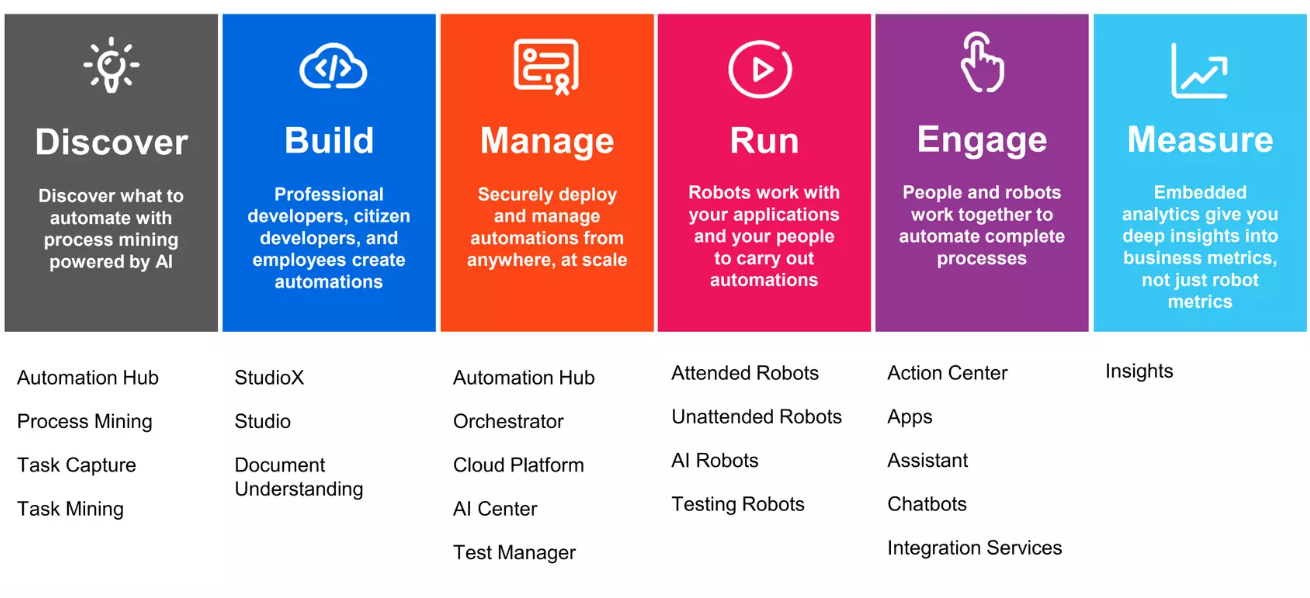
Browser Use runs a public templates library anyone can clone. UiPath Marketplace pushes agent templates as plug-and-play blocks. Power Automate positions itself as "RPA for everyone," bundling web automation and data extraction for the masses.
If your plan is "sell workflows," you're competing with gravity.
The asymmetric wedge isn't the workflow library. The real moat is post-deployment: ongoing maintenance, monitoring, and reliability guarantees.
The Hidden Tax: Maintenance Is the Business Model
Automation doesn't die at install. It dies at month two.
UI-based automation breaks because the world changes: DOM structures shift, MFA flows update, "just a small redesign" becomes "nothing works," rate limits appear, bot checks tighten, new modals pop up, cookie policies flip.
Organizations report spending 60-70% of their automation effort on maintenance. That's the economic law underneath browser automation.
Three reasons bots break:
- UI changes in the applications they interact with
- Regulatory or policy shifts that impact logic
- Missed requirements during initial development
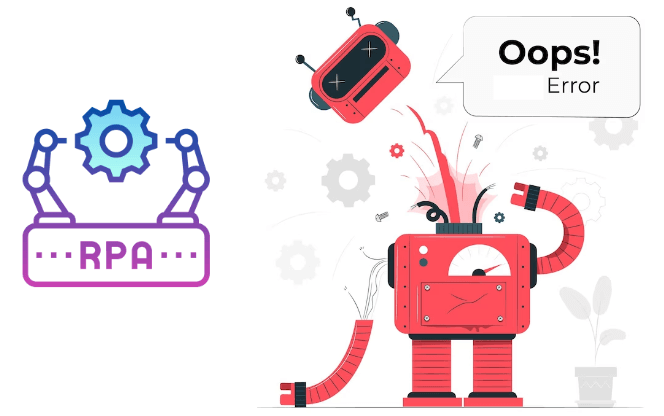
A bot designed to automate invoice processing inputs data into a specific ERP field. The ERP updates. The field moves. The bot errors out. You pull it from production, fix it, test it, redeploy it. Repeat monthly.
Licensing fees represent 25-30% of total RPA costs. The other 70-75%? Implementation, integration, and maintenance. Industry case studies show maintenance consuming up to 70% of operational budgets. Companies report break-fix cycles eating time that should go toward building new automations.
The wedge becomes clear: stop selling automations. Start selling reliability over time.
The Opportunity: Vertical Automation-as-a-Service
The play is building Autopilot for [Industry] Ops.
Choose an industry drowning in legacy portals that will never get good APIs. Look for repetitive rules-based workflows, painful deadlines, and budget authority to make the pain disappear.
Your product is a promise: the workflows run without becoming the customer's maintenance burden. When portals change—and they will—fixes ship within agreed SLAs.
Where the Money Already Is
AP/invoice automation is a real budget line. The global accounts payable automation market was $3.07B in 2023, projected to reach $7.1B by 2030 at 12.5% CAGR. That's just one vertical slice of "people doing repetitive portal work."
The average cost of processing an invoice manually is $15. Organizations with fully automated AP can handle 23,333 invoices per FTE annually versus 6,082 in manual processes. Yet 68% of companies still manually key invoices into their ERP.
This is budget already allocated.
What You Sell (And Why It's Defensible)
You Sell Outcomes in a Narrow Domain
Perfect "portal hell" verticals:
Unlock the Vault.
Join founders who spot opportunities ahead of the crowd. Actionable insights. Zero fluff.
“Intelligent, bold, minus the pretense.”
“Like discovering the cheat codes of the startup world.”
“SH is off-Broadway for founders — weird, sharp, and ahead of the curve.”


