


Sunday, 7:14 p.m.
Your Slack is quiet but your brain won't stop running scenarios for tomorrow. You open TikTok "just for five minutes" and end up 40 minutes deep in cozy-chaos bedroom tours, nostalgic recap videos, and people narrating their Sunday anxiety like it's a sitcom character.
Nobody's searching for "candles" or "calming tea." They're searching for a way to feel different for the next 90 minutes.
The disconnect between search queries and actual purchase intent defines the mood economy. The product matters less than the emotional micro-shift it creates. Build the infrastructure layer for that shift—small emotional rituals packaged as a repeatable platform, complete with creator networks, proprietary behavior data, and B2B insights nobody else can access.
The spending data backs this up at scale
TikTok functions as a feelings machine right now. December's dominant trends—"cozy chaos" advent calendars, nostalgic "dear younger me" videos, Sunday reset routines—optimize for emotional states rather than product features. The content performs because it delivers anticipation, comfort, and identity.
The spending data validates this at scale. In China, analysts literally call it "emotional consumption" (情绪消费): Gen Z drives growth in toys, jewelry, and bubble tea specifically because these purchases deliver comfort and self-expression over utility. Pop Mart, which sells blind-box art toys like Labubu, went from niche retailer to multi-billion-dollar "happiness IP" business by understanding that people weren't buying collectibles—they were buying the emotional hit of surprise and attachment.

Similar patterns show up across Korea, where "little treats" spending has become an explicit coping strategy for young adults managing economic stress. Not frivolous spending. Strategic emotional regulation through $5-15 purchases that create small dopamine loops.
In the U.S., Gen Z's "treat culture" spending averages several hundred dollars monthly, with 55% of Gen Z consumers planning to splurge even as they cut other expenses. They're not irrational—35% report that living an exciting life is a primary motivator, and 74% want brands they're proud to display to friends. Emotional purchases serve as both identity signals and stress management in a generation facing economic instability, pandemic disruption, and delayed life milestones.
The infrastructure supporting this behavior is exploding. The global subscription box market hit $37.5 billion in 2024 and projects to reach $116-186 billion by 2033, growing at 13-19% annually. In the U.S. alone, the market is climbing from $20 billion in 2024 to $86 billion by 2035 at 14.2% CAGR.
More telling: curation subscriptions—boxes built around specific experiences rather than just product replenishment—are the fastest-growing segment. Personalization, influencer unboxing content, and experiential discovery drive this growth, not just convenience.
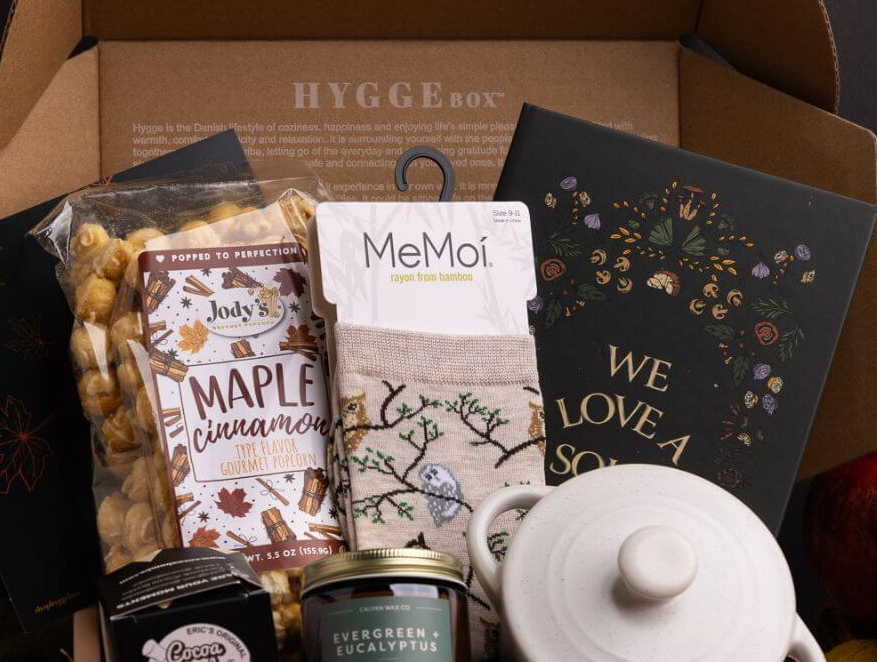
Meanwhile, mental health and wellness apps—the digital side of mood management—grew from $6-8 billion in 2024 to projected $17-36 billion by 2032-2034. Mood tracking features engage 58-65% of users, and 72% of global users now prefer digital mental wellness platforms for stress relief.
Consumer spending is reorganizing around emotional outcomes. The question shifts from "What do you want to buy?" to "How do you want to feel?" Whoever owns that translation layer captures a disproportionate share of Gen Z's $12 trillion in projected spending power by 2030.
Why the basic subscription box model has structural limits
The obvious move: "Let's sell mood-themed boxes. Sunday Scaries kit, Main Character Energy kit, Creative Block kit. $39-69 per box. Include a candle, tea, playlist QR code, journaling cards. Ship monthly. Done."
You could build a lifestyle business this way. But three structural problems keep it from becoming a platform:
Unlock the Vault.
Join founders who spot opportunities ahead of the crowd. Actionable insights. Zero fluff.
“Intelligent, bold, minus the pretense.”
“Like discovering the cheat codes of the startup world.”
“SH is off-Broadway for founders — weird, sharp, and ahead of the curve.”


