


In early December, OpenAI dropped $4.6 billion on sovereign AI infrastructure in Sydney and cut a deal that made professional association directors everywhere stop mid-email: a partnership with Coles, CommBank, and Wesfarmers to train 1.2 million Australian workers through "OpenAI Academy."
Industrial-scale AI literacy packaged as national policy. Three of Australia's largest employers just handed OpenAI the keys to their workforce development. The message to every trade group watching: you're about to become irrelevant unless you can credibly claim your members are "AI-ready."
Association boards from realtors to dental practices to city clerks saw the announcement and understood immediately. They need their own version. The training budgets exist. The continuing education infrastructure exists. What's missing is anyone who can actually build a credible AI training program before their members look incompetent when insurers and regulators start asking questions about risk management.
The Play: White-Label AI Academies for Vertical Professions
You sell co-branded AI training to professional associations—but skip the generic "prompt engineering for everyone" approach. Build real training that ships with profession-specific copilots, certifications that actually matter to employers and insurers, and benchmarks proving member offices use AI safely. Package curriculum for dental front desks or hotel operations or municipal clerks with working AI assistants they can plug into daily workflows, all wrapped in the association's brand.
Annual pricing runs $75,000 to $250,000 per association. The academy gets you in the door. The real prize is owning the AI standards, copilots, and usage data for an entire profession.
Why This Wave Isn't Hype
Corporate America is flooding training budgets into AI literacy while actual training lags embarrassingly behind adoption.
U.S. companies spent $102.8 billion on training in 2025, up 4.9% year-over-year, with per-employee spending hitting $874. The global corporate training market crossed $391 billion. AI training budgets specifically jumped 25%, with 70% of corporate programs planning to incorporate AI by year-end.
At the same time, 75% of workers used AI at work in 2024, with usage nearly doubling in six months. Individual usage of tools like ChatGPT jumped from 19% in December 2023 to 35% by late 2024. But only 49% of workers report their company offered any AI training. Microsoft found 70% of organizations struggle to equip their workforce with AI skills. When McKinsey surveyed employees in late 2024, nearly half said they wanted more formal AI training and believed it was the best way to boost adoption.
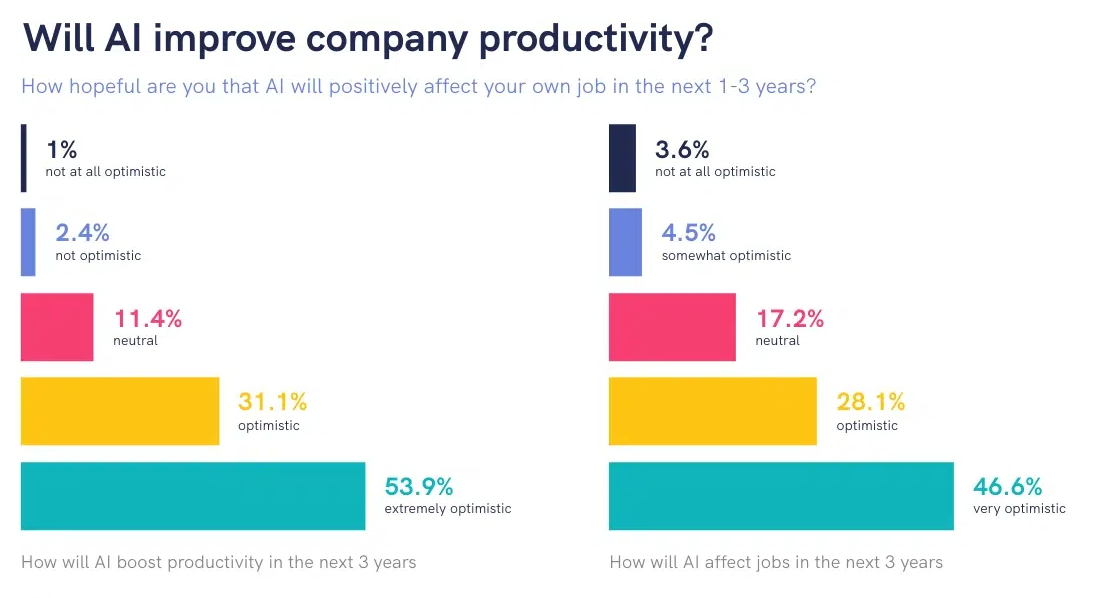
The gap is widening. Companies are spending near-record amounts on training while their employees teach themselves ChatGPT in secret. Associations sit in the middle of this mess, responsible for continuing education but lacking any credible AI curriculum.
OpenAI proved the model works at national scale. Vendors like HigherEd+ and Publication Academy already sell white-label AI training academies to universities—pre-built courses, fully branded, dropped into existing LMS platforms. The infrastructure exists. The budgets are real. The demand is desperate.
Current offerings are horizontal—generic "AI literacy" and "prompt engineering fundamentals" sold to anyone who will pay.
The Asymmetric Insight: Associations Are Quiet Regulators
Most people see trade associations as conference organizers who send too many emails.
Associations actually define what competence looks like in a profession. They control continuing education credits and issue certifications that members display on websites and letterhead. They set ethical standards. They sit at the center of vendor sponsorship money and have built-in distribution to thousands of practices that trust them more than any external vendor.
They function as quasi-regulators. In a world where AI liability is about to matter to insurers and plaintiffs' attorneys, the profession that can credibly claim "our members work under an AI framework with auditable training" will win on recruitment, public relations, and insurance terms.
If you become the engine behind an association's AI literacy standards, certification program, and usage benchmarks, you're not a course vendor anymore. You're infrastructure for that profession's AI transition.
Here's how that looks in three years: A dental practice gets sued after an AI-generated treatment plan email contains an error. The malpractice insurer asks whether the practice staff completed any AI training. The practice shows certification from their state dental association's "AI-Ready Practice" program—your program. The insurer sees documentation of training hours, competency testing, and adherence to association guidelines on AI usage. That certification carries weight specifically because it came through their professional body, not some random online course.
Or consider municipal governments. When a city clerk's AI-assisted public records response creates a FOIA violation, the city's risk management team investigates. They discover the clerk completed the state municipal league's AI training program, which included modules on legal compliance, data privacy, and when AI should never be used. The existence of association-backed training doesn't eliminate liability, but it demonstrates due diligence in a way that ad-hoc individual learning never could.
Associations provide the credibility layer between "I watched some YouTube videos about ChatGPT" and "I completed profession-specific training certified by our industry body." When regulatory scrutiny arrives—and it will—having your AI training blessed by the association carries weight that no generic online course can match.
From Academy to Platform: The Three-Year Progression
Year Zero to One: Sell the Academy

Unlock the Vault.
Join founders who spot opportunities ahead of the crowd. Actionable insights. Zero fluff.
“Intelligent, bold, minus the pretense.”
“Like discovering the cheat codes of the startup world.”
“SH is off-Broadway for founders — weird, sharp, and ahead of the curve.”


