


Something broke in how mornings work.
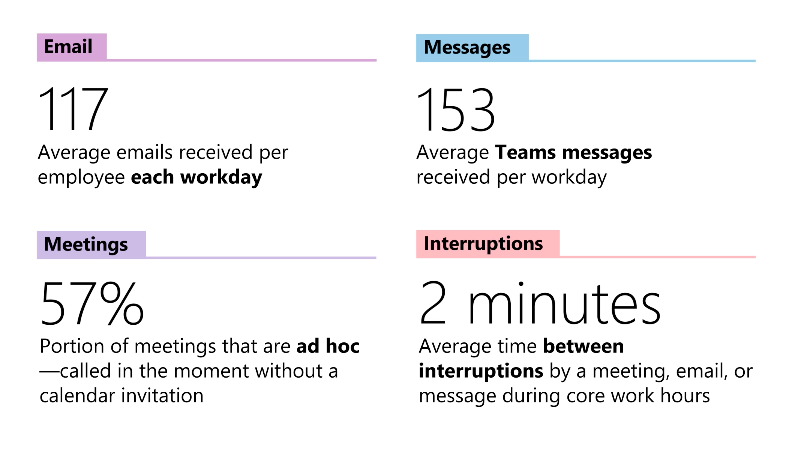
Microsoft analyzed trillions of signals from 31,000 knowledge workers across 31 markets through February 2025. 40% of people online before 6 a.m. are already triaging email. The average worker receives 117 emails daily—most skimmed in under 60 seconds. By 10 p.m., 29% of active workers are back in their inboxes.
The morning moment—coffee, paper, maybe a commute—has been replaced by a soft panic. The first swipe. The first subject line. The first "quick thing."
Big Tech just decided that exact moment is the new battlefield.
Google launched CC on December 16, 2025: a Gemini-powered assistant living in your inbox, sending daily "Your Day Ahead" briefings built from Gmail, Calendar, Drive, and the open web. Early access via Labs, waitlist for paid users in the U.S. and Canada.
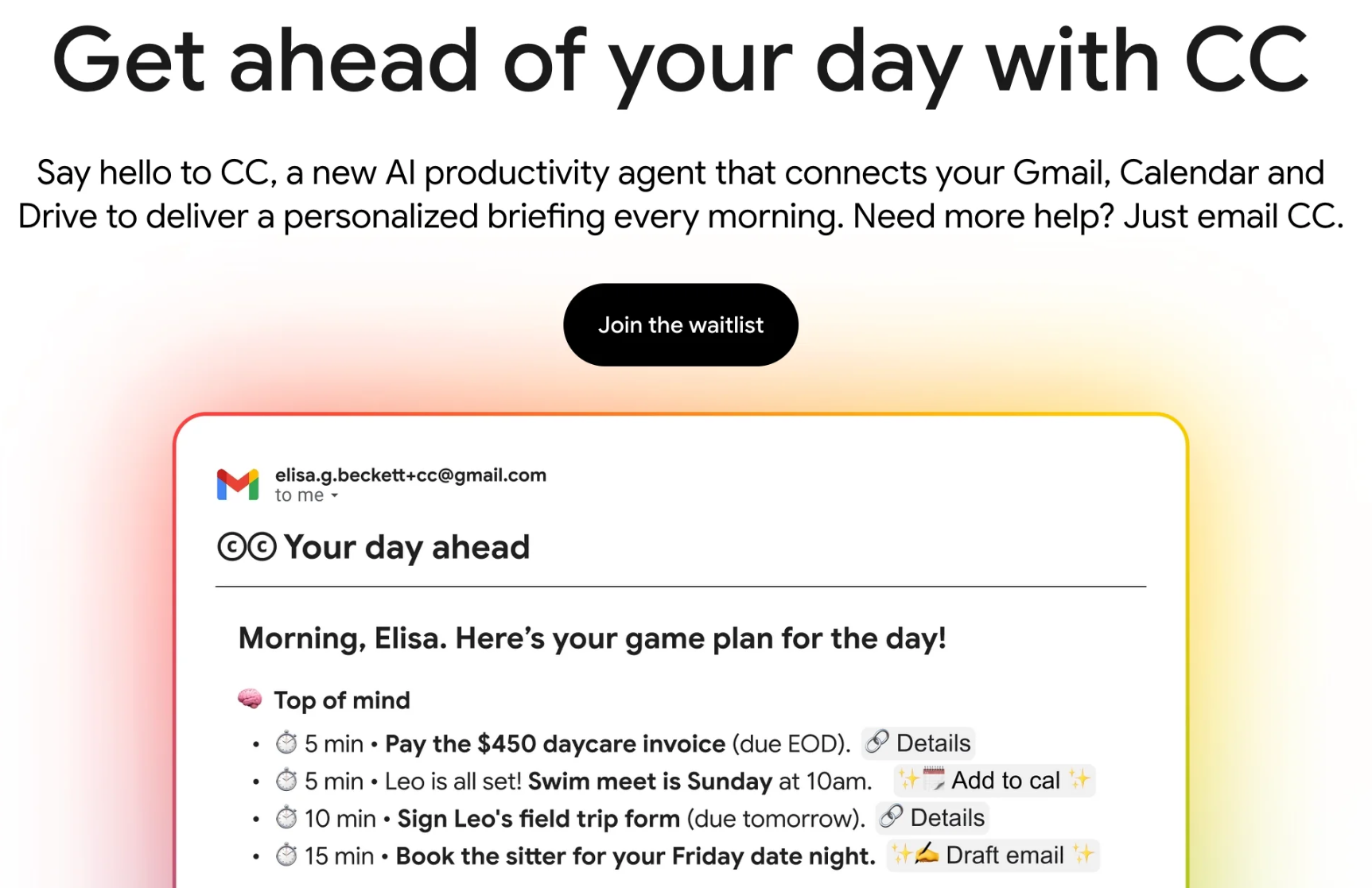
OpenAI shipped the same behavioral shape three months earlier. ChatGPT Pulse went to Pro subscribers ($200/month) on September 25, 2025—proactive morning briefs designed to make "check ChatGPT first" a daily habit. Five to ten cards covering news, calendar events, and personalized suggestions based on chat history, connected apps, and explicit feedback.
The generic morning briefing is about to be price-compressed to $0.
If you build "a nice daily digest," you're building a feature on top of a feature inside a product whose entire business model is features.
The opportunity lives in the action layer.
Build a vertical "Morning Operator" that ships decisions + execution
Google and OpenAI are training the world to accept one premise: AI runs your mornings.
Your job isn't to compete with their summaries. Your job is to build what they can't safely ship: a niche, opinionated operator that takes action inside the messy systems of record.
The product in one sentence
Every morning, one email arrives with:
- 3 decisions you should make today (ranked, with reasons)
- 3 actions you can commit with one tap (drafted, prefilled, logged)
Decision OS disguised as a morning email.
Why this surface area actually exists
1) The behavior is being normalized for you
Google CC explicitly frames itself as replacing the "morning scroll," shipping lightweight actions like email drafts and calendar links. The baseline experience—AI-generated morning summaries with suggested next steps—is coming for free.
OpenAI Pulse uses the same playbook: proactive briefs to establish ChatGPT as "first app in the morning." Sam Altman called it his "favorite feature" for this exact reason—it's a habit-forming mechanism, packaged as utility.
The market education is happening without you having to spend a dollar.
2) The workday is fragmenting, and morning triage is the choke point
Microsoft's data paints a brutal picture: employees are interrupted every 2 minutes during core hours—275 times per day via meetings, emails, or chats. Nearly half of employees (48%) and more than half of leaders (52%) report their work feels chaotic and fragmented.
If you can own the first 10 minutes of the day, you influence the next 10 hours. McKinsey projects that generative AI will create trillions in annual economic value, with early gains concentrated in customer support, sales, and software development. The daily briefings that reduce coordination time are a direct path to capturing those benefits in everyday knowledge work.
3) AI email clients already proved "summaries + drafting" isn't defensible
Shortwave, Superhuman, and the entire "smart inbox" category normalize summarization and AI-assisted writing. That's table stakes.
The only remaining defensible position is judgment + workflow execution.
The wedge: Pick one vertical where mornings equal money
Your first vertical needs three qualities: tool-heavy, ROI-obvious, repeatable.
Lots of SaaS tabs. One extra action per day equals real dollars. Same morning patterns every day.
The cleanest wedge is real estate teams because their mornings are literally a pipeline: leads, follow-ups, showings, listings, price drops, seller updates.
And the integrations already exist.
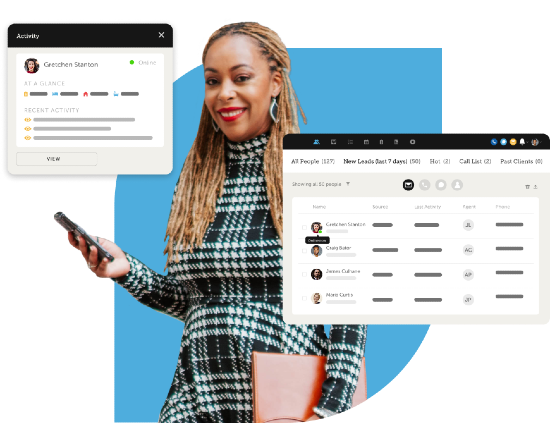
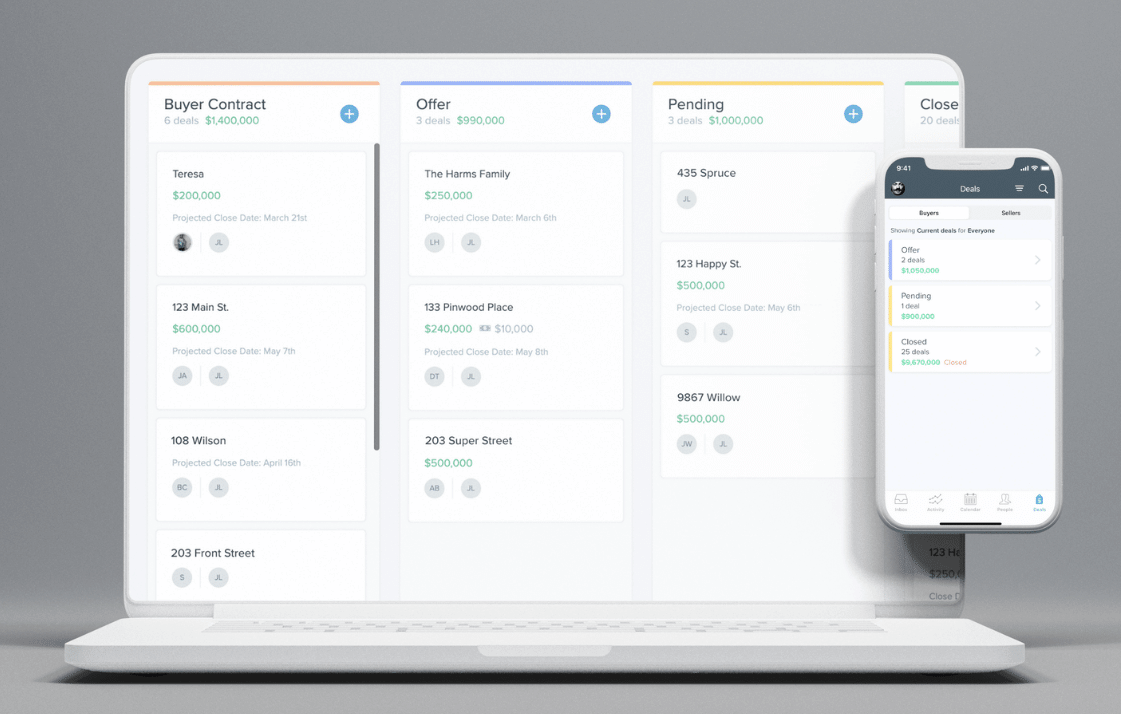
Follow Up Boss positions itself around "speed-to-lead" and connects with 200+ lead sources. Zillow has a deep two-way integration that syncs leads and workflows directly into Follow Up Boss, alongside connections to Realtor.com, Facebook, and major IDX providers. It's explicitly designed as an open platform CRM that makes Gmail and Calendar sync trivial.
That's exactly the kind of system you can "operate" from an email. You are creating a wedge. Think integration, not competition.
What the "Morning Brief for Realtors" actually does
Example:
Decision: "These 5 leads are most likely to convert today based on speed-to-lead scoring + intent signals."
Action button: "Send follow-up text + email" (prefilled, tone-matched, logged to CRM).
Decision: "Two sellers are at risk—price-drop conversations overdue by 72+ hours."
Action button: "Generate seller update + propose 2 pricing options based on recent comps."
Decision: "Your calendar is lying—your pipeline says you need one more showing booked by Friday to hit quota."
Action button: "Propose 3 showing slots" (based on calendar availability + drive-time heuristics).
The calendar is not the source of truth. Pipeline velocity is.
Why Google won't beat you here
Google can ship "helpful."
Google can't ship "opinionated" inside regulated or reputation-sensitive workflows without blowing up trust.
A vertical operator can.
Your unfair advantage is being willing to encode:
- Pre-approved compliance templates
- Disclosure language by state
- Audit logs for every action taken
- Role-based permissions within teams
In real verticals, the best action is often the one that is allowed. That compliance + workflow layer is explicitly where horizontal AI assistants fail. They optimize for flexibility and broad applicability, which makes them useless for anyone operating under regulatory constraints or reputation risk.
The moat
1) Behavioral loops turn into proprietary data
Foundation models get commoditized fast. Your moat is the longitudinal dataset:
- What gets clicked
- What gets ignored
- What gets undone
- What gets delayed
Over time, you're learning a niche's operating rhythm. That dataset becomes increasingly valuable as you train recommendation models on actual conversion outcomes.
2) Deep integrations create switching costs
The minute you write back into systems of record—CRM notes, automated follow-up sequences, task creation, drafted emails—ripping you out becomes painful.
Every action taken through your system strengthens the lock-in. You're not just reading data; you're becoming part of the operational infrastructure.
3) "Skill packs" marketplace (your platform pivot)
Base subscription gets you the core brief.
Add-on "skills" become playbooks turned into agent modules:
- "Listing Launch Mornings"
- "Price Drop Week"
- "Open House Follow-Up Sprint"
- "Expired Listings Hunter"
This "skills marketplace" approach is the cleanest platform expansion without boiling the ocean. You monetize vertical expertise as modular components that bolt onto the base product.
4) Shareability creates built-in distribution
People love flexing routines: "My AI runs my mornings."
Add a "share this brief" footer that redacts names and shows outcome metrics:
- "Completed actions: 3/3"
- "Pipeline touches: 7"
- "Response time improved: 18%"
That becomes social proof that spreads organically.
The playbook
MVP scope (build the smallest version that ships outcomes)
Goal: Within 14–21 days, ship a daily email that reliably generates actions.
MVP v1: "Assistive execution" (safe, shippable)
Unlock the Vault.
Join founders who spot opportunities ahead of the crowd. Actionable insights. Zero fluff.
“Intelligent, bold, minus the pretense.”
“Like discovering the cheat codes of the startup world.”
“SH is off-Broadway for founders — weird, sharp, and ahead of the curve.”


