


Your mom just called. Third time today.
She's outside CVS. She knows where she parked. She just can't remember which button opens the Uber app, and now her phone is asking for a password she didn't set, and there's a notification about a $79 subscription she doesn't remember buying, and the Confirm button is the size of a grain of rice.
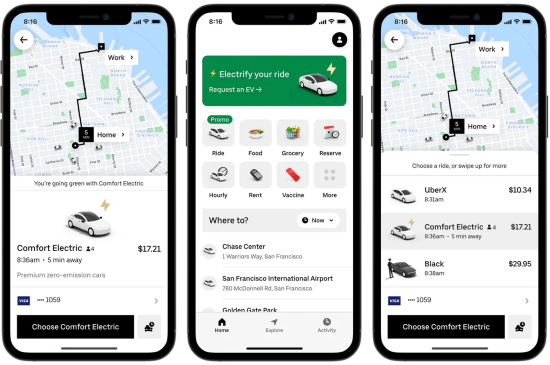
She doesn't want help. She wants to go home.
90% of Americans 50+ now own smartphones—up from 55% in 2016. Banking went mobile-only. Pharmacies push app-only refills. Ride services assume you have a working understanding of map interfaces, payment methods, and notification permissions.
The phone that was supposed to make aging in place possible has become the primary barrier to it. And the person who needs the solution isn't the person who pays for it.
That 45-year-old daughter in Phoenix whose 73-year-old mother just missed another doctor's appointment because the ride confirmation got buried in notifications? She'll pay $50/month to make that stop. Scale that across 116 million smartphone-owning adults 50+ who crossed the digital divide in less than a decade, add B2B distribution through home care agencies at $8-12 per member per month and Medicare Advantage plans at $10-15 PMPM, and you're looking at a wedge into a market that's hiding in plain sight.
The forces making this inevitable
In 2016, only 55% of Americans 50+ owned a smartphone. By 2024 it hit 90%—116 million people who crossed over in less than a decade, most of them not by choice. The pandemic accelerated everything. Telehealth became the default. Grocery delivery became essential. Banking apps became the only way to deposit checks. Transportation required an app and a working knowledge of geolocation.
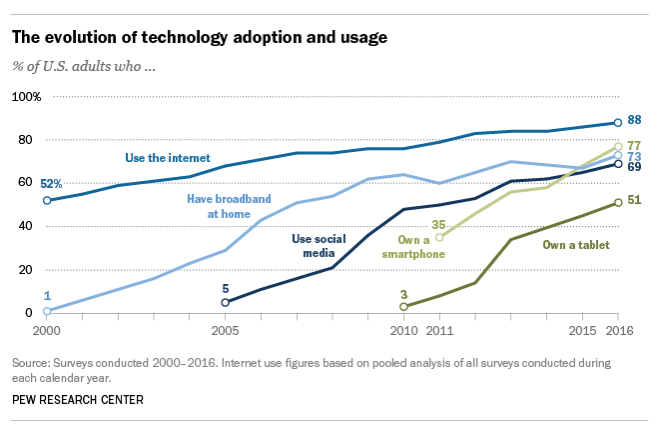
Smartphone UI design optimized for people who grew up with touchscreens. Every app assumes fluency with gestures, permissions, notifications, and navigation patterns that weren't part of this cohort's formative years. And 7 in 10 people will require some form of long-term care in their lifetime, which means this isn't a niche problem—it's infrastructure for most families eventually.
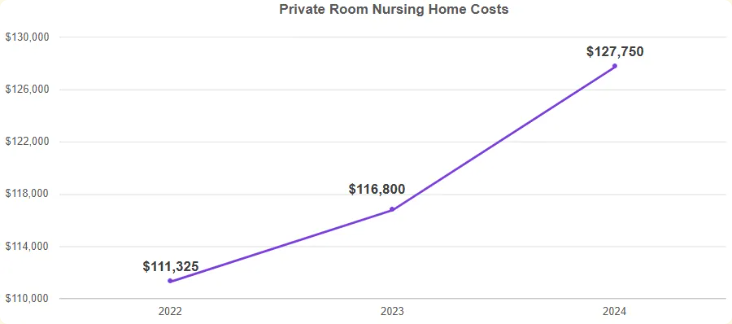
Aging in place became financially mandatory. Assisted living now costs $70,800 per year. A private nursing home room runs $127,750 annually. Home care with a health aide costs $34/hour—about $77,792 per year for 40 hours per week, which is more than assisted living for less coverage.
Families can't afford professional help, but they also can't afford to not provide it. So they'll pay for anything that delays the facility conversation by 6-12 months, because assisted living represents the moment independence ends.
And the phone became the attack surface. Elder fraud losses jumped from $600 million in 2020 to $2.4 billion in 2024—a fourfold increase. The Federal Trade Commission estimates actual losses could be as high as $81.5 billion when accounting for unreported incidents.
The surge isn't random. The phone is now the primary interface for money movement, identity verification, and trust signals. Every tap is a potential decision point: Is this real? Should I confirm? What did I just authorize?
Losses over $100,000 now represent 68% of total fraud losses among older adults. These aren't small mistakes—they're catastrophic. Entire retirement accounts emptied because a "security alert" looked real and the phone made it too easy to transfer funds.
Who's actually paying for this
Your dad doesn't think he has a problem. He thinks technology is broken. He doesn't want a "senior app" because that feels patronizing.
But you—the adult child managing a full-time job, raising kids, and getting panicked calls because Dad can't figure out how to reorder his prescriptions—you'll pay to make that stop.
The buyer is tired, stretched thin, and willing to pay for infrastructure that works. This isn't convenience. It's a relief valve for families holding together aging-in-place scenarios with duct tape and guilt.
Start with two buttons
Button 1: "Just Get Me Home"
- One tap triggers a pre-approved ride to a saved address
- If the app fails → instant human concierge fallback (phone call/text)
- Adult child gets real-time notifications: ride requested, driver assigned, pickup confirmed, arrival time, drop-off completed
- No address entry. No map interface. No payment selection screen.
This button isn't about convenience—it's about independence. It delays the conversation where the family says "you can't go out alone anymore."
Unlock the Vault.
Join founders who spot opportunities ahead of the crowd. Actionable insights. Zero fluff.
“Intelligent, bold, minus the pretense.”
“Like discovering the cheat codes of the startup world.”
“SH is off-Broadway for founders — weird, sharp, and ahead of the curve.”


