


It's 2:07 AM. Your customer isn't browsing your site.
They're texting their AI: "Find me the best cordless drill under $120 that'll arrive by Friday. Don't let me get scammed on returns."
The agent doesn't click through product pages. It compiles constraints, calls structured commerce endpoints, compares inventory promises and return policies across merchants, then checks out inside the chat. Your brand story? Your lifestyle imagery? The agent skipped all of it.
On January 12, 2026, Google and Shopify shipped the Universal Commerce Protocol—an open standard connecting AI surfaces to merchant backends so agents can execute discovery, purchase, and post-purchase support without bespoke integrations. The protocol already has backing from Walmart, Target, Etsy, Wayfair, and 20+ payment providers including Mastercard, Visa, American Express, and Stripe.
UCP-powered checkout is rolling out inside Google's AI Mode and Gemini. Shopify merchants can enable it from their admin panel. Microsoft's Copilot Checkout is live with embedded UCP experiences.
Senator Elizabeth Warren just sent Google a letter with a February 17 deadline demanding transparency about how Gemini's checkout feature handles user data, pricing influence, and partner prioritization. When a sitting senator asks pointed questions about "sensitive data exploitation" and "consumer manipulation" before a product fully launches, the distribution channel is real.
Every merchant who fought for blue links is about to fight for agent selection. The merchants who crack this first can build a $20M+ ARR SaaS in 18 months selling dashboards and optimization tools to brands desperate not to lose visibility.
Market size: $190B–$385B in agentic commerce by 2030.
How Agents Actually Shop
Classic SEO optimized for visibility in a results page. Agentic commerce optimizes for selection inside a decision engine—inventory accuracy, delivery promise reliability, total cost including shipping and returns friction, risk signals from warranties and merchant reputation, attribute fit matching user constraints, and policy alignment around return windows and international shipping.
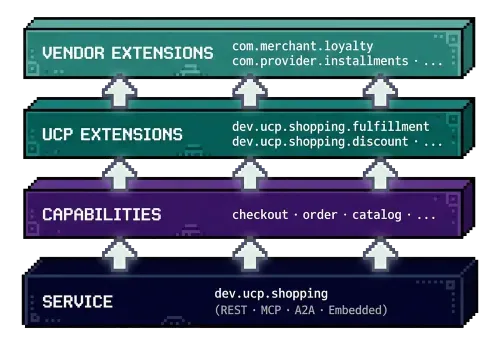
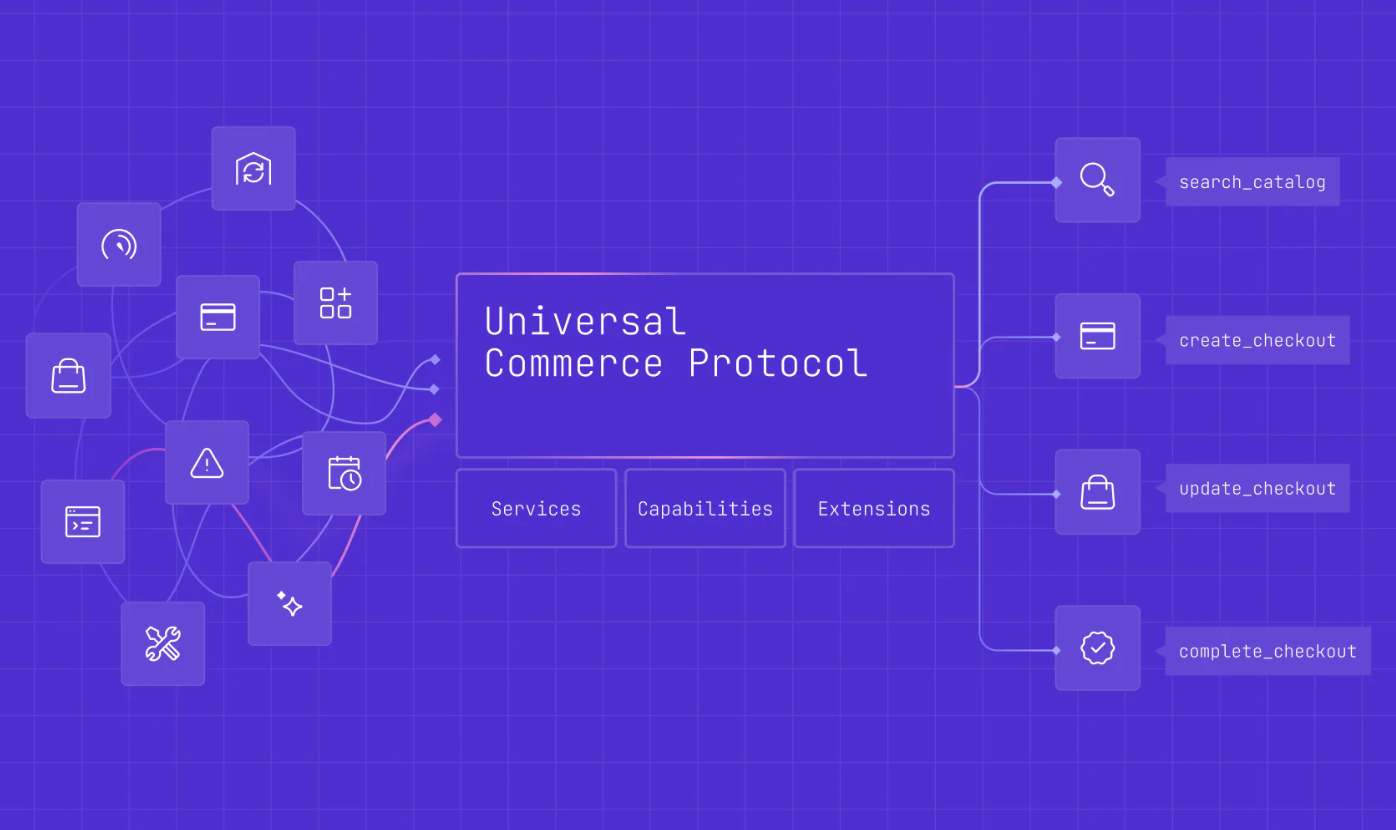
UCP is the common language that makes those factors machine-readable across platforms. Agents from ChatGPT, Gemini, Perplexity, or Microsoft Copilot can transact with any merchant exposing UCP endpoints without custom integration work.
Winners won't necessarily have the best copywriting. They'll have the most agent-legible certainty.
Traffic from GenAI browsers and chat services to U.S. retail sites grew 4,700% year-over-year in July 2025. Visitors from AI sources spend 32% more time on-site, browse 10% more pages, and have a 27% lower bounce rate than traditional search traffic.
The friction: conversion rates from agentic commerce currently underperform traditional channels significantly. The infrastructure works, but the trust layer and optimization knowledge don't exist yet.
That gap is your opportunity.
Build the Search Console for Agents
The winners in the next 12 months won't be the ones who "implement UCP." Everyone will do that.
The winners will be the ones who learn the agents' loss functions first and sell the playbook back to merchants.
What You're Selling
A dashboard showing:

Unlock the Vault.
Join founders who spot opportunities ahead of the crowd. Actionable insights. Zero fluff.
“Intelligent, bold, minus the pretense.”
“Like discovering the cheat codes of the startup world.”
“SH is off-Broadway for founders — weird, sharp, and ahead of the curve.”


