


Hacker News just lit up over "ASCII characters are not pixels"—a nerdy reminder that developers still crave tactile, low-level computing. The same day, custom map posters pulled in millions while Spotify soundwave art shops printed money at $23 a pop.
Here's what connects them: AI can generate pretty pictures instantly. But nobody frames AI output. They frame proof their work mattered.

GitHub contribution graphs as museum-grade prints. Spotify playlists as waveform skylines. Strava routes as abstract line art. Stripe revenue curves rendered as weather maps. This isn't decoration—it's provenance in a world drowning in generated content. And when everyone can generate content, provable work becomes the only asset that matters.
The wall art market sits at $53 billion globally, heading to $81 billion by 2030. Multiple players already ship variations of this product—codeprints.dev sells GitHub posters, WaveVisual does soundwave art starting at $23—but they're leaving money everywhere. The wedge is tight (dev posters priced at $39-$249), but the expansion is massive: B2B installations hitting $15K per contract, template marketplaces, and integrations with every platform that tracks provable achievement.
Turn digital exhaust into physical trophies.
Existing Players Miss the Scale
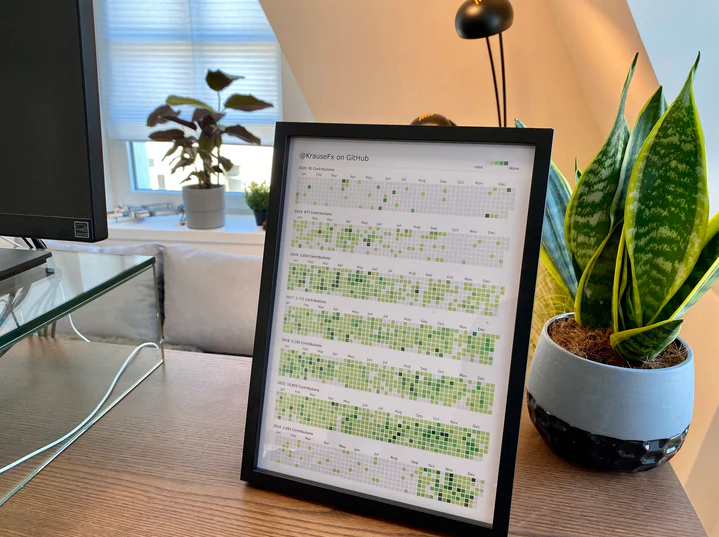
codeprints.dev ships personalized art from open source contributions. They've proven developers will pay for contribution-based wall art and have expanded into team products, but they've stayed locked in the GitHub vertical.
CommitGraph by Bitti Gitti offers the full product ladder—stickers, t-shirts, laser-engraved wooden speakers, acrylic blocks. They've figured out SKU expansion but not category expansion.
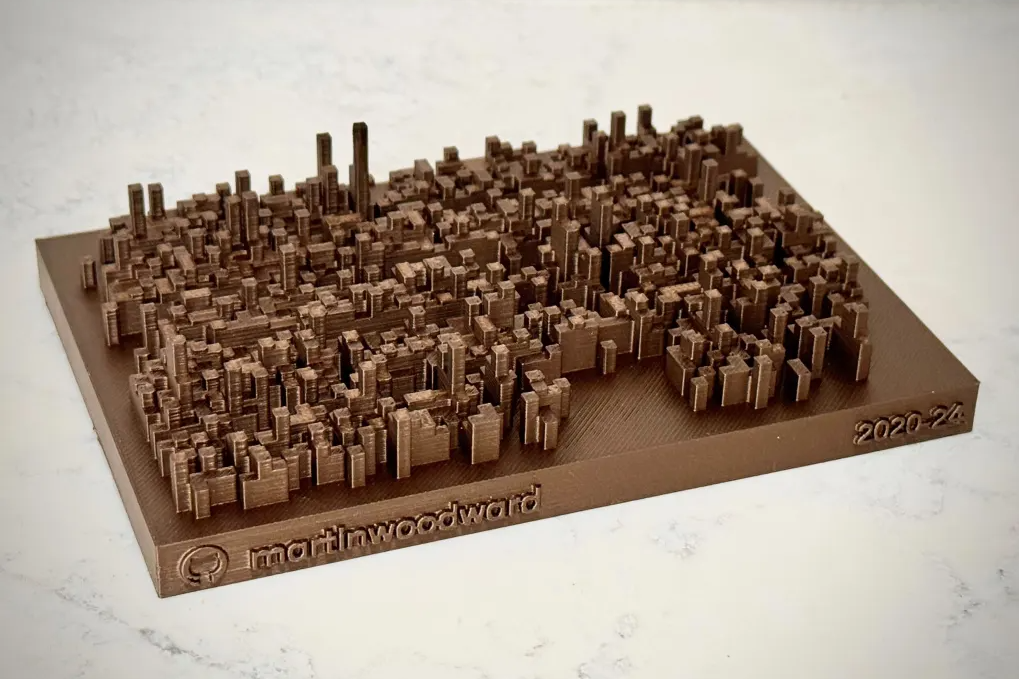
GitHub Skyline is the official GitHub feature. It renders your contribution graph as a 3D cityscape you can download as an STL file and 3D print. Free distribution from the platform itself, but no monetization infrastructure.
WaveVisual owns the Spotify soundwave category. They've integrated direct Spotify search, offer QR codes that play the actual song when scanned, and sell everything from digital downloads to framed prints starting around $23.
The soundwave business is proven at scale—Red Bull commissioned WaveVisual for AR-enabled bandanas promoting their album, scannable from multiple angles to play tracks and link to Spotify. That's brand collaboration revenue on top of direct sales.
Every existing player picked one data source and stopped. Nobody owns "the platform for turning provable digital output into physical artifacts."
Three Mistakes Creating the Opening
They stayed single-SKU. CommitPrint does GitHub graphs. WaveVisual does soundwaves. GeoJango does maps. Each company carved out one vertical and stopped.
Your Strava data is just as provable as your GitHub history. Your Substack growth curve tells a story. Your podcast download trajectory is a mountain range. Your Stripe revenue arc is a weathermap. Your customer support resolution time is a heatmap.
The winners won't be "the GitHub poster company." They'll be the platform for turning any provable digital output into physical artifacts. That's the only position that captures the full market.
They compete on aesthetics instead of meaning. Most competitors offer template customization—pick your color palette, choose your layout, done. Commodity behavior that invites race-to-bottom pricing.
The margin lives in turning data into narrative. A framed GitHub graph labeled "2025: The Year I Shipped" hits different than "My Contributions." A Stripe revenue print with "First $100K" engraved on museum-grade acrylic becomes an heirloom, not a novelty.
codeprints had to build entire tooling suites just to handle teams wanting to frame collective contributor activity with meaningful context. That's signal. The copy sells the meaning. The object preserves it. Narrative-first positioning isn't decoration—it's the moat.
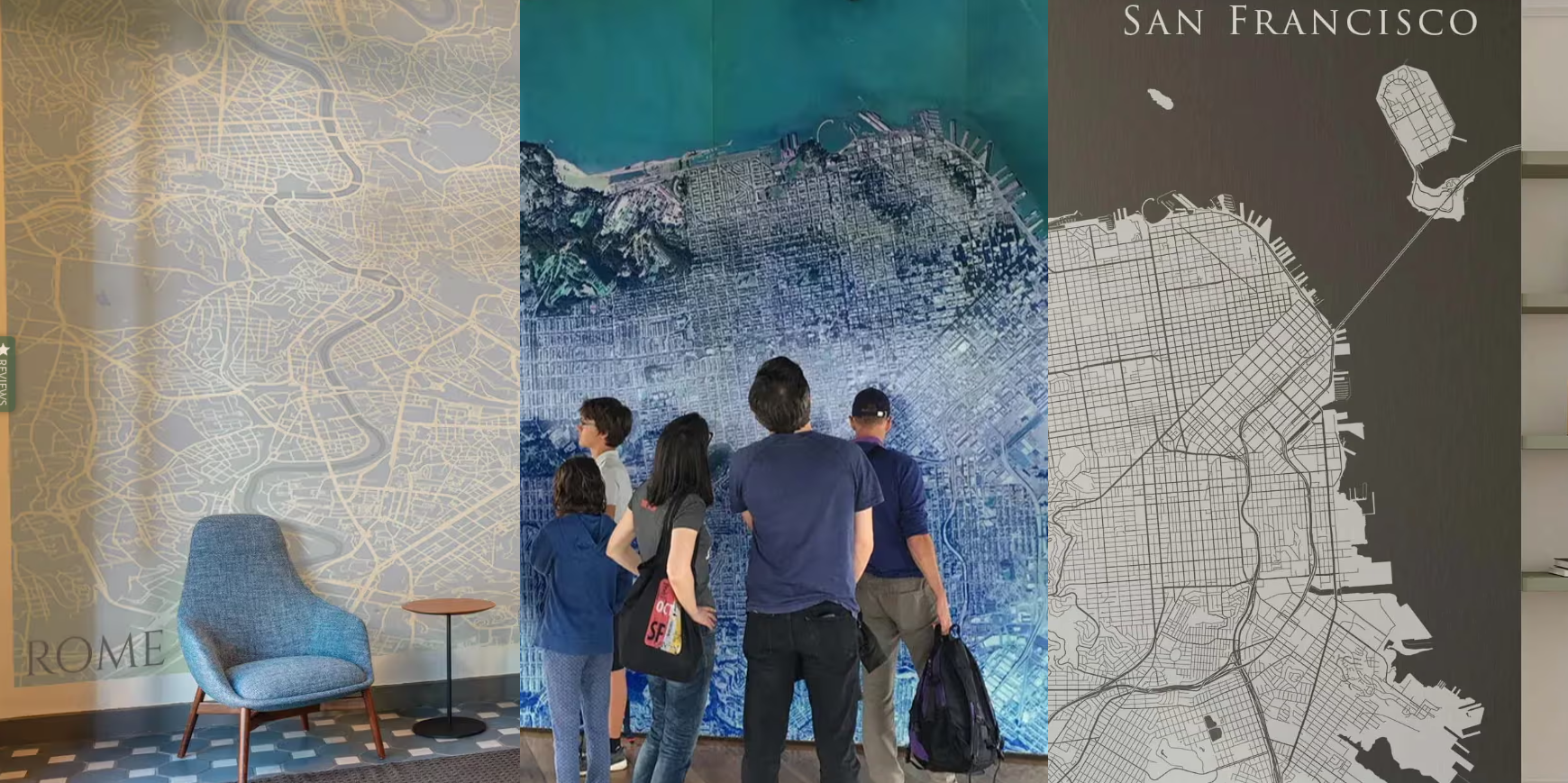
They missed the B2B cash cow. GeoJango Maps sells custom business wall maps to companies who want geography printed large for offices and retail. Multi-panel installations, custom framing, professional mounting. The business model works.
Nobody's selling company heartbeat art at scale. Engineering team's collective commit history as a mural. Customer acquisition map showing geographic expansion over time. Support ticket resolution curves as office installation. Uptime history rendered as textile acoustic panels.
Office managers and HR teams already allocate budget for team gifts and workspace décor. The B2B office supplies market is adding $33.9 billion from 2024-2029. Corporate buyers pay premium for branded installations. A $99 poster scales to a $15K installation when you're outfitting a headquarters.
AI Made "Human-Made" Premium
The authenticity backlash is measurable now.
Industry reports show a 47% decline in bookings for anime-style illustrators since February 2025. Artist Joy Cardaño saw commissions "nearly come to a halt" as AI flooded the market.
Counter-positioning works. When Trixie Cosmetics deliberately hired human illustrator Joey Donatelli instead of using AI for action figure art, YouTuber Tyler Oakley captured the sentiment: "Love this so much more than anything AI could have made."
Research published in Frontiers in Psychology (January 2025) found people systematically prefer AI-generated artworks when origin isn't labeled—but when they know it's AI, the preference inverts sharply. Human-made becomes the premium tier.
Books By People launched verification stamps for human-written literature. Art Recognition offers authentication for visual art. CREDO 23 certifies films created with zero AI.

Data art sits at the center of the authenticity economy because it's cryptographically provable by default. GitHub graphs are API-verifiable. Spotify histories are OAuth-authenticated. Strava routes are GPS-tracked. You can't fake 365 days of commits. The API doesn't lie. The data is the certificate of authenticity.
When everyone can generate pretty images, meaning becomes the scarcity. Data art is meaning you earned.
The Market Math
Global wall art market: $53B in 2022, projected to hit $81B by 2030 (5.4% CAGR) per Grand View Research.
Print-on-demand: Tens of billions within the decade per Global Insight Services. Zero inventory, infinite SKUs, global fulfillment baked in. 60-70% gross margins are standard if you keep returns low.
Office supplies B2B: Growing by $33.9B during 2024-2029 per Technavio. Corporate buyers want customized products. They have budgets for workspace upgrades. They pay premium for branded installations that tell their company story.
The wedge is tight (dev posters at $40-$100), but the expansion is massive (any provable digital output for consumers and B2B).
How to Actually Build This
Phase 1: Launch Fast with One Killer SKU (Week 1–2)

Unlock the Vault.
Join founders who spot opportunities ahead of the crowd. Actionable insights. Zero fluff.
“Intelligent, bold, minus the pretense.”
“Like discovering the cheat codes of the startup world.”
“SH is off-Broadway for founders — weird, sharp, and ahead of the curve.”


