


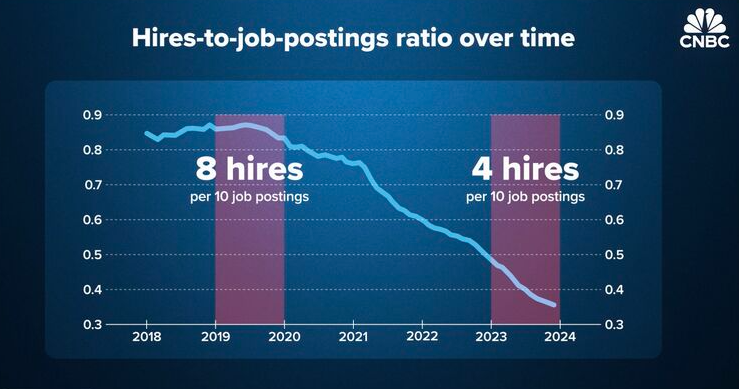
In 2019, employers made 8 hires for every 10 job postings. By 2024, that number collapsed to 4 hires per 10 postings. The listings doubled. The hiring didn't.
Revelio Labs, a workforce intelligence firm, published that stat in August 2024. Their chief economist, Lisa Simon, put it plainly: "It just softens the signal of what a job posting really means."
She's being polite. What she's describing is the largest-scale information failure in employment markets in a generation.
The infrastructure that connects workers to jobs—LinkedIn, Indeed, ZipRecruiter—publishes opportunities with such efficiency that it's rendered validation worthless. Posting a job costs nothing. Removing one costs nothing. Never actually hiring? Also nothing.
Ghost jobs have crossed from nuisance into systemic fraud. Regulators are circling. Platforms are scrambling to add verification badges that don't actually verify hiring intent. Job seekers have started building their own early warning systems on Reddit, Glassdoor, and scrappy community databases.
Someone is going to own the trust layer for hiring. The question is whether that's a startup with a real business model—or another free browser extension that flames out after the founder gets a job.
The Anatomy of a Locked Door
A ghost job is a listing posted without genuine intent to fill. The company is real. The role sounds legitimate. The hiring plan doesn't exist.
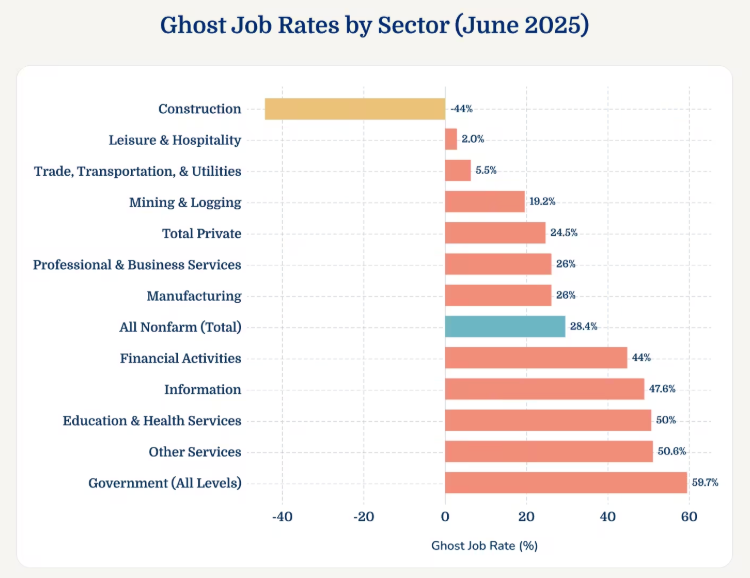
The scale of the practice is staggering:
- 40% of companies posted at least one ghost job in 2024, according to Resume Builder's survey of 650 hiring managers.
- 18–22% of all job listings on Greenhouse's platform—which serves 7,500+ companies including HubSpot and Major League Baseball—are classified as ghost jobs.
- Nearly 70% of Greenhouse clients posted at least one ghost job in Q2 2024.
- 81% of recruiters in a Fast Company survey admitted to posting ghost jobs, with over a third saying up to 25% of their active listings are fake.
- A ResumeUp.AI analysis of LinkedIn found 27.4% of U.S. job listings are likely ghost jobs. Los Angeles topped the list at 30.5%.
The motivations are rational, even if they're deplorable:
Pipeline building: Collect resumes for future roles that don't exist yet.
Growth theater: Signal to investors, employees, or competitors that the company is expanding.
Talent benchmarking: Harvest salary expectations and skill profiles for free market research.
Employee intimidation: 62% of companies in one behavioral study admitted posting ghost jobs to make current employees feel replaceable.
Process compliance: Some roles must be posted publicly before an internal candidate can be promoted. The listing is theater.
The consequences land squarely on job seekers. Jobright.ai calculated that ghost listings waste approximately 448,800 applications per year among their user base alone—an average of 9 hours per candidate spent on positions with no genuine hiring intent.
Why Now (The Timing Is Perfect)
The window for this opportunity wasn't open two years ago. Now three forces have converged to make it viable.
1. Ghost Jobs Hit Mainstream Consciousness
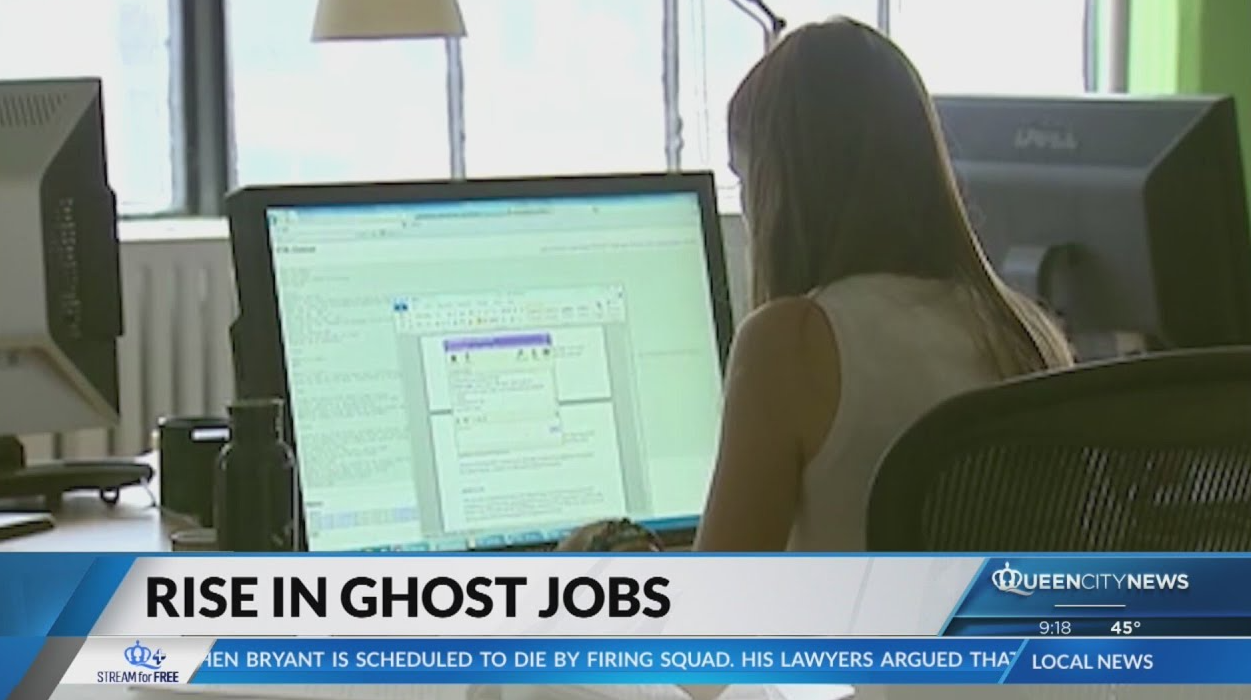
The term "ghost job" now appears in CNBC headlines, Forbes features, and Wall Street Journal analysis. Greenhouse's president called the job market "kind of a horror show." Job seekers aren't confused anymore—they're furious and organized.
Reddit communities like r/recruitinghell have become early warning systems. Users post screenshots of listings that disappear and reappear, compare notes on companies that never respond, and maintain collaborative spreadsheets flagging repeat offenders. GhostJobs.io, a community-driven database, has built a Chrome extension that monitors job boards and flags suspicious listings.
Awareness creates demand. When everyone knows the game is rigged, the person selling detection wins.
2. Regulation Is Actually Forming
In February 2025, the FTC launched a Joint Labor Task Force with "deceptive job advertising" explicitly listed as a priority enforcement area. Chairman Andrew Ferguson's directive placed it alongside no-poach agreements and wage-fixing—hardcore violations that carry real penalties.
State legislatures are moving faster:
- Kentucky introduced legislation in January 2025 to ban ghost jobs outright, requiring employers to disclose whether a posting is for an existing vacancy or an anticipated future role.
- California passed a bill requiring employers to include a clear statement disclosing whether a posting is for an actual vacancy.
- New Jersey introduced identical bills in both chambers requiring disclosure and timely removal of filled positions.
- Ontario, Canada amended its Employment Standards Act in 2025, making it illegal to advertise a job that doesn't exist. Effective January 2026.
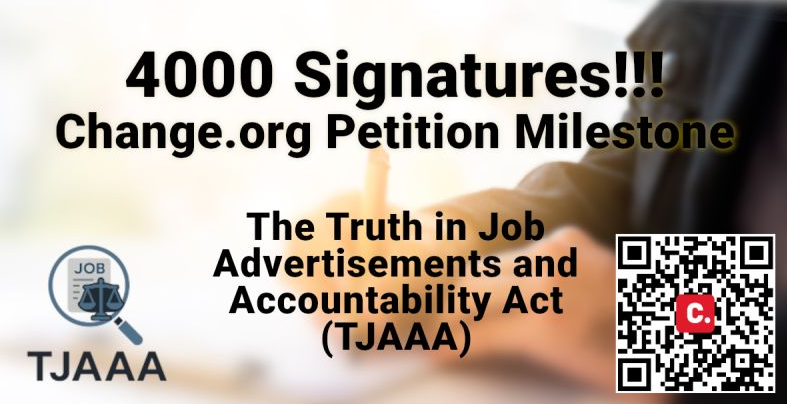
The proposed Truth in Job Advertising and Accountability Act (TJAAA) at the federal level would require employers to disclose salary ranges, intent to hire, funding status, and reposting history—with a 90-day maximum posting window. The TJAAA Working Group has gathered 3,000+ signatures and earned Forbes and CNBC coverage.
Once any disclosure rule exists anywhere, companies need tooling everywhere. Compliance becomes a line item. HR departments don't build verification infrastructure—they buy it.
3. Verification Became a Product Feature—Except for Jobs
LinkedIn added identity verification badges in 2022. Over 100 million users now have at least one verification on their profile. Verified members see 60% more profile views and 50% more engagement on posts. LinkedIn reports more than half its job listings are now tagged as "verified."
Here's the problem: LinkedIn's verification badges don't verify that a job is actually being filled. They verify that the poster works at the company and that the company exists. That's it.
LinkedIn verified that the recruiter is real. Nobody verified that the job is real. The gap between those two things is massive—and you're going to own it.
The Opportunity: Own the Truth Layer
The infrastructure is a browser extension + public index that answers one question:
"Is this listing a real, actively hiring role—or a mirage?"
Launch as a consumer tool. Build distribution. Accumulate the only asset that matters: ground truth over time.
Then sell the real business:
Verified Hiring Intent (VHI)
A lightweight standard employers and platforms can use to prove:
- This role is funded.
- This role is open now.
- This role has a real hiring owner.
- This role will be updated or closed on a schedule.
The product isn't a plugin that yells at job postings. You're building the Better Business Bureau for hiring—except it's measurable, automated, and plugs into workflow.
The Ghost Typology: Your Classification System
Most ghost-job tools make a fatal mistake: they treat all phantom listings as one blob. You win by classifying intent.
Your product should label listings into types. This approach is safer (legally defensible as risk assessment rather than defamation), more useful (different interventions for different types), and more credible (probability instead of accusation).
The Six Types

Unlock the Vault.
Join founders who spot opportunities ahead of the crowd. Actionable insights. Zero fluff.
“Intelligent, bold, minus the pretense.”
“Like discovering the cheat codes of the startup world.”
“SH is off-Broadway for founders — weird, sharp, and ahead of the curve.”


