


Every small manufacturer in America has the same dirty secret: their supply chain runs on email threads, half-maintained spreadsheets, and whoever remembers what the supplier said last Tuesday. There's no ERP. There's no visibility dashboard. There's a shared inbox like purchasing@company.com that somehow holds the entire operation together.
And 2025's tariff chaos just blew the window wide open.
The pitch:
give these companies their first real supply chain manager, embedded in the inbox they already use, for less than the cost of a hire.
An AI-powered disruption desk can deliver 80% of that role's daily output at $1,500–$7,500/month.
Ten clients at the mid-tier gets you to $35K MRR. Thirty clients with a few premium accounts pushes past $100K.
The unit economics work because the playbooks are reusable — every new client makes the system smarter, not more expensive.
Why This Window Is Open
Small manufacturers and distributors have been stuck in permanent exception handling since COVID. Volatile lead times, carrier unreliability, price shocks, tariff whiplash. SMEs can't staff like enterprises, so critical processes stay trapped in email and tribal memory. About 60% of organizations still rely on spreadsheets to record and monitor supply chain disruptions. The operational gaps just compound year after year.
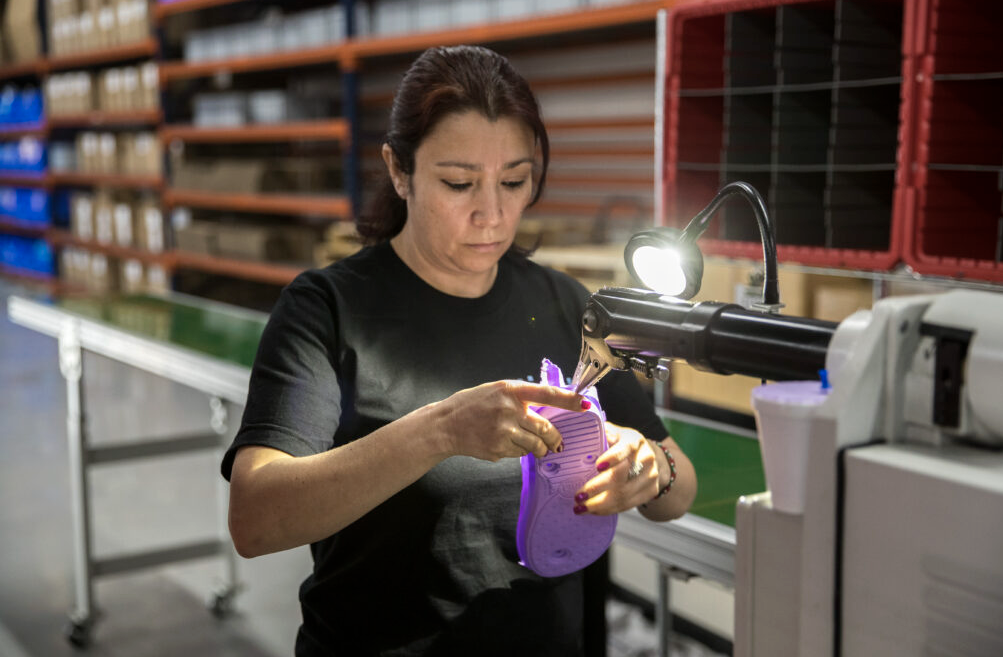
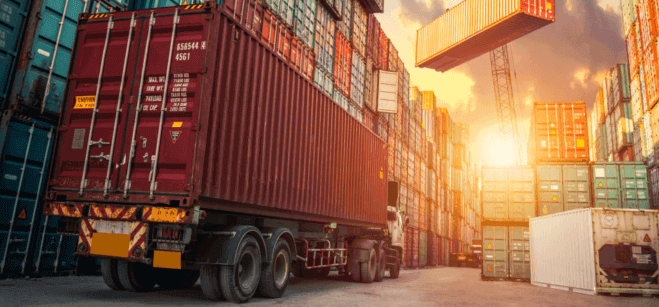
Then 2025 happened. Tariff duties as high as 25% on imports from China, Canada, and Mexico forced companies to reconfigure supplier networks built over decades, often under impossible timelines. Roughly 60% of U.S. companies experienced logistics cost increases of 10–15% in the past year. Thirty percent of SMEs reported cash-flow problems from the disruption. Global shipping costs jumped around 12% on top of that.
The AI-in-supply-chain market is projected to grow from roughly $13.93 billion in 2025 to about $50.41 billion by 2032, expanding at a 20.2% CAGR. The services segment — consulting, integration, managed services — is expected to lead that growth specifically because SMEs prefer outsourced capabilities over building in-house teams. Deloitte's 2026 State of AI report flagged agentic AI as one of the highest-impact use cases in supply chain management. The industry consensus heading into 2026: supply chains are shifting toward "predictive orchestration," where AI integrates procurement, manufacturing, and logistics data to anticipate disruptions rather than react to them.
Only about 23% of supply-chain leaders have a formal AI strategy. For SMEs, that number is almost certainly lower. The market is big enough for serious outcomes and early enough for a sharp wedge.
Why the Incumbents Miss This
Enterprise supply chain software (SAP, Oracle, Kinaxis) assumes clean ERP data, structured integrations, and a customer with $250K+ to spend on implementation. SMEs don't have any of that. Their operational truth is email threads, forwarded PDFs, screenshots of carrier portals, and a purchasing manager who keeps critical supplier contacts in a personal notebook.
The asymmetric move is to treat email as the system of record, extract structure from the chaos, and layer intelligence on top. Enterprise incumbents can't solve this. They're built for structured integrations and six-figure deployments, not for ops@company.com functioning as the control tower.
The Wedge: Disruption Response Agent
Don't start with "AI optimization." Don't start with dashboards. Start where the ROI is obvious and the pain is daily: disruption response.
A focused "fractional manager" that detects issues, drafts the right messages, and drives resolution fast.
What It Watches (v1)
Unlock the Vault.
Join founders who spot opportunities ahead of the crowd. Actionable insights. Zero fluff.
“Intelligent, bold, minus the pretense.”
“Like discovering the cheat codes of the startup world.”
“SH is off-Broadway for founders — weird, sharp, and ahead of the curve.”


