


Six percent of U.S. adults now carry an ADHD diagnosis, remote work settled into permanence, and millions of people sit alone at home—screens open, knowing exactly what they need to do but unable to start.
People with ADHD figured out years ago that hopping on a silent video call with a stranger makes boring work tolerable. No coaching, no pep talk—just another human in the frame, working on their own thing. That presence alone breaks through executive dysfunction and anchors you to the task.
This spread from ADHD forums to TikTok to clinical literature. The Attention Deficit Disorder Association now lists body doubling as a legitimate productivity strategy. Cleveland Clinic published explainers. Research confirms what the community discovered empirically: social presence activates dopamine pathways, which ADHD brains need to overcome task initiation paralysis.
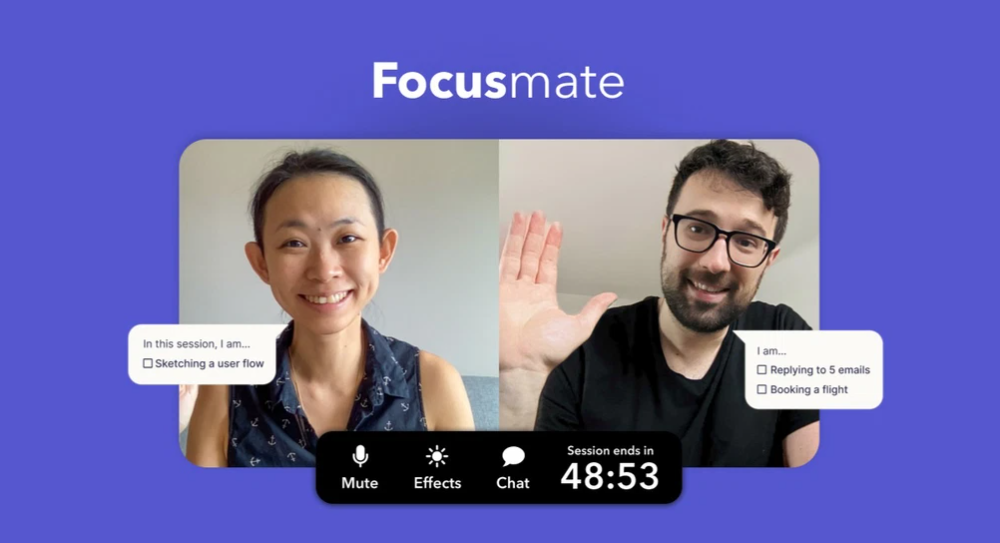
Focusmate already proved the model. They give you three sessions a week for free, unlimited for seven bucks a month. Flow Club and FLOWN offer variations. Focusmate reports strong sustained usage with hundreds of thousands of sessions running annually. Demand is validated.
Cloning Focusmate misses the point. The real play is turning body doubling into default infrastructure—not a productivity app you subscribe to, but the work layer that millions of neurodivergent brains rely on to function in remote environments that weren't designed for them. Other platforms experiment with themed sessions and host-led blocks, but nobody's gone all-in on neurodivergent-first infrastructure with guide marketplaces and institutional integration.
The market that remote work broke open
Adult ADHD diagnoses doubled in five years. As of late 2023, 15.5 million U.S. adults have a current ADHD diagnosis—up from 8.7 million in 2018. Over half got diagnosed in adulthood, many during the pandemic when parents watched their kids struggle with remote learning and recognized the same patterns in themselves. Between 2020 and 2023, adult diagnoses jumped another 15%.
At the same time, remote work stopped being temporary.
Twenty-two percent of U.S. employees now work remotely at least part of the time. Hybrid job postings climbed from 15% in early 2023 to 24% by mid-2025. The "return to office" push hit a wall. What settled instead: 36% of new jobs offer some form of remote flexibility, and workers will quit over it. When Owl Labs surveyed employees in 2024, 31% said they'd start looking for a new job if remote work disappeared. Another 6% would quit immediately.
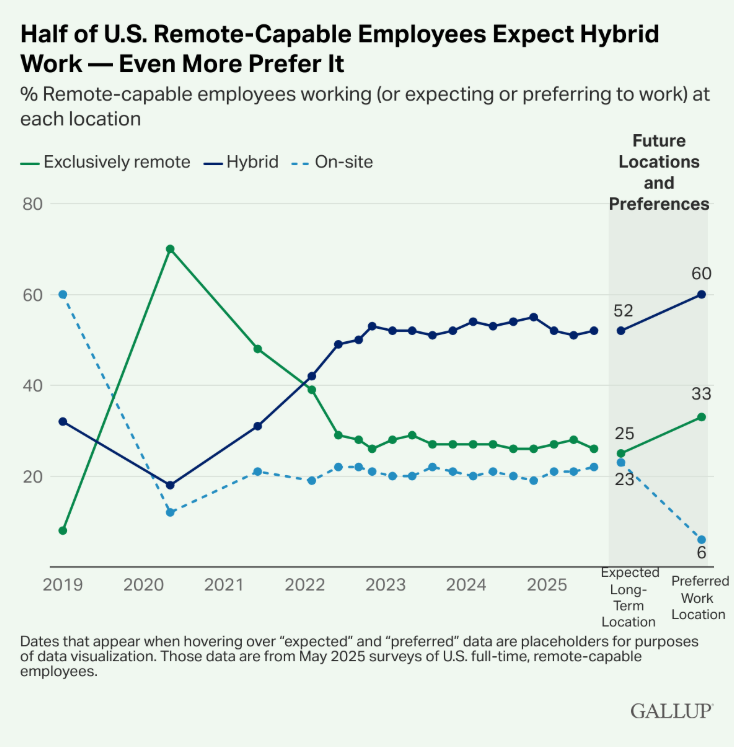
ADHD isn't an intelligence problem—it's a self-starting problem. Remote work systematically removes the external structure that made traditional offices tolerable: the coworker working next to you, the ambient office noise, the physical separation between "work mode" and "home mode."
Tens of millions of adults whose brains process executive function differently are now working in environments optimized for neurotypical brains, with no external accountability system. The infrastructure gap is massive, and body doubling fills it. Research backs what ADHD communities discovered on their own: working alongside another person reduces procrastination, improves task initiation, makes tedious work bearable. A 2019 study in Psychiatry Research showed that social encounters activate dopamine reward circuitry—exactly what ADHD brains lack when trying to start boring tasks. A 2025 VR study out of a construction safety research program found that both human and AI body doubles significantly improved focus and task completion for ADHD workers.
Validation and demand are settled. The infrastructure layer isn't.
Why cloning Focusmate caps out early
Focusmate did the hard part: they proved the model works and set the pricing anchor at $6.99 to $9.99 per month for unlimited sessions. The UX pattern is established. Users book a slot, get paired with someone random, share what they're working on, mute for 25 or 50 minutes, check out.
The problem with this model is commoditization. At $7-10/month for unlimited sessions with random partners, differentiation collapses. A prettier UI or smarter matching algorithm doesn't create a moat when the core interaction is "sit quietly on video with a stranger." You're selling minutes on Zoom.
The unit economics also cap your ceiling. To build something meaningful at sub-$10 price points, you need massive scale, high retention, and lean operations. Churn becomes the whole game. If retention slips, the model fractures.
And there's nowhere obvious to expand. Once someone has "unlimited silent coworking sessions," where do you upsell? More of the same doesn't work. Premium matching might help at the margins. But fundamentally, it's the same commodity.
The asymmetric play here is repositioning body doubling from "productivity app" to "work infrastructure for neurodivergent brains"—selling externalized executive function as a service, not focus sessions.
The product: Neurodivergent-first focus infrastructure
Unlock the Vault.
Join founders who spot opportunities ahead of the crowd. Actionable insights. Zero fluff.
“Intelligent, bold, minus the pretense.”
“Like discovering the cheat codes of the startup world.”
“SH is off-Broadway for founders — weird, sharp, and ahead of the curve.”


