


Three apps you've never heard of just pulled $250M in a single quarter. DramaBox earned nearly $1M on its best day in July 2024. ReelShort crossed $130M in Q1 2025—up 31% from the prior quarter.
The product? 60-second soap operas designed for doomscrolling.

Vampire CEOs. Contract marriages. Secret heirs. Each episode ends exactly when you need the next hit. Users spend more per month than they do on Netflix, Hulu, and Disney+ combined—not on quality, but on momentum. The format prints money because it competes with Candy Crush, not streaming platforms.
Vertical micro-drama is the fastest-growing entertainment category traditional media never saw coming.
The Numbers Tell a Different Story Than Hollywood Expects
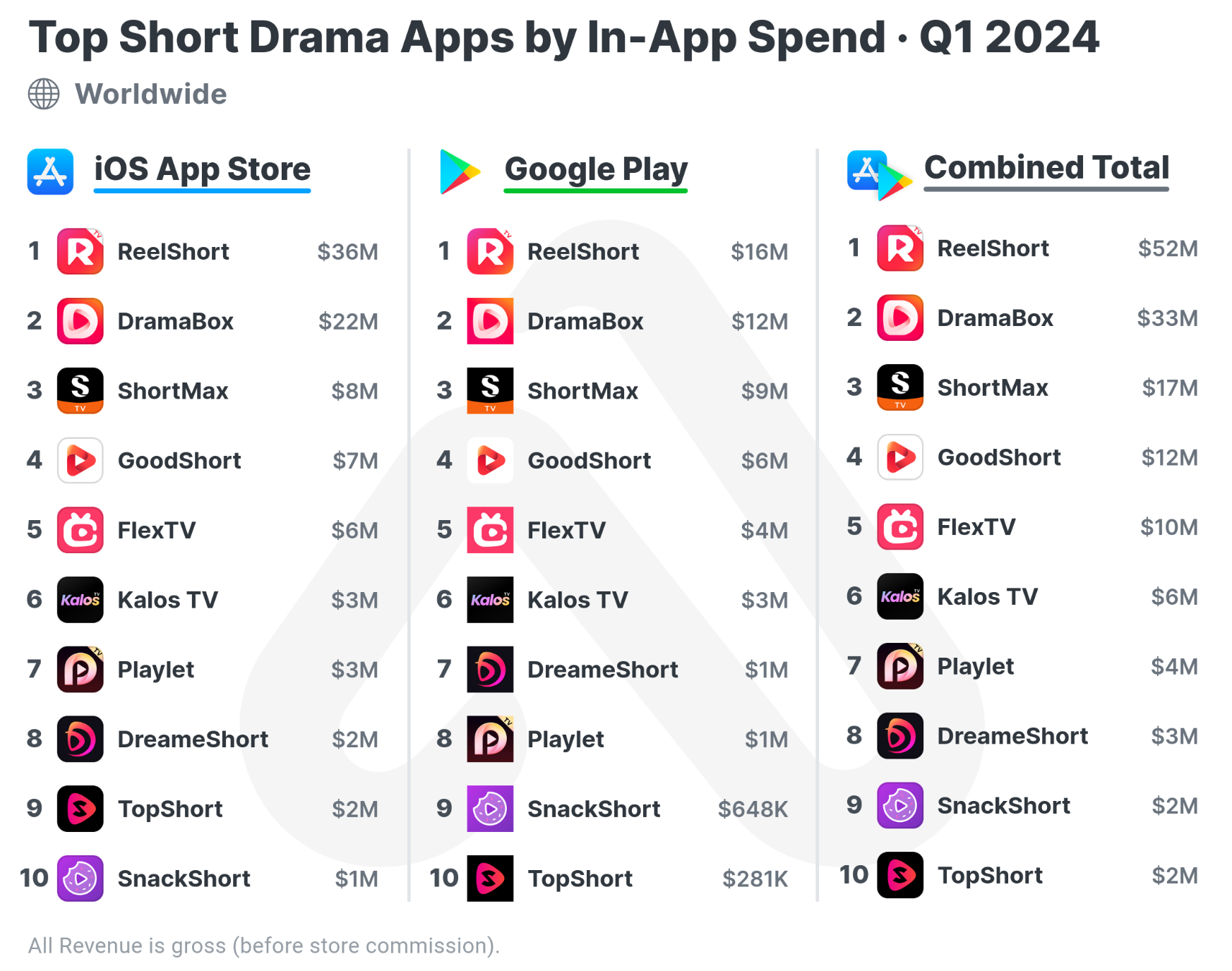
Q1 2025 delivered approximately $700 million in global in-app revenue for micro-drama apps—nearly 4x the $178 million from Q1 2024. The U.S. market alone accounted for $350 million (49% of global revenue). ReelShort led with $130 million, up 31% quarter-over-quarter. DramaBox followed at $120 million, up 29%.
Global downloads exceeded 370 million in Q1 2025, representing a 6.2x increase year-over-year. Cumulative downloads have reached nearly 950 million by March 2025.

ReelShort and DramaBox now pull in over $3 million combined per day. On ReelShort's best day in July 2024, the app generated $581,000. DramaBox peaked near $1 million daily. ShortMax grew revenue 642% between January and July 2024.
The U.S. market carries disproportionate value. American users generate revenue at rates substantially higher than users in other regions—the U.S. drives roughly half the global revenue despite representing a smaller share of total downloads.
This has scaled beyond niche territory into industrial-scale entertainment with mobile-game economics.
Platforms Are Publicly Announcing Supply Shortages
The market signal isn't subtle. Platforms are recruiting writers like SaaS companies recruit engineers.
DramaBox partnered with Stage 32 in December 2025 to launch what they're calling the "world's first vertical drama incubator"—a formal pipeline to recruit U.S.-based writers and train them in 60-second storytelling. The partnership includes a $5,000 writing contract, development support, and direct access to DramaBox's production pipeline. Stage 32 CEO Richard "RB" Botto framed it plainly: "Vertical series aren't just a trend. They're a legitimate career pathway."
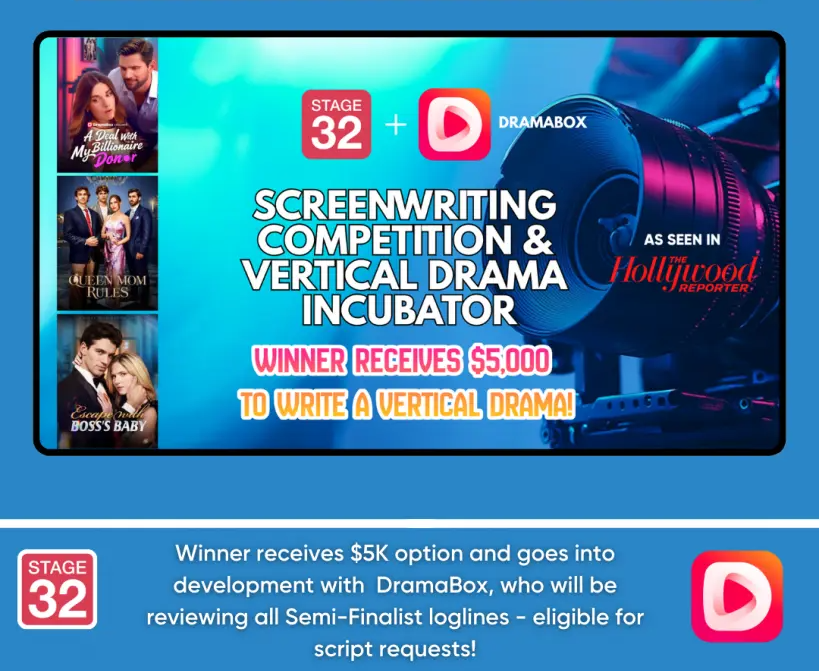
DramaBox's head of development, Christianne Cruz, was more direct: "We're looking for writers who can move fast, be bold, and understand what hooks an audience within seconds." The company has launched similar initiatives with Gold House and Roadmap Writers.
This is supply-chain expansion. When platforms start recruiting writers the way tech companies recruit developers, they're signaling undersupply at scale.
ByteDance launched Melolo, a free-to-watch micro-drama app, with dedicated regional teams for localization. Netflix added a short-form section. Fox Entertainment invested in U.K.-based micro-drama firm HolyWater. Even talent agency WME signed an AI-generated dog podcast called DogPack—yes, talking dogs—because the format works and nobody can produce fast enough.
Platforms have distribution, users, and payment infrastructure. What they lack is enough content to fill the demand.
Why Users Pay More Than for Netflix
Micro-dramas monetize like free-to-play mobile games: free episodes hook users, paywalls hit right after emotional investment, and each episode ends with a designed psychological chokehold.
Apps like ReelShort reportedly drive subscription revenue through aggressive unlock mechanics—once hooked, stopping feels worse than paying. Monthly spend per engaged user can exceed $80, significantly more than traditional streaming services, for content that costs a fraction to produce. Users aren't buying "quality" in the traditional sense. They're buying momentum.
The format stacks multiple revenue layers: pay-per-episode unlocks, subscription tiers, and increasingly, ad-supported free versions that drive conversions to paid. Some apps are testing interactive branching storylines where user choices trigger additional microtransactions.
China's ecosystem shows where this goes at scale: by 2030, advertising is projected to contribute 56% of Chinese micro-drama revenue, with subscriptions at 39% and commerce integration at 5%. The U.S. market is tracking the same pattern with higher per-user spend.
This is a conversion optimization business with entertainment as the wrapper.
Build the Picks and Shovels, Not Another Netflix Clone
Most people see this opportunity and think: "I'll generate some AI episodes and pitch platforms." That's the commodity move. The asymmetric play is becoming infrastructure.
Path 1: The Trope OS
The moat isn't video quality. Use the following 2-step playbook:

Unlock the Vault.
Join founders who spot opportunities ahead of the crowd. Actionable insights. Zero fluff.
“Intelligent, bold, minus the pretense.”
“Like discovering the cheat codes of the startup world.”
“SH is off-Broadway for founders — weird, sharp, and ahead of the curve.”


