


A seamstress in New Jersey posted something odd on a bridal forum last month. Her alterations schedule had become "chaotic." Brides were shrinking out of their dresses between fittings—sometimes dropping two sizes in eight weeks. One client went from a size 14 to a 6 between her first appointment and her wedding day.
The immediate context: 12% of American adults—31 million people—currently take GLP-1 drugs like Ozempic, Wegovy, and Mounjaro. Another 6% have used them in the past but stopped. Women aged 50-64 use these medications at the highest rates, with nearly 22% currently on a prescription.
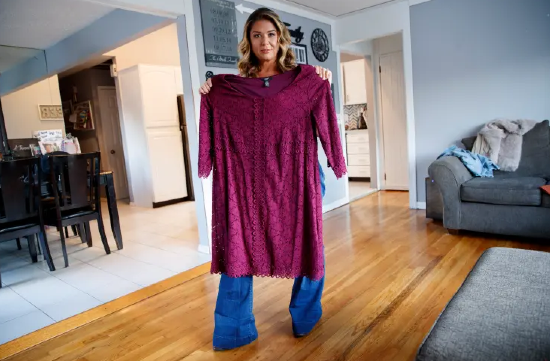
These people share one immediate, expensive problem: their closets expire faster than milk.
They're already spending $1,000-2,500 replacing wardrobes during major weight changes—but doing it inefficiently, emotionally fraught, and without good options. Meanwhile, they're paying $900-1,300/month for medication and cutting restaurant and grocery spending to afford it. A membership service solving wardrobe continuity during body transition could capture $129-399/month from this cohort, with 69% contribution margins and compounding inventory liquidity as yesterday's suppliers become tomorrow's customers.
Poshmark reported a 103% surge in plus-size listings (3XL and up) over the past two years. Listings mentioning "weight loss" jumped 78%. Jennifer Hyman, CEO of Rent the Runway, told the Wall Street Journal that customers are switching sizes at the highest rate in the company's 15-year history—and they're experimenting with tighter, more body-conscious styles they previously avoided.
Meanwhile, resale shop owners from Kansas City to Florida report the same pattern: racks that used to empty out of large sizes are now overflowing with them. Their small sections? Picked clean daily.
The wedge isn't selling smaller jeans. It's owning the wardrobe layer of a new life stage—one retail fundamentally can't serve.
The Signal: This Cohort is Already Too Large to Ignore
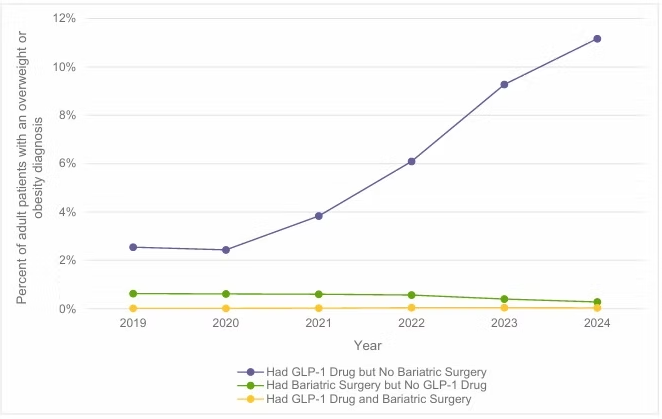
The numbers moved fast. In 2019, roughly 2.5% of adults without bariatric surgery had GLP-1 prescriptions. By 2024, that hit 11.2%—a 587% increase in five years. Currently, 12% of U.S. adults are taking these drugs, with 18% total having used them at some point.
Women drive adoption. They're using GLP-1s at higher rates than men across most age groups, with women 50-64 representing the peak usage demographic at 22%. Among those who've used GLP-1s solely for weight loss (not diabetes or heart disease), younger adults under 50 dominate.
Research firm Circana found that 23% of U.S. households include a GLP-1 user—and projects those households will represent 35% of food and beverage units sold by 2030. Morgan Stanley expects 31.5 million Americans will be taking these drugs by 2035.
This isn't niche. It's a demographic shift in real time.
The wardrobe exhaust is already measurable.
Resale platforms see the supply spike. Poshmark tracked a 103% increase in size 3XL listings, 80% in 4XL, and 73% in 5XL over two years. Vestiaire Collective and The RealReal report similar patterns—more premium pieces in larger sizes hitting the market, often from affluent sellers.
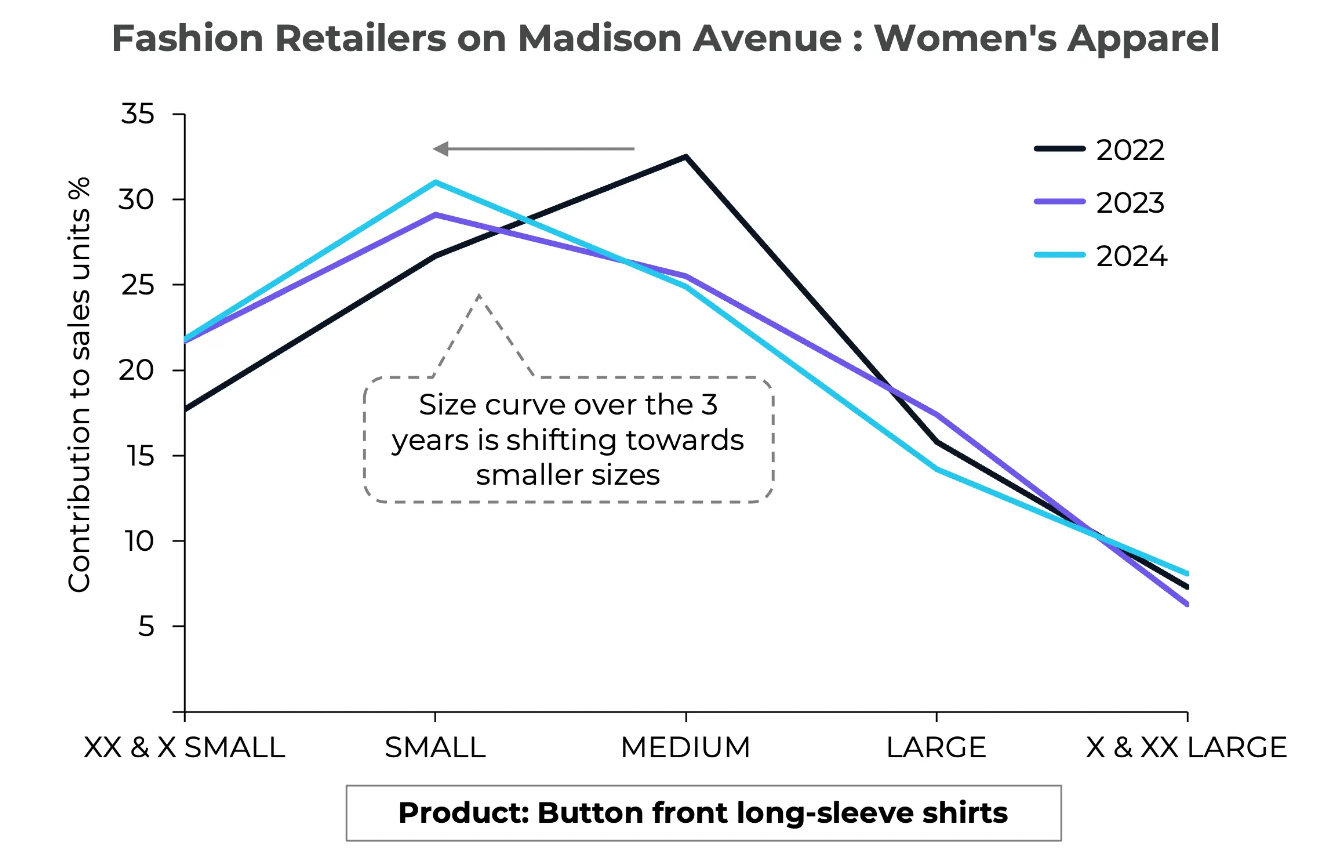
Retailers see the demand shift. Impact Analytics analyzed point-of-sale data from Manhattan's Upper East Side—the highest concentration of GLP-1 users for weight loss in NYC. Sales of women's button-down shirts in sizes XXS, XS, and S rose 12% from 2022 to 2024. Sales of XXL, XL, and L dropped nearly 11%. The same pattern appeared in men's polo shirts, sweaters, and dresses.
Rental services see behavior changes. Rent the Runway isn't just seeing size switches—it's seeing style switches. Customers moving down in size are ordering tighter silhouettes, cutouts, and more adventurous looks. Hyman described it as people becoming "more comfortable in their skin" and willing to wear what they previously avoided.
Plus-size retail is contracting. Despite 54% of U.S. women wearing size 14 or above, fashion is retreating. Plus-size model representation at major fashion weeks dropped from 2.8% in 2020 to 0.3% by Fall/Winter 2025. Brands like ASOS cut plus-size assortments by 15%; Reformation reduced extended sizing by 46%. Retailers are shifting larger sizes online-only or eliminating them entirely.
But the critical insight most people miss: the opportunity isn't the weight loss. It's the transition.
The Core Insight: The SKU Isn't Size—It's Time
Retail is structurally incompetent at serving temporary wardrobes.
Traditional retail wants you to buy clothes you'll wear for 18-24 months. GLP-1 users experience sequential purchasing.
Phase 1 (Weeks 0-8): "I don't want to buy anything yet. Maybe this won't work."
Phase 2 (Weeks 8-16): "Nothing fits and I need work clothes immediately."
Phase 3 (Months 4-9): "I'm smaller and I want a refresh."
Phase 4 (Months 9-18): "My weight stabilized. Time to invest in a real wardrobe."
Phase 5 (Variable): "I stopped the medication and I'm gaining it back."
According to KFF's research, 14% of GLP-1 users stopped taking the drugs due to cost. Another 13% stopped due to side effects. The discontinuation pattern creates two distinct wardrobe transitions: shrinking down, then potentially sizing back up.
Wardrobe churn happens every 8-12 weeks for active users, plus a second transition for those who discontinue.
Retail can't monetize this. Retail sells permanence at scale. You're selling continuity during volatility.
The Market Reality: What People Actually Spend
Before we refine our business model, we need to thoroughly understand the concept of wardrobe continuity, where the pain points are, and how our customers actually think and behave during this journey. Get it right, you'll be looking at $95K MRR at 500 members; get it wrong, you'll be left holding the bag.

Unlock the Vault.
Join founders who spot opportunities ahead of the crowd. Actionable insights. Zero fluff.
“Intelligent, bold, minus the pretense.”
“Like discovering the cheat codes of the startup world.”
“SH is off-Broadway for founders — weird, sharp, and ahead of the curve.”


