


Your pipe bursts on Saturday morning. You don't Google "emergency plumber near me" anymore — you ask your phone. The assistant calls three shops, compares pricing and availability, then hands you the best option like it's ordering lunch.
Google shipped this in January 2025 as "Ask for Me" and has been expanding it across the U.S. through Search Labs. The assistant literally calls businesses on your behalf to check pricing, availability, and services — no human interaction required. It started with auto shops and nail salons. It's moving faster than most local businesses realize.
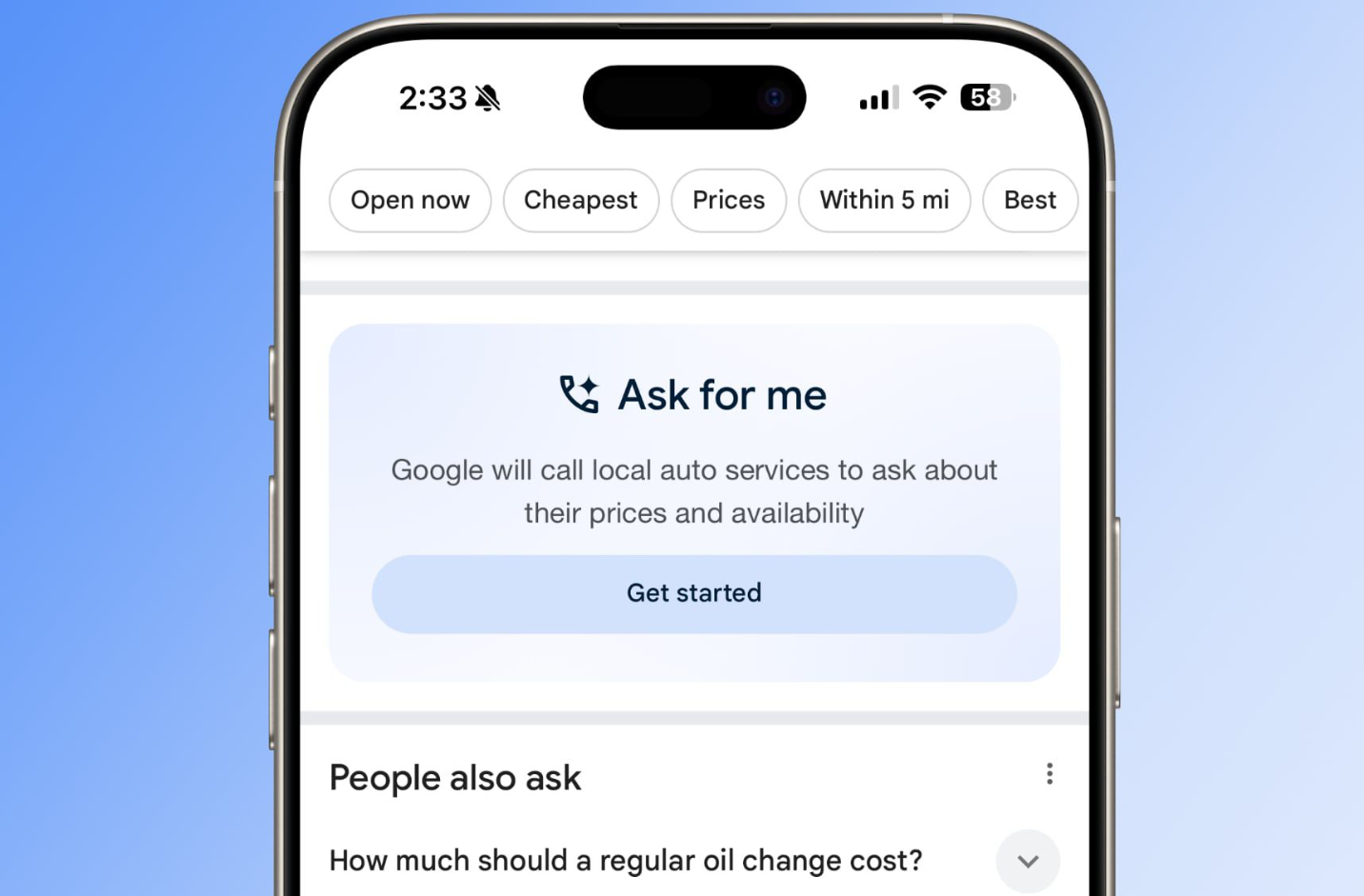
The shift from ranking to selection is binary. You're either the answer the assistant picks, or you effectively don't exist. And that binary creates pricing power most local SEO shops have never seen.
Multi-location businesses already pay mid-five to six figures annually for brand consistency and local presence management. Now they'll pay the same — or more — for "default answer" protection in a world where the assistant only recommends 1-3 options. A regional dental chain with 40 locations isn't buying "schema help." They're buying insurance against invisibility.
The U.S. has 36.2 million small businesses, and even a narrow focus on high-LTV verticals (home services, healthcare, legal, auto) yields contracts worth $30K-$250K annually per multi-location client.
The biggest arbitrage in local business infrastructure since Google Business Profile launched isn't building "AIO agencies." That's a trap. The actual opportunity is building the operating system that makes businesses agent-ready — and becoming the source agents query directly. You're not optimizing for algorithms. You're manufacturing the structured, verifiable supply graph that assistants trust enough to call automatically.
The Rails Are Already Down
Delegation is replacing search. When Google ships agentic calling into Search Labs and expands it beyond initial test categories, it signals where this is going. Fewer blue links, more "pick one and transact."
The interface is collapsing into answers. AI Overviews went from 6.49% of U.S. desktop searches in January 2025 to 13.14% in March (a 102% surge), peaked at 25% in July, then settled at 16% by November. The trajectory is volatile but directional — synthesized answers are becoming the default experience for a growing share of queries. 88% were informational in January, but commercial and navigational queries are rising fast. By November, navigational AI Overviews grew from under 1% to more than 10%. The assistant is intercepting brand searches and purchase-intent queries, not just "how-to" content.
Clicks are evaporating where these summaries appear. Pew Research measured actual behavior: when an AI summary appears, users click traditional results 8% of the time versus 15% without the summary — a 47% relative decline. When Seer Interactive tracked 3,119 informational queries between June 2024 and September 2025, organic CTR for those queries collapsed 61% — from 1.76% to 0.61% when AI Overviews appeared. The pattern is clear even if the magnitude varies by query type.
"Ask an agent" is becoming a default button. Apple's documentation confirms Siri can "tap into ChatGPT" for certain requests with permission. ChatGPT already has 800 million weekly active users. The behavior shift (delegate), product rails (agent calling + AI answers), and distribution (Siri + ChatGPT + Google) all line up.
The wedge is real. The question is what form wins.
What Assistants Trust (Subtle but Important Difference from SEO, Don't Skip this)
When assistants make selections, they're silently asking: "Which option is least likely to embarrass me?"
Confidence comes from data clarity, data consistency, trust signals, and transaction-ability. Yext ran the numbers on 6.8 million AI citations across ChatGPT, Gemini, and Perplexity between July and August 2025.
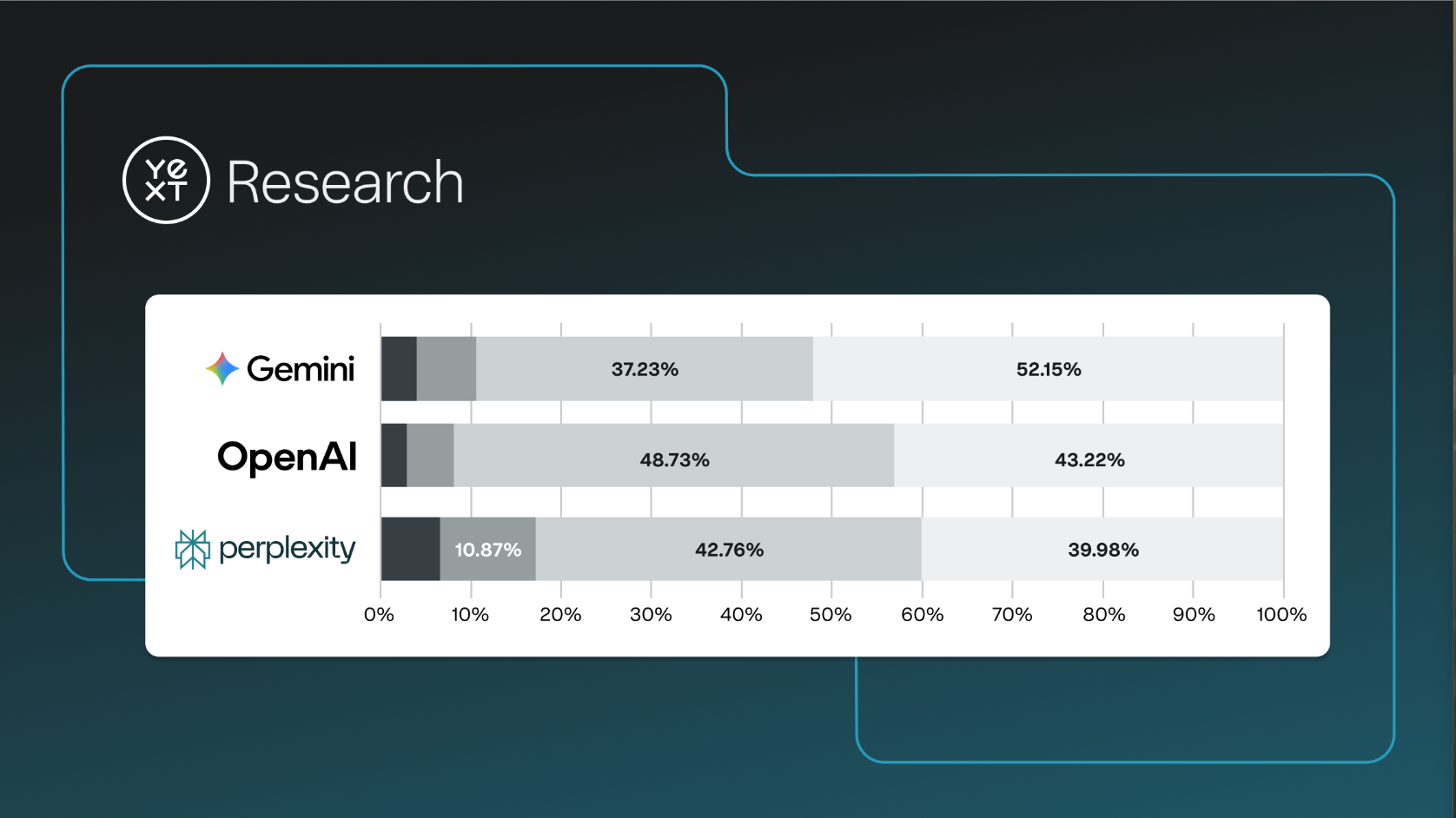
86% of AI citations come from brand-managed sources: 44% from websites, 42% from listings (Google Business Profile, Apple Business Connect, Yelp), and 8% from reviews and social. Forums and third-party content account for just 6%.
The winners aren't the best bloggers. They're the cleanest entities.
Over half of U.S. consumers now use AI assistants like ChatGPT or Perplexity at least weekly, and 72% of marketing leaders believe AI search will eclipse traditional SEO within three years. The infrastructure gap is now — not someday.
Why "AIO Agency" Hits a Ceiling
If you hang a shingle offering schema markup, NAP cleanup, and AI Overviews optimization, you'll get customers. You'll also hit a ceiling fast.
Problem #1: It's copyable. Schema becomes a checklist, then a plugin, then a feature inside every directory platform.
Problem #2: Deliverable hell. One-off fixes. Platform changes every quarter. High churn, low switching costs — the exact trap that commoditized local SEO.
Problem #3: SEO pricing psychology. Businesses have been trained for 15 years to squeeze "optimization" like it's carpet cleaning.
You can run a boutique doing $3K–$10K audits for regulated verticals. But that's not category-defining.
The real play isn't selling schema. Sell confidence as a managed system — and become a source agents trust repeatedly.
The Product: Agent-Ready Infrastructure OS in 4 Concrete Steps
Agents don't browse. They source. And they overweight structured, verifiable information.
Google's own documentation is explicit: LocalBusiness structured data helps the system understand hours, departments, services, and credibility markers. The Yext research confirms it: when someone searches "best urgent care near me," the assistant pulls from individual listings, review platforms, and local pages — not Wikipedia.
Build infrastructure, not services.
1st Step: Agent Graph Layer (Your Core IP, keep it simple but build this first)
Unlock the Vault.
Join founders who spot opportunities ahead of the crowd. Actionable insights. Zero fluff.
“Intelligent, bold, minus the pretense.”
“Like discovering the cheat codes of the startup world.”
“SH is off-Broadway for founders — weird, sharp, and ahead of the curve.”


