


A Catholic prayer app raised $50 million in 2023. Then it hit #1 in the App Store—beating Netflix, Instagram, TikTok. Now it's pulling estimated revenue north of $50 million annually from people paying to... pray.
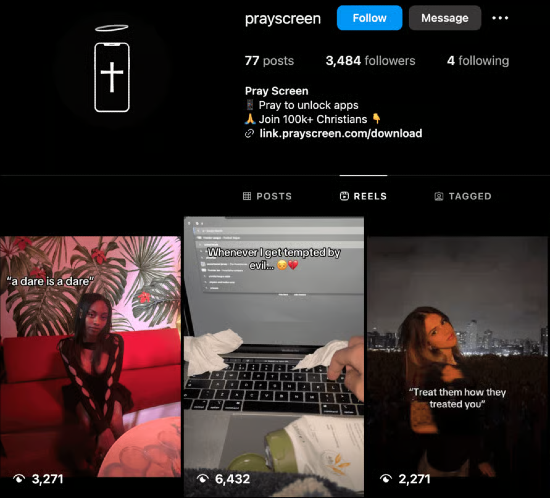
Meanwhile, a Christian app that locks your phone until you complete a prayer went from zero to 100k installs and $50k MRR in under 90 days. Entirely on organic TikTok. No ads. Just videos that got 10 million views because Gen Z was tired of porn and doomscrolling.
Silicon Valley keeps chasing "retention."
Religion already solved it 2,000 years ago.
The market already voted with $175 million
In 2016, venture funding for faith-based apps was $6.1 million. By 2021, it hit $175.3 million—a 28x jump in five years. The pandemic forced churches to close and people to find new ways to pray. VCs noticed the retention numbers and wrote checks.
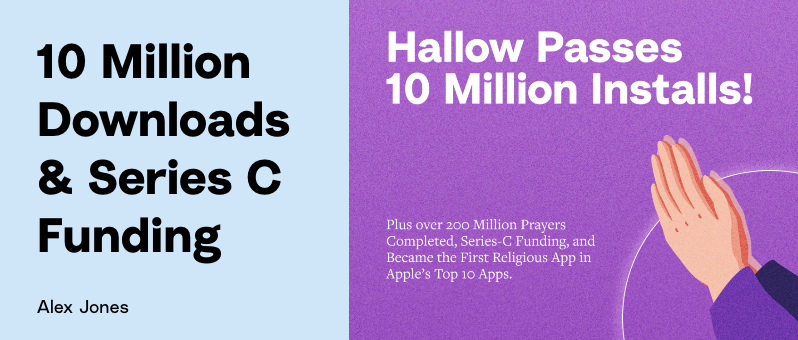
Hallow, a Catholic meditation app, raised $105 million total, including a $50 million Series C in 2023. Ten million downloads by mid-2023. Six hundred million prayers completed. In February 2024, it became the first religious app to hit #1 on the entire App Store.
Glorify, a Christian competitor, raised $40 million. Pray.com raised $34 million across 18 million downloads. VCs validated broad Christianity at venture scale. The micro-niches? Still wide open.
The retention edge nobody talks about
Faith apps work differently from every other wellness subscription.
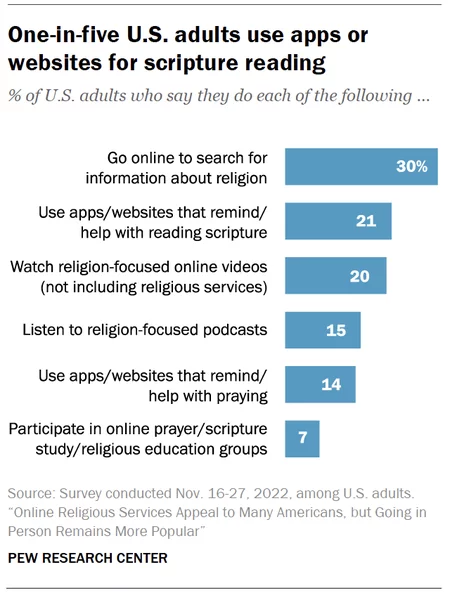
Pew Research found that among highly religious Americans, 52% use apps or websites to help them read scripture—29% do it daily. Another 28% use apps or websites to help them pray, with 18% using them every single day. These aren't casual users. They're people whose identity is tied to daily practice.
Compare that to meditation apps, where 3-5% of free users convert to paid. Faith apps see conversion in the 5-10% range because the habit goes beyond mindfulness. The ritual is obligation. It's guilt if you skip.
A study of 1,031 Pray.com subscribers found that most had been using the app for 1-2 years, with over half being "high-frequency users." The top reason for starting? Spiritual growth. But almost half also used it to reduce stress, and a third to reduce anxiety.
You come for God, you stay because the app actually makes you feel better. And unlike Calm, which competes with Spotify and podcasts, faith apps compete with nothing. Your phone already stole your prayer time. This gives it back.
Retention creates lifetime value. Higher LTV means you can bid more on ads, pay affiliates better, and wait longer to break even. That's how Hallow went from zero to #1.
Identity, not content
Most faith app clones fail because they think they're selling content. Daily Bible verses. Inspirational quotes. A library of prayers.
People pay for identity infrastructure. They wake up thinking:
- "I'm drifting and I don't know how to stop."
- "I'm anxious and therapy doesn't speak my language."
- "My phone is eating my life and I hate myself for it."
The app becomes a mirror. It tells a very specific person: this was built for you.
The wedge comes from micro-identities, not broad Christianity:
- Overwhelmed Muslim mothers balancing work and five daily prayers
- Orthodox Christians in big cities who can't get to church
- Reformed dads rebuilding discipline after a rough year
- Immigrant Buddhists navigating tradition in a corporate world
- Operators who want Stoicism without cringe quote accounts
Pick one. Go deep.
Two thousand users at $9.99/month is $20k MRR. That's a full-time income from a niche most people don't know exists.
What to build: 3 steps, same play, from solo to viral
A) The Lifestyle App ($20k MRR, solopreneur model)

You don't need a million users. You need an intense 2,000.
Math:
- $9.99/mo → 2,000 subs = $20k MRR
- $59/year → 4,100 annual subs = $240k ARR
- Upsell: seasonal challenges at $29-99 each
Core loop (must work on Day 1):
Unlock the Vault.
Join founders who spot opportunities ahead of the crowd. Actionable insights. Zero fluff.
“Intelligent, bold, minus the pretense.”
“Like discovering the cheat codes of the startup world.”
“SH is off-Broadway for founders — weird, sharp, and ahead of the curve.”


